

Image from Wikimedia / H. Zell
Euphorbia candelabrum is a very beautiful succulent plant, but due to the large size it reaches, it is not a very good option for growing in a pot... although it is not impossible .
And besides being very easy to care for, it also multiplies well from cuttings, so if you love tree Euphorbias, keep reading.
How is it?
Euphorbia candelabrum is the scientific name of a succulent tree plant endemic to the Horn of Africa and the east of the African continent, in the Great Rift Valley, which was described by Trémaux ex Kotschy and published in Mitteilunger der Geographischen Gesellschaft in 1857.
It is characterized by reaching a height of 12 to 20 meters, with a single trunk about 90 cm in diameter that is highly branched . The branches can reach about 3 meters in length and form a wide, rounded crown. The flowers are yellowish and bloom in spring.
Like other species in this genus, it is a toxic plant . The sap it contains can cause itching and irritation.
What care do you need?
To thrive, it needs a sunny location and a substrate (or soil, if it's going to be planted in the garden) with excellent drainage . In fact, ideally it should be composed of coarse sand, such as pumice, which you can buy here . If you have very compacted soil, I recommend digging a large planting hole, about 50cm x 50cm, and mixing it with perlite (which you can get here ) in equal parts.
When it comes to watering, it's important not to overwater . Euphorbia candelabrum tolerates drought well, so one or two waterings a week in the height of summer and a little less the rest of the year will be more than enough to keep it hydrated.
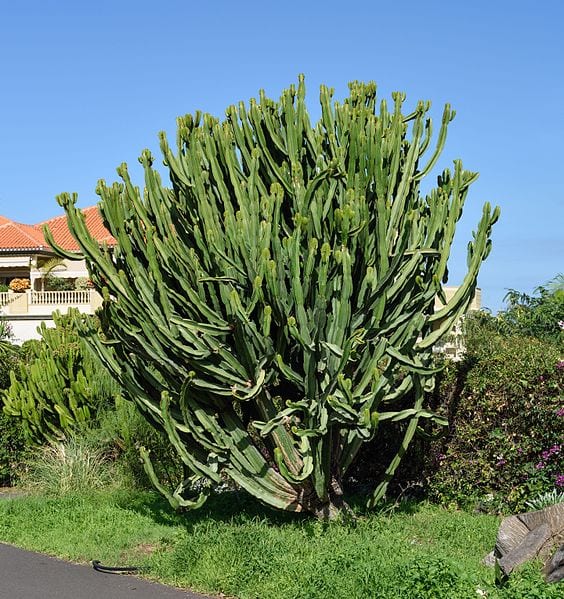
Image from Wikimedia / Cayambe
Furthermore, it's worth noting that it doesn't particularly like the cold, but it tolerates light, occasional frosts down to -2ºC . And if you need more plants, cut a branch in spring, let it dry for a week in partial shade… and then plant it. In a few days, it will develop its own roots! That's interesting, isn't it?
Table of Contents