

Haworthia attenuata cv Zebra Image from Flickr/Stephen Bolsvert
Haworthia attenuata is one of those non-cactus succulents that are a staple in almost every collection, whether for a beginner or an expert. It's common, but sometimes beauty lies in what is most familiar.
But it's not just beautiful; it's also incredibly easy to care for and even easier to propagate. Having one on your patio or terrace is a real treat. If you don't believe me, read its information sheet and then get one to see for yourself. You definitely won't regret it!
Haworthia attenuata is the scientific name of a succulent plant described by Adrian Hardy Haworth (1767-1833) native to the Eastern Cape of South Africa, popularly known as the zebra plant. It is characterized by its leathery , roughly triangular, dark green leaves with a pattern of white lines. The thickness and quantity of these lines have given rise to several cultivars.
Over time , it forms clusters of rosettes up to 15cm in diameter and about 10cm high . During spring, clusters of flowers with long, thin stems emerge.
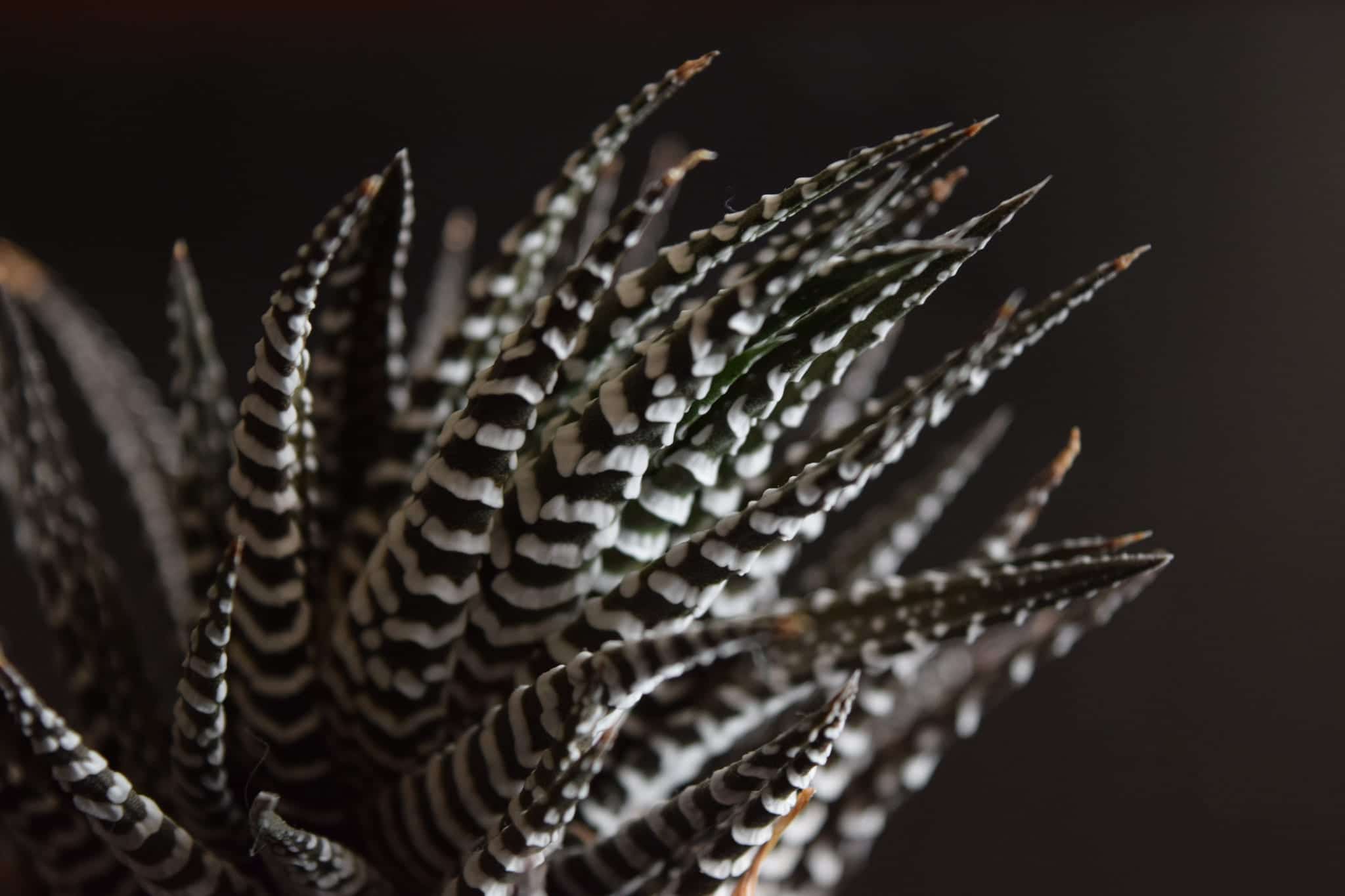
Haworthia Attenuata CV Zebra
As for its care, to keep it in perfect condition, simply place it in partial shade , in a pot that is wider than it is deep so that its pups can develop properly. Another option is to plant it in a rather narrow container and remove the offshoots to plant in individual pots during spring and summer.
Water it sparingly : no more than twice a week in summer and no more than once every 15-20 days the rest of the year. It is also highly recommended to fertilize it with a liquid fertilizer for cacti and succulents, following the instructions on the product packaging, throughout the warmer months of the year.
It withstands cold and frost down to -2ºC . If you live in a colder area, you can protect it from low temperatures by placing it in a room with plenty of natural light and away from drafts.