

Aeoniums are among the most rewarding succulent plants you can have in a garden, balcony , or terrace. As long as they are exposed to direct sunlight and receive occasional watering, they will grow beautifully season after season.
They are so adaptable, that we are undoubtedly talking about the best, or one of the best, succulents suitable for beginners and also for those who do not want to or/or cannot dedicate much time to their cultivation.
Origin and characteristics of the Aeonium
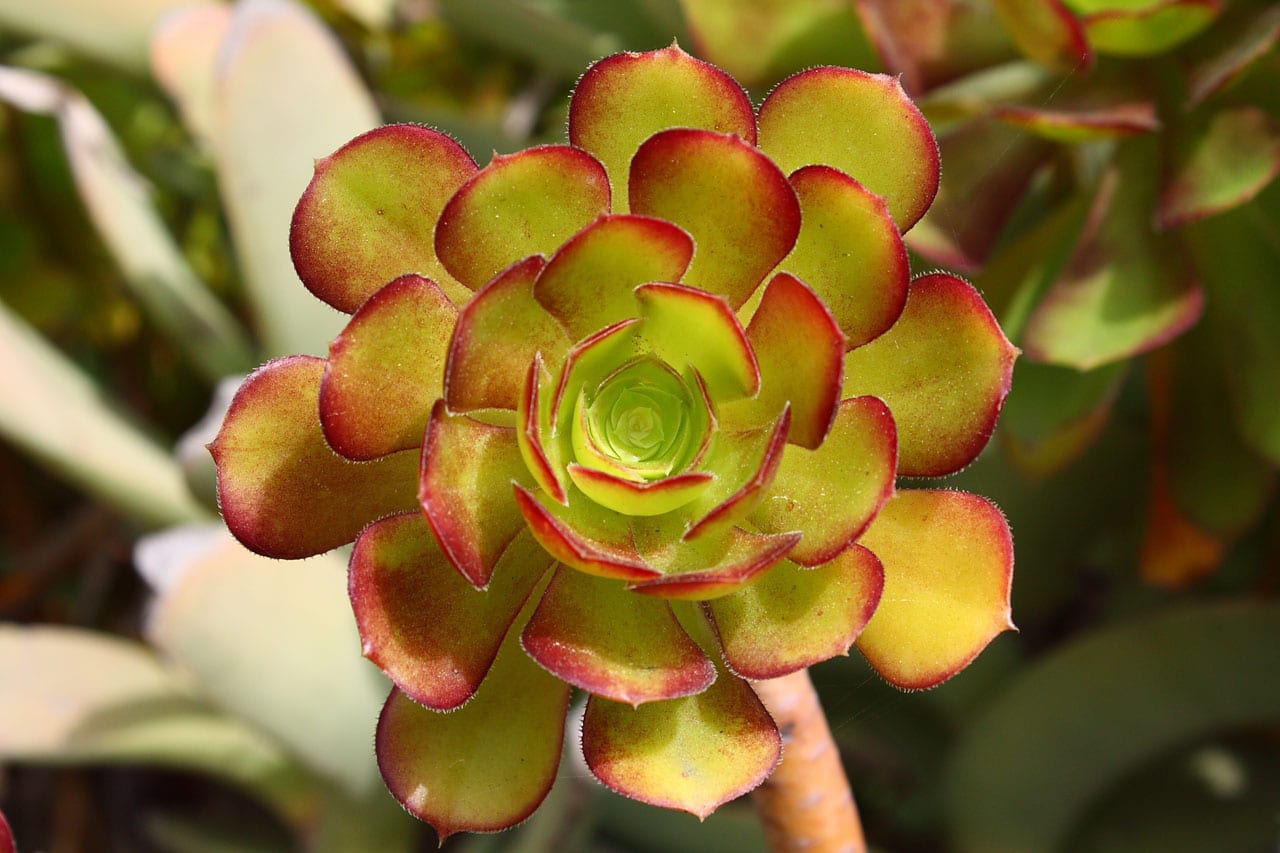
This is a genus of succulent plants comprising about 75 species, primarily native to the Canary Islands, but also found in Madeira, Morocco, and East Africa. They belong to the Crassulaceae family and are characterized by developing a rosette of leaves on a stem that is usually straight or slightly inclined.
During winter they produce an inflorescence of white or yellowish florets which rarely bear fruit. On the contrary, if a branch breaks and falls to the ground, it will root without problems in a matter of a few days.
Main species
The new options are the following:
Aeonium arboreum
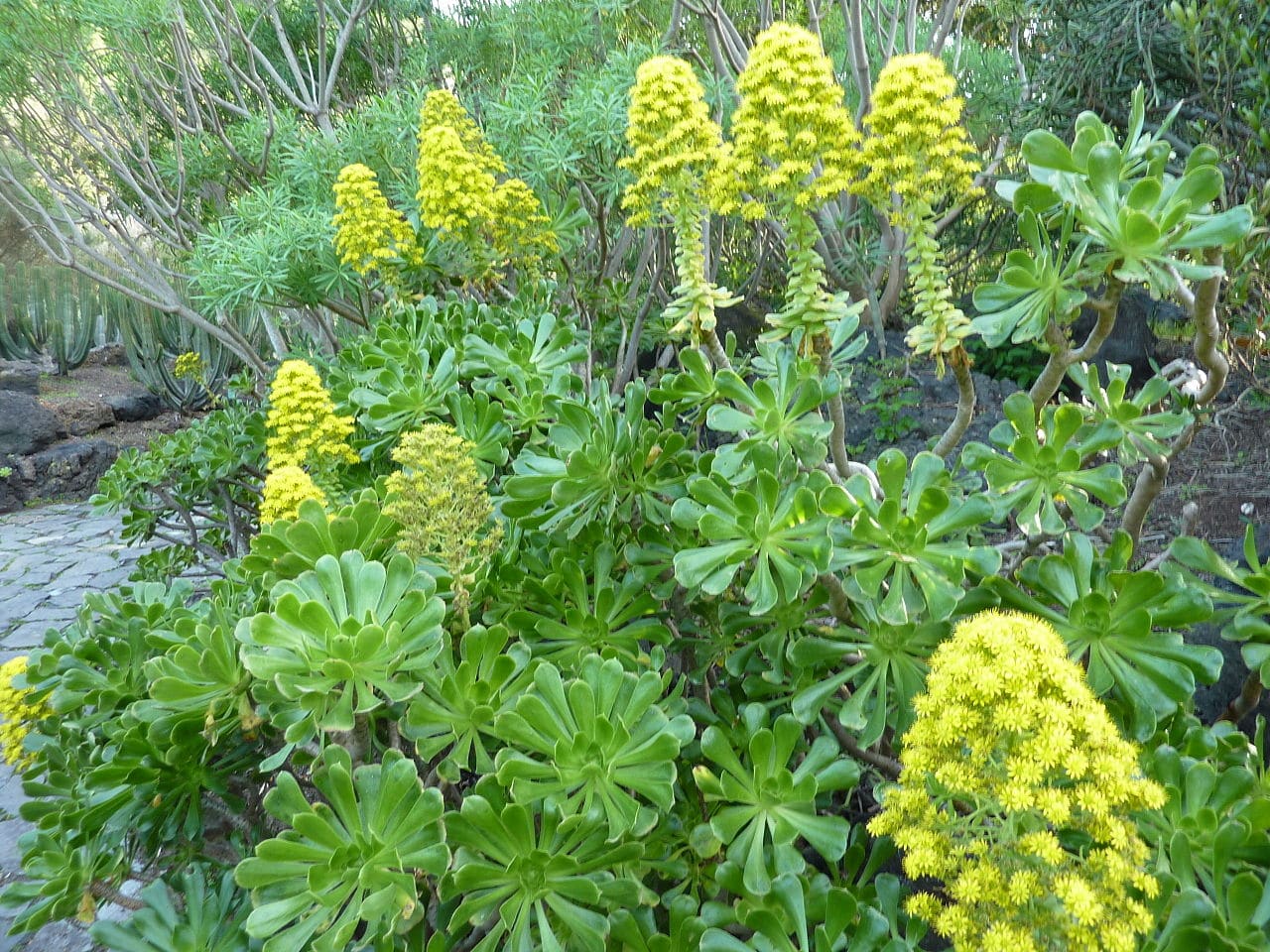
Image - Wikimedia / James Steakley
It is known as the tree houseleek , common houseleek, or garchosilla, and is a species native to Morocco. It reaches a maximum height of 90 centimeters and develops stems from which rosettes of green leaves, about 15-20 cm in diameter, sprout. The flowers are grouped in inflorescences about 15 centimeters across and are yellow.
Resists up to -4ºC.
Aeonium arboreum 'Atropurpureum'
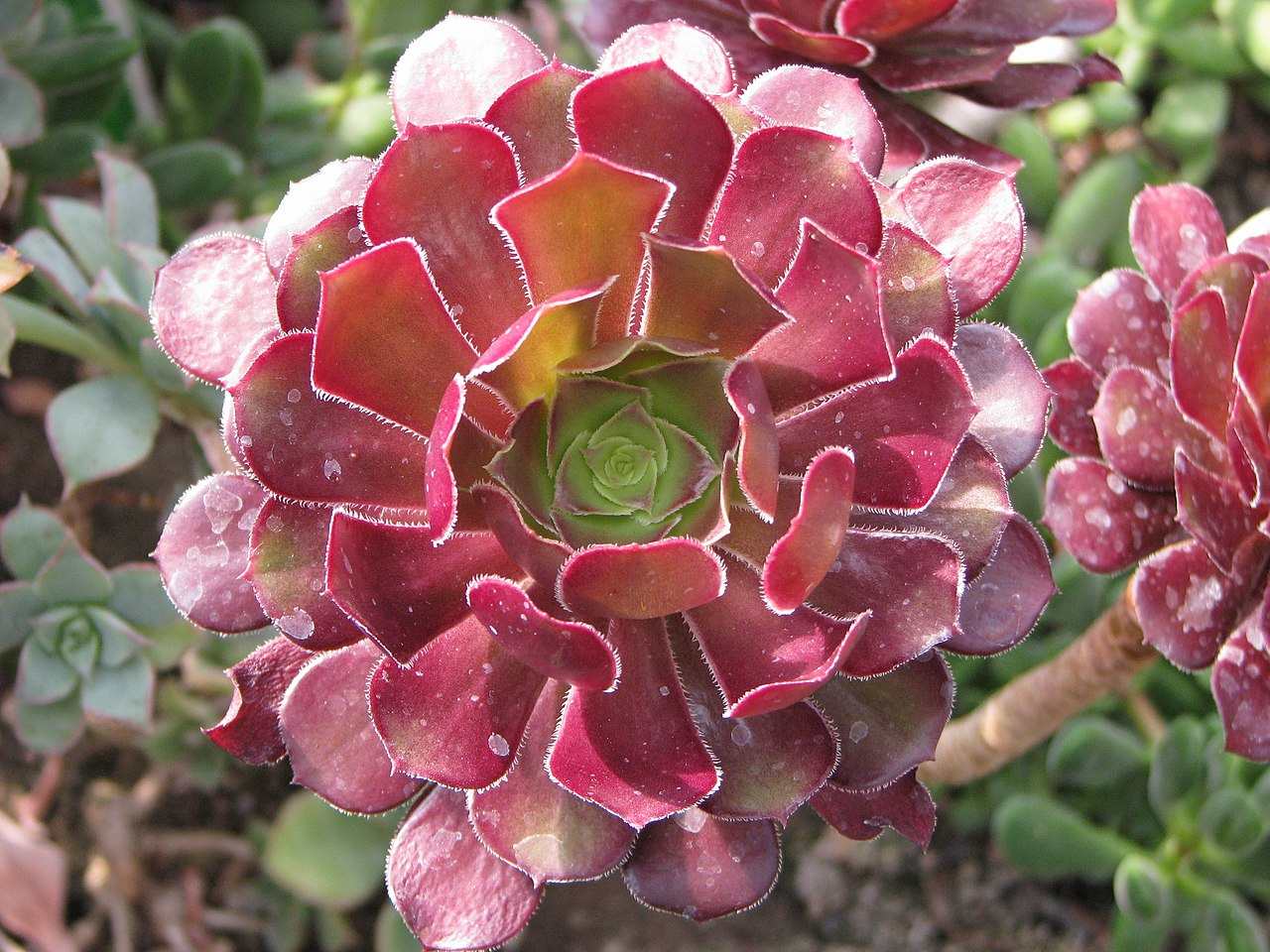
Image - Wikimedia / Agnieszka Kwiecie ?, Nova
It has the same characteristics as the previous one, but its leaves are brown , which is why it usually attracts a lot of attention.
canarian aeonium
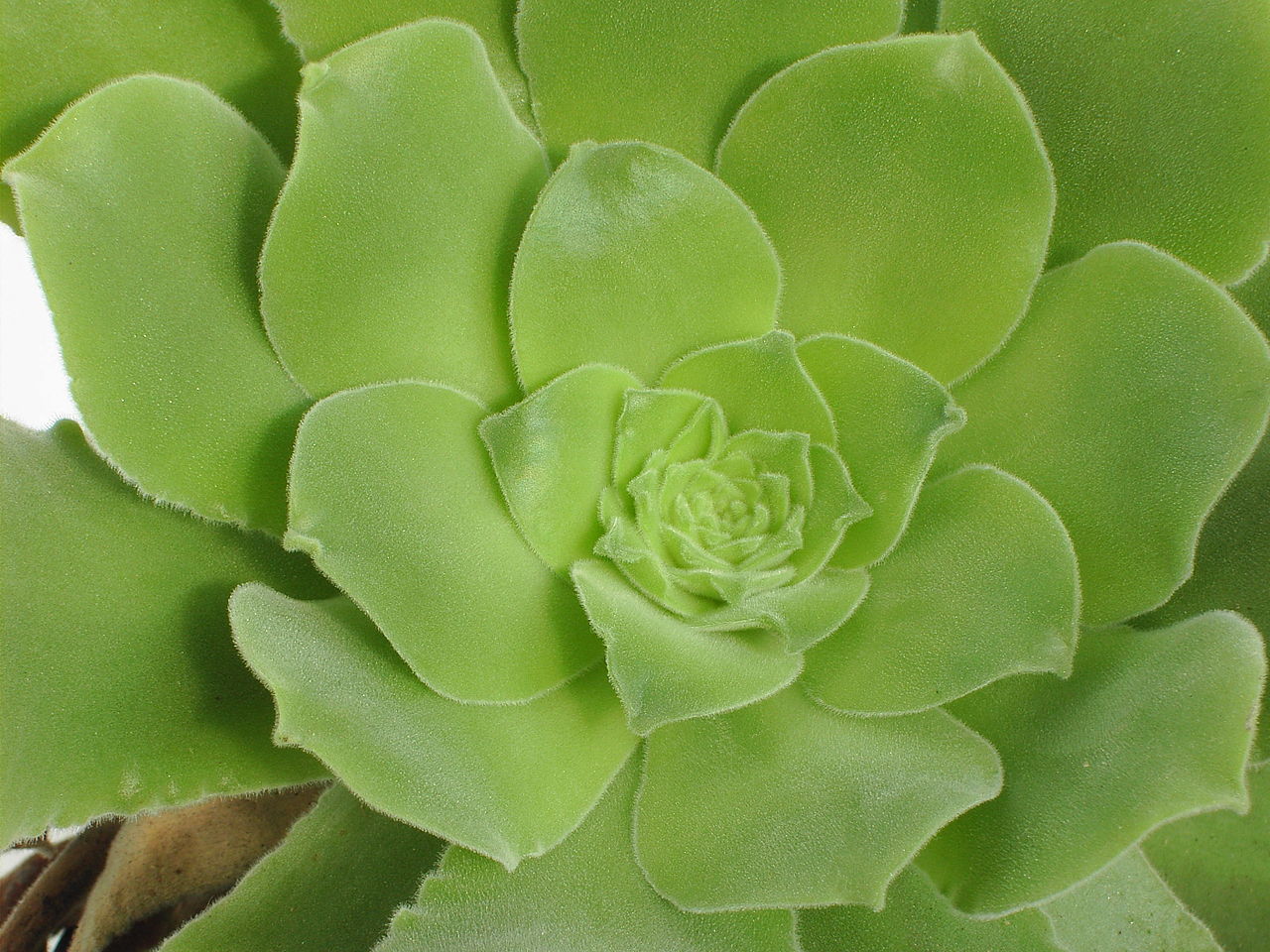
Image - Wikimedia / Opuntia
Known as bejeque , it is a species native to the Canary Islands, specifically La Gomera. It develops short, straight, and thick stems, which rarely branch, and from which sprout rosettes of pubescent leaves with a diameter of between 15 and 45 cm , green in color.
It resists frosts down to -2ºC.
Aeonium haworthii
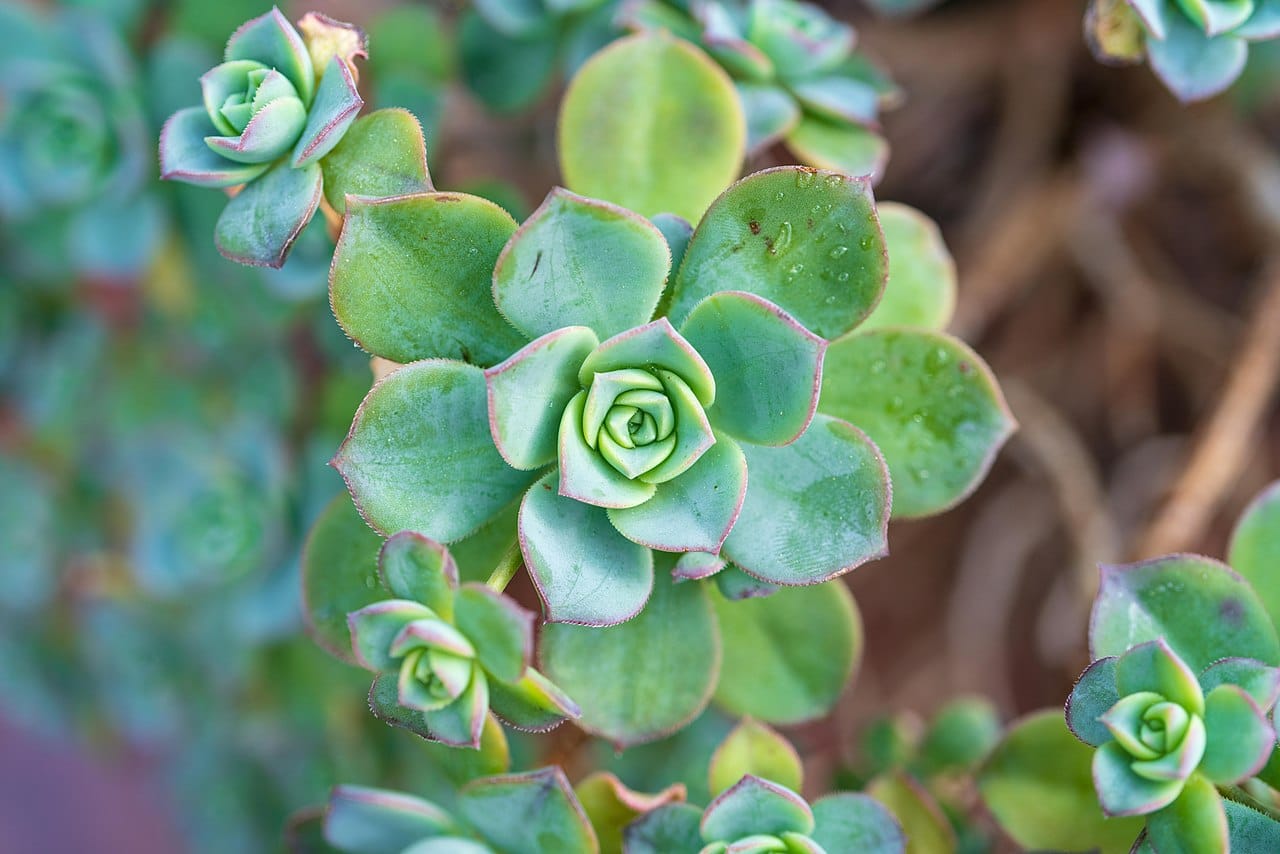
Image - Wikimedia / PantaRhei
It is a species native to the Canary Islands, specifically Tenerife, reaching a height of approximately 40-50 centimeters . It develops a rosette of green leaves, 6 to 11 cm in diameter. The flowers are small and whitish.
Resists up to -4ºC.
Aeonium lancerottense
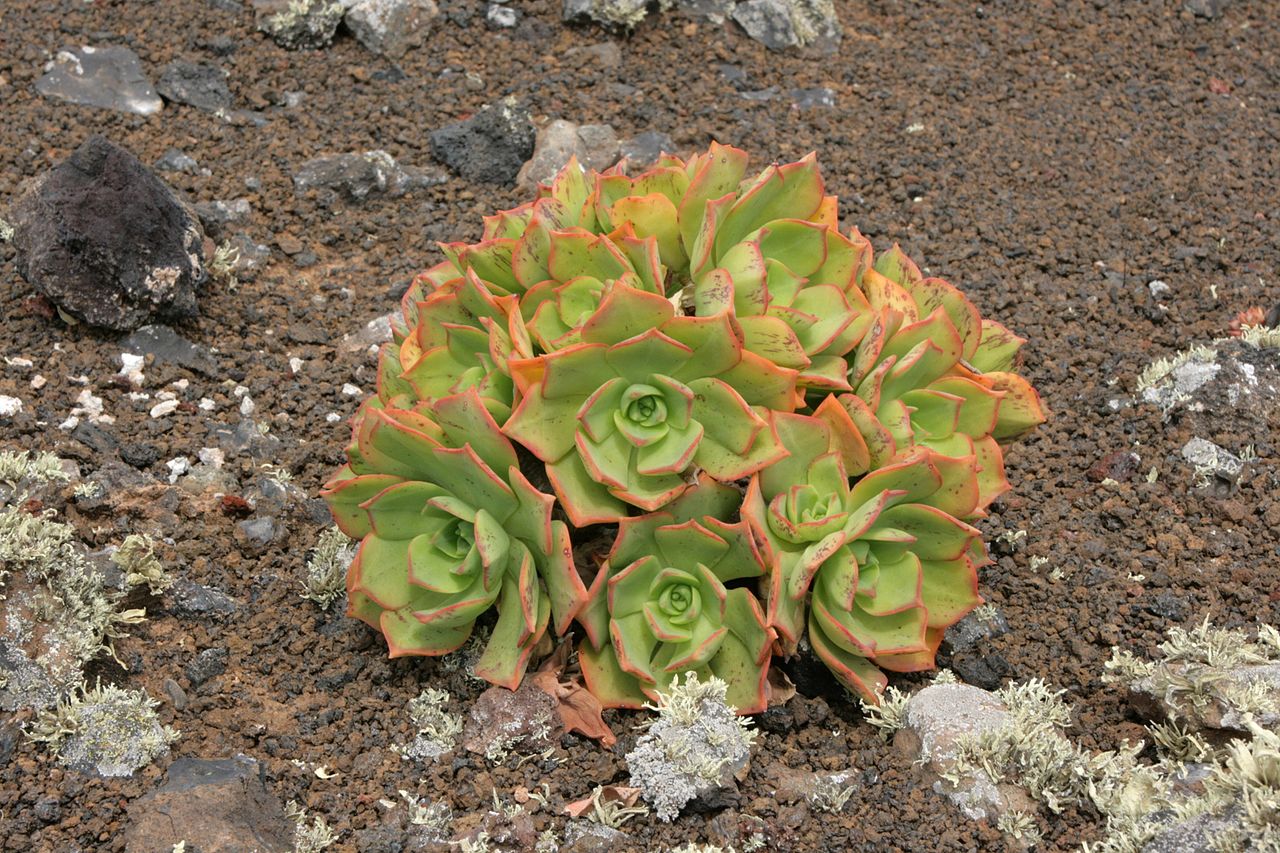
Image - Wikimedia / Frank Vincentz
This plant is endemic to the Canary Islands and grows as a shrub or subshrub with branched stems . The leaves are grouped in rosettes with a diameter exceeding 5 centimeters and are green and hairless. The flowers are pink.
It resists frosts down to -2ºC.
Aeonium Tabulare
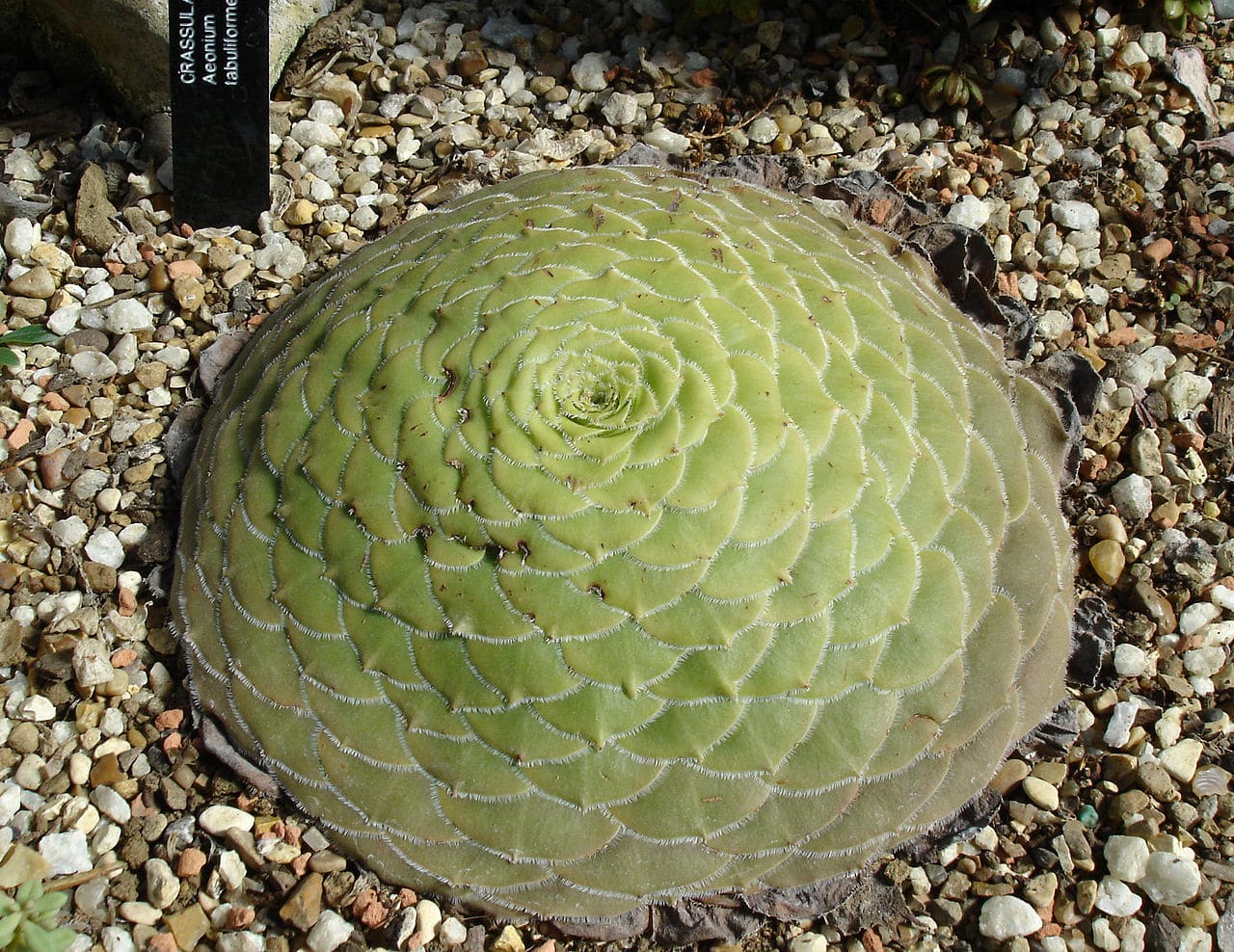
Image - Wikimedia / Bluemoose
Its original scientific name is Aeonium tabulaeforme , and it is native to the Canary Islands, specifically Tenerife. It develops a rosette of flattened, green leaves, between 15 and 30 centimeters in diameter . The flowers are grouped in pale yellow inflorescences.
It is not very resistant to cold, down to 0 degrees.
What are their cares?
If you want to have a copy, we recommend that you provide it with the following care:
Location
These plants need to be kept outdoors, in a sunny spot where they get sun all day long, provided they're already accustomed to it. If you buy one that was kept indoors, you must gradually acclimate it to the sun's rays, otherwise its leaves will burn.
Earth
- Flower pot: fill it with a universal culture substrate mixed with 30-40% perlite or similar (arlite, volcanic clay, quartz sand, etc.).
- Garden: not demanding, as long as it has good drainage.
Irrigation
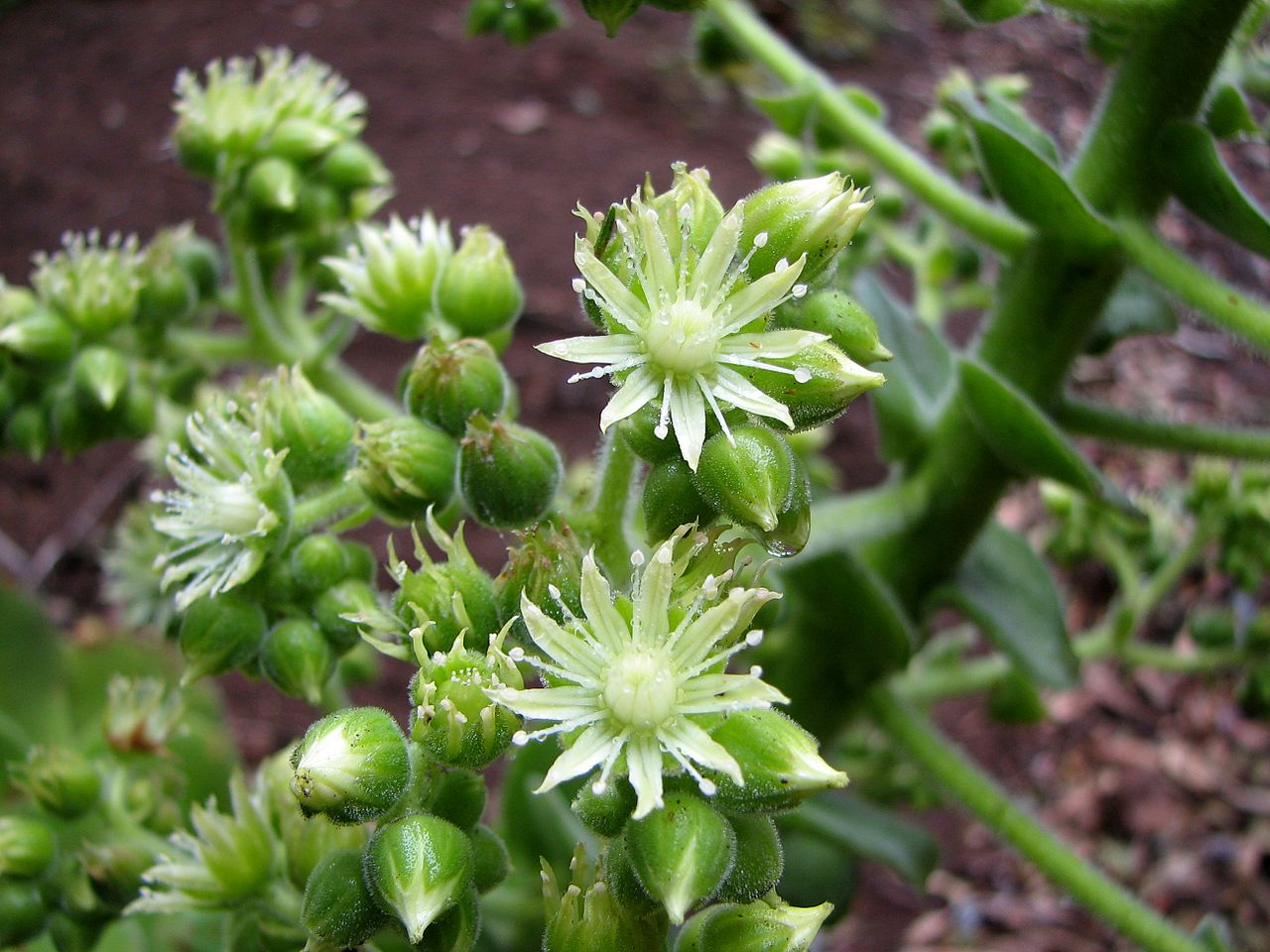
Image - Wikimedia / Javier Sanchez Goalkeeper
Water sparingly. Allow the soil or substrate to dry out completely before watering again , as Aeoniums are very sensitive to overwatering. For this reason, it is also very important to note that if growing in a pot, do not place a saucer underneath or use a pot without drainage holes.
Subscriber
Since these plants grow in spring and summer and usually bloom in winter, it is ideal to fertilize them throughout the year (except in winter if the temperature drops below -4ºC) with a specific fertilizer for cacti and succulents, or by adding about two small (coffee) spoonfuls of blue Nitrofoska every 15 days.
Another alternative is to fertilize it with organic products, such as guano (use the liquid format if you have it in a pot) or the manure of herbivorous animals.
Thus, you will be able to have an Aeonium in good health, capable of fighting without problems the microorganisms that cause infections and the insects that can become pests.
Multiplication
As we mentioned before, they rarely produce seeds when cultivated. If they do, sow them in spring in seed trays with drainage holes, filled with universal potting mix. But if you want a new plant quickly, we recommend propagating it by stem cuttings.
These cuttings are obtained in spring or summer, and are planted in individual pots with quartz sand, pumice or similar, and placed in a bright outdoor area but protected from the sun. In about 15-20 days they will root.
Plagues and diseases
They are quite hardy, but can be affected by mealybugs and snails . As they are relatively small plants, you can remove them by hand, or if you prefer, with a natural insecticide such as diatomaceous earth.
Planting or transplanting time
In spring , when the risk of frost has passed.
Rusticity
It depends on the species, but in general they withstand light and short-duration frosts down to -4ºC.
What did you think of the Aeonium?
Table of Contents