

Aloe dichotoma is one of the best-known, yet most obscure, caudex-bearing plants in the world. Yes, it's very popular among collectors, but it's hard to find in nurseries, especially non-specialized ones.
Although it may seem rare to many, its cultivation and maintenance are actually very simple ; so if you get one, you'll just need to keep in mind the advice I'm going to offer you here, in the fact sheet for this wonderful species.
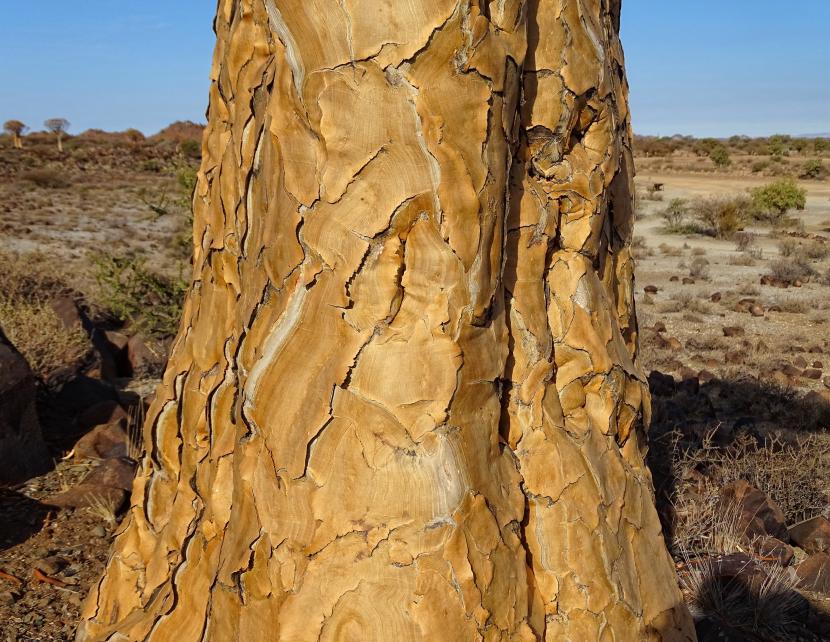
Aloe dichotoma is the name of a species from South Africa and Namibia belonging to the family Xanthorrhoeaceae and subfamily Asphodeloideae. It was described by Francis Masson and published in Philosophical Transactions of the Royal Society in 1776.
This is a tree aloe that can reach a height of approximately 5-6 meters, with a highly branched crown formed by rosettes of long, fleshy, bluish-green leaves . The trunk, while not very thick, can reach a diameter of 50 cm. Its bark is quite distinctive, as it serves to protect it from the intense African sun.
The flowers bloom during the summer in adult specimens , and are distributed in inflorescences whose appearance resembles that of a spike.
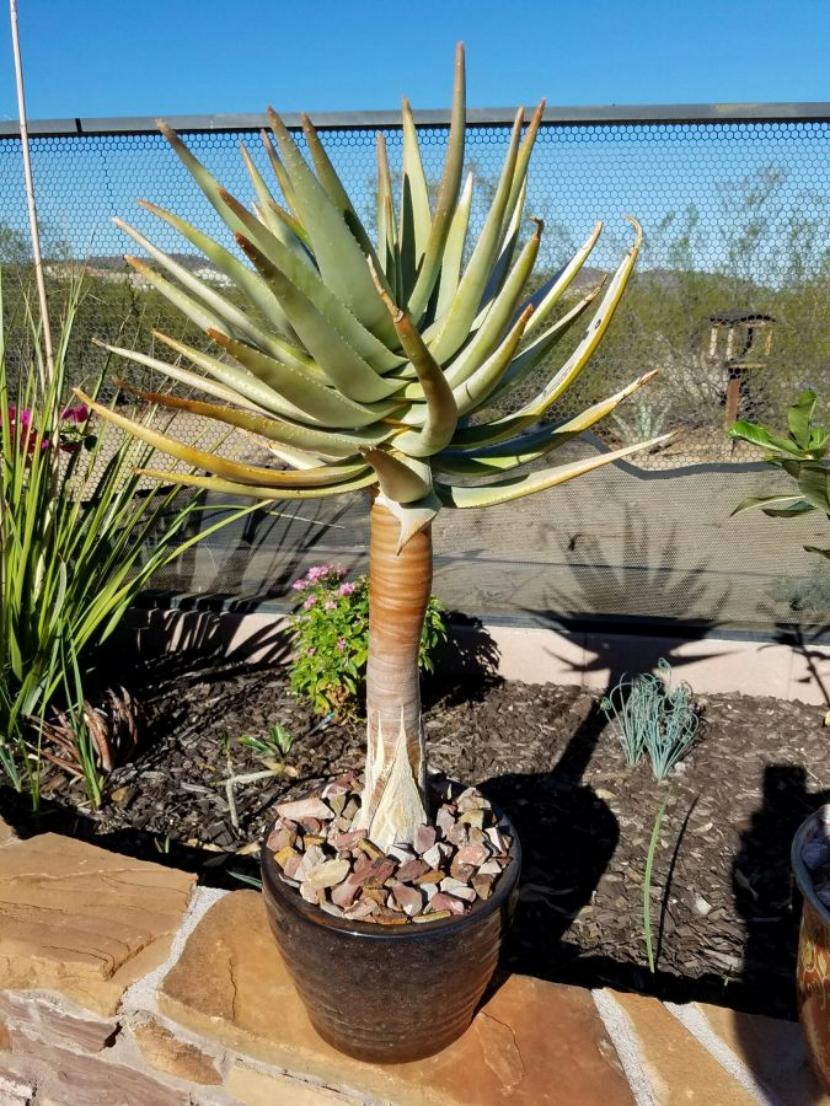
Image from Agaveville.org
In terms of care, it's a relatively easy plant to maintain. In fact, you simply need to place it in an area where it receives direct sunlight throughout the day and plant it in a pot with a well-draining substrate , such as pumice or washed river sand. I strongly advise against substrates like peat, as it struggles to root in them.
Watering should be very infrequent: every 10 days in summer and every 20-25 days the rest of the year . For optimal growth, it will be necessary to fertilize it with liquid fertilizer for cacti and other succulents, following the instructions on the product packaging, or with Nitrofoska Blue.

Because it has a slow growth rate, repotting every 3-4 years in spring will suffice . Alternatively, it can be planted in the garden, provided a planting hole of at least 50x50cm is dug and the soil is mixed with perlite, using a ratio of perlite to soil.
Finally, it is interesting and important to mention that, although it is of tropical origin, it is able to withstand mild and occasional frosts down to -2ºC.