

Cacti of the genus Astrophytum are among the most coveted by collectors, both beginners and advanced. Their unique shapes and beautiful flowers make them a highly sought-after species, and I'm almost certain that every cactus enthusiast either owns or is considering acquiring one.
They're quite easy to care for, although if it's your first time looking after a plant like this, you might have a lot of questions about its upkeep. But don't worry, I 'm going to tell you everything you need to know about them : star cacti.
As they are?
Astrophytum (Latin for "star-shaped plant") are cacti native to Mexico and the southern United States . The genus was described by Charles Lemaire and published in Cactearum Genera Novea Speciesque Novae in 1839. It comprises five unique species:
Astrophytum asterias
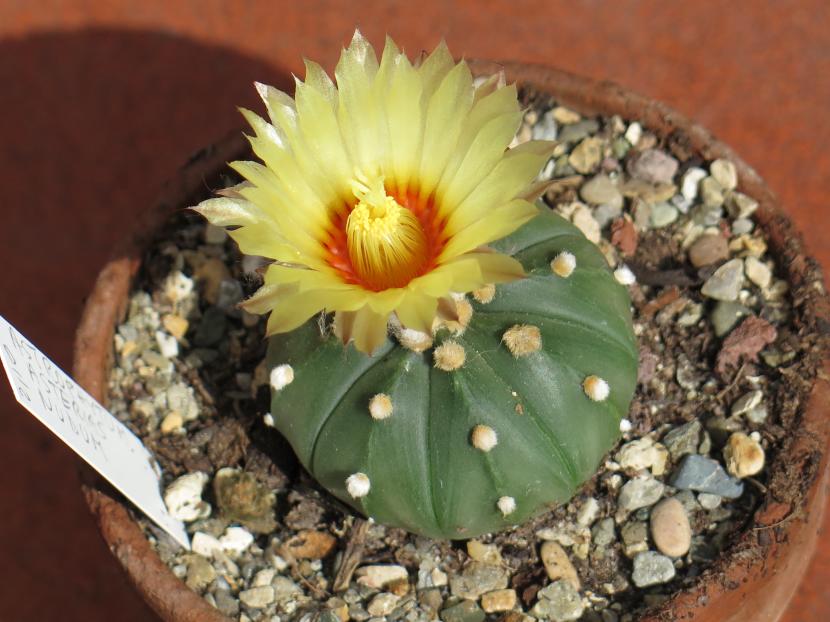
Astrophytum asterias 'Nudum'
It is native to Mexico, specifically Tamaulipas and Nuevo León, as well as the Rio Grande Valley in Texas (USA). Its stem takes the form of a flattened sphere, with a maximum height of 5 centimeters and a diameter of 10 centimeters . It has no thorns, but it does have very pretty yellow flowers up to 6,5 cm in diameter.
Astrophytum capricorne
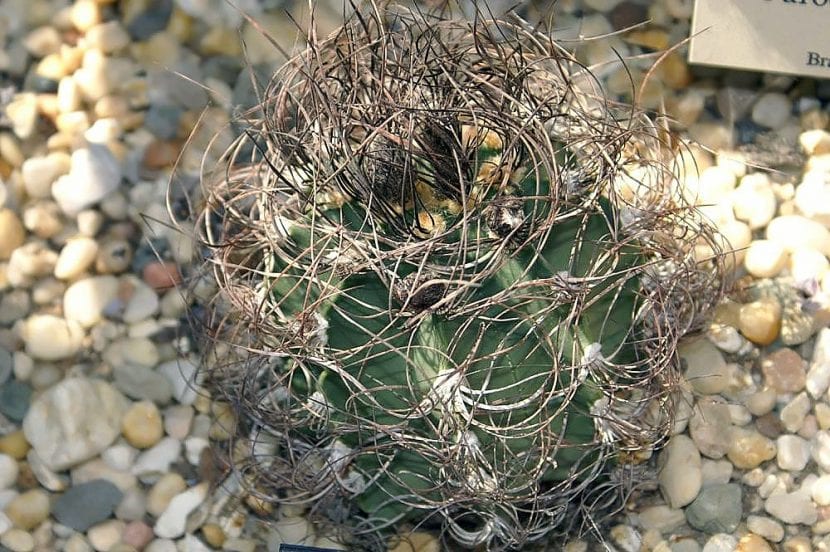
Image - Wikimedia / David J. Stang
It is a globose cactus native to Mexico, reaching a height of 10-15 cm and a diameter of up to 20 cm . Its stem is composed of 7-8 very visible ribs from which long, curved spines sprout. The flowers are yellowish and large, measuring 6 cm in diameter.
Astrophytum caput-medusae
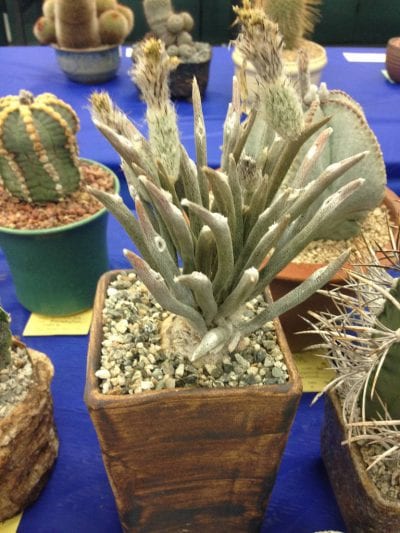
Image - Flickr / Reggie1
It is endemic to Nuevo León, Mexico. It is a very peculiar species, as its stem closely resembles the appearance of a jellyfish, with 3 to 8 cylindrical ribs that look like the animal's "legs." It is armed with spines up to 3 mm long, and its bright yellow flowers are up to 5,3 cm in diameter.
Astrophytum myriostigma
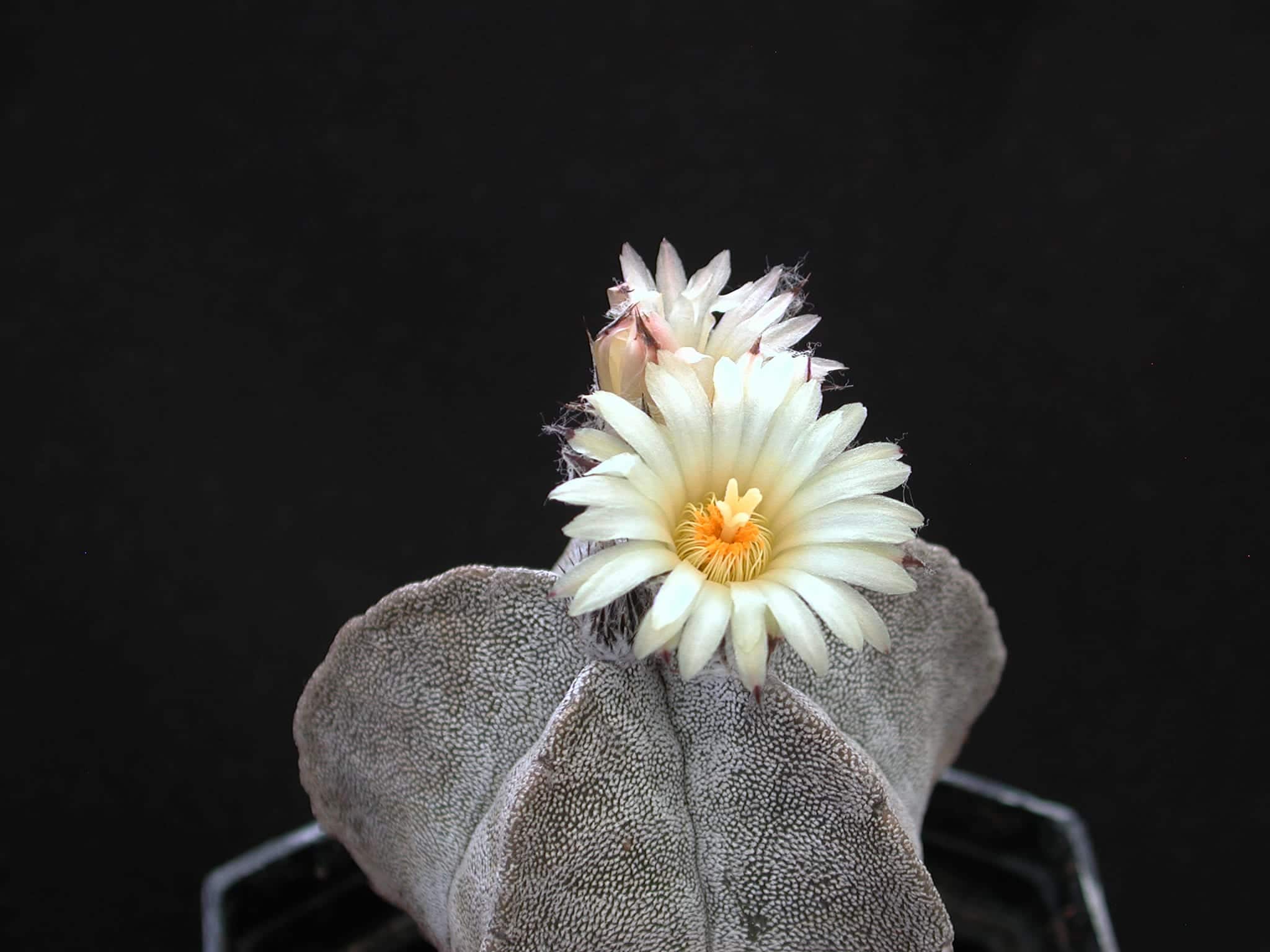
This cactus is endemic to Coahuila and Durante, Mexico. Its stem is almost square, with eight ribs from which small spines sprout. Over time, it can reach a height of up to 1 meter and a diameter of 20-30 centimeters . The flowers are yellow or, rarely, white, and 5-6 centimeters in diameter.
Astrophytum ornatum
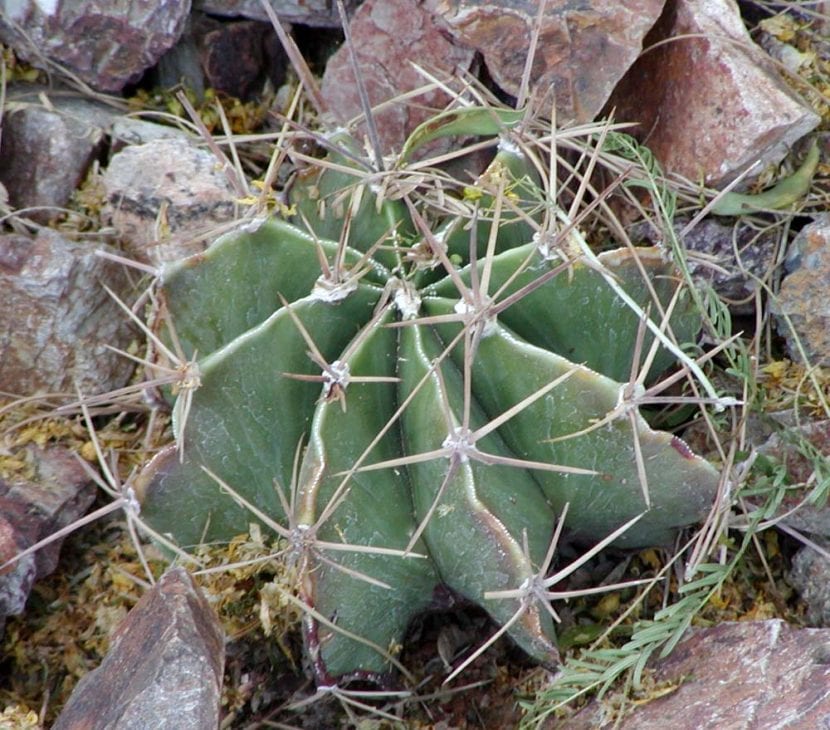
Image - Wikimedia / Stan Shebs
It is endemic to Querétaro and Hidalgo, Mexico. When young, it has a globose stem, but as it grows it takes on a columnar shape up to 1,2 meters tall and about 20-30 cm in diameter . It has a central spine and 5-10 pale yellow radial spines. The flowers are yellow.
What are their cares?
If you want to have a specimen of star cactus, I recommend you take care of it as follows:
Location
This plant needs to be outdoors in full sun . If it has been grown in partial shade, you will need to gradually acclimate it, starting in autumn or late winter when the sunlight is less intense.
Earth
- Flower pot: you can use universal growing medium mixed with perlite in equal parts. Another option is to mix black peat with river sand -washed previously- and pumice in equal parts.
- Garden: grows in soils with very good drainage, slightly alkaline. If the one you have is not like that, dig a hole of about 40 x 40cm, and mix the soil with 50% perlite.
Irrigation
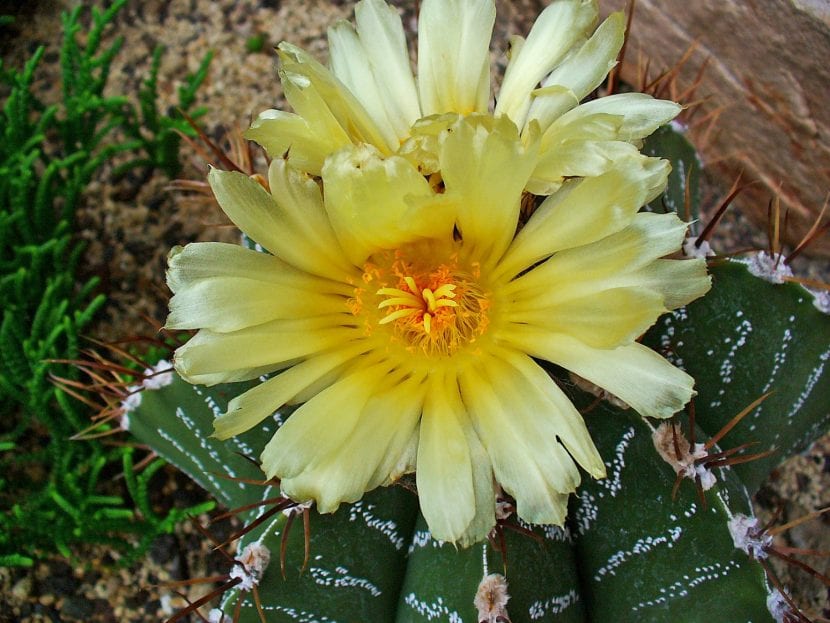
Image - Wikimedia / H. Zell
In general, watering should be rather infrequent . It doesn't tolerate waterlogging at all, and in fact, its roots usually rot quickly in excessively humid conditions. So, to avoid problems, I recommend you do the following:
- If it is potted:
- Weigh it once watered and again after a few days. You will notice that wet soil weighs more than dry soil, therefore, this difference in weight will serve as a guide.
- Use a digital humidity meter: it is not very reliable to say, but it is also a good guide if you introduce it closer to the cactus and again further away.
- If you are in the garden: insert a long, thin stick (about 40cm) of wood almost to the bottom. If when you remove it you see that it has come out with a lot of adhering soil, do not water.
And what is there to do in winter? Well, in that season you have to water once a month, since not growing does not need much water.
Important : Every time you water, do not wet the cactus, only the soil, otherwise it will rot.
Subscriber
In spring and summer it is recommended to fertilize the Astrophytum with cactus fertilizers, following the instructions specified on the product packaging.
Multiplication
It is multiplied by seeds in spring-summer , following these steps:
- First, you must fill a pot with universal growing substrate mixed with 50% perlite, and water.
- Then sow the seeds on the surface, being careful not to get clumped together.
- Then cover them with a thin layer of previously washed river sand, or pumice.
- Finally, place the seedbed near a heat source, in a bright area.
Thus, they will germinate in 3-7 days.
Plagues and diseases
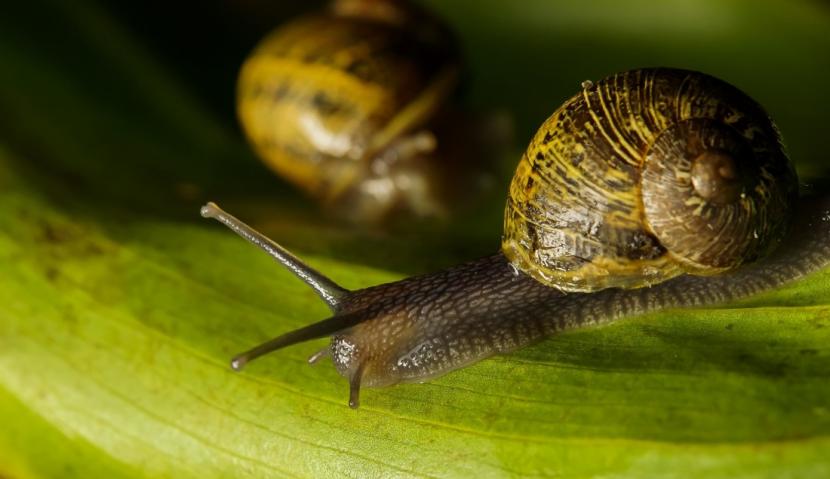
It's quite hardy. The only thing is that you have to keep an eye on mollusks (snails and slugs) and mealybugs , but since it's a relatively small cactus, it's good to remove any pests it has, by hand, with molluscicides (be careful if you have pets) or other home remedies such as protecting it with mosquito netting.
Regarding diseases, overwatering can cause fungal problems. To prevent this, carefully control watering and, if desired, apply preventative treatments with copper or sulfur in spring and autumn.
Rusticity
From experience I can tell you that it withstands light frosts down to -1,5ºC without suffering damage; so it is likely to withstand down to -2ºC.

What did you think of them?
Table of Contents