

Image - Flickr / Skolnik Co
Caralluma is a genus of succulent plants that can easily be grown in a pot. When fully grown, they only reach a maximum height of ninety centimeters. Furthermore, although their flowers are small, they have a very high ornamental value.
The maintenance required is simple ; in fact, it's so simple that you can keep it indoors, which is recommended if your area has a cold winter.
What is Caralluma?
This is a type of non-cactus succulent plant that grows primarily in Africa, although it is also found in Europe, Asia, and Arabia. It has fleshy, thin stems, generally green or bluish-green, that reach a minimum height of 10 centimeters and a maximum of 90 centimeters . It may have leaves, but they are very small, between 0,1 and 0,5 centimeters, so it is not surprising that they go unnoticed, as they are nothing more than scales.
As for the flowers, they are simple, purple or dark lilac in color, and are grouped in inflorescences which sprout at the top of the stems. Those of some species have a bad smell.
What are the most cultivated species?
The genus comprises about 120 species, but the truth is that of these, only five are popular:
Caralluma burchardii
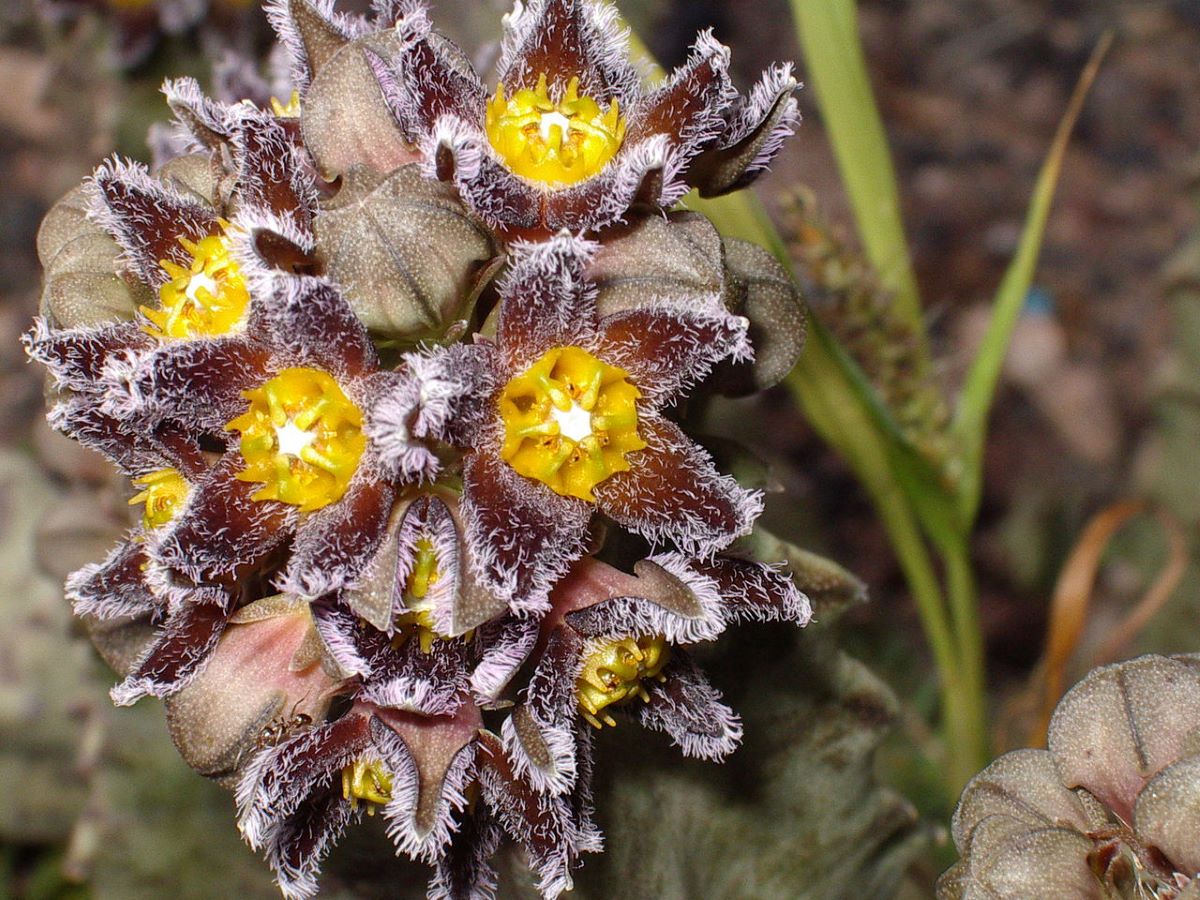
Image - Wikimedia / Juanillo1976
It is known as the wolf prickly pear and is endemic to the Canary Islands. It reaches a height of about 50-60 centimeters, and has purplish-brown flowers covered in white hairs.
Caralluma europaea
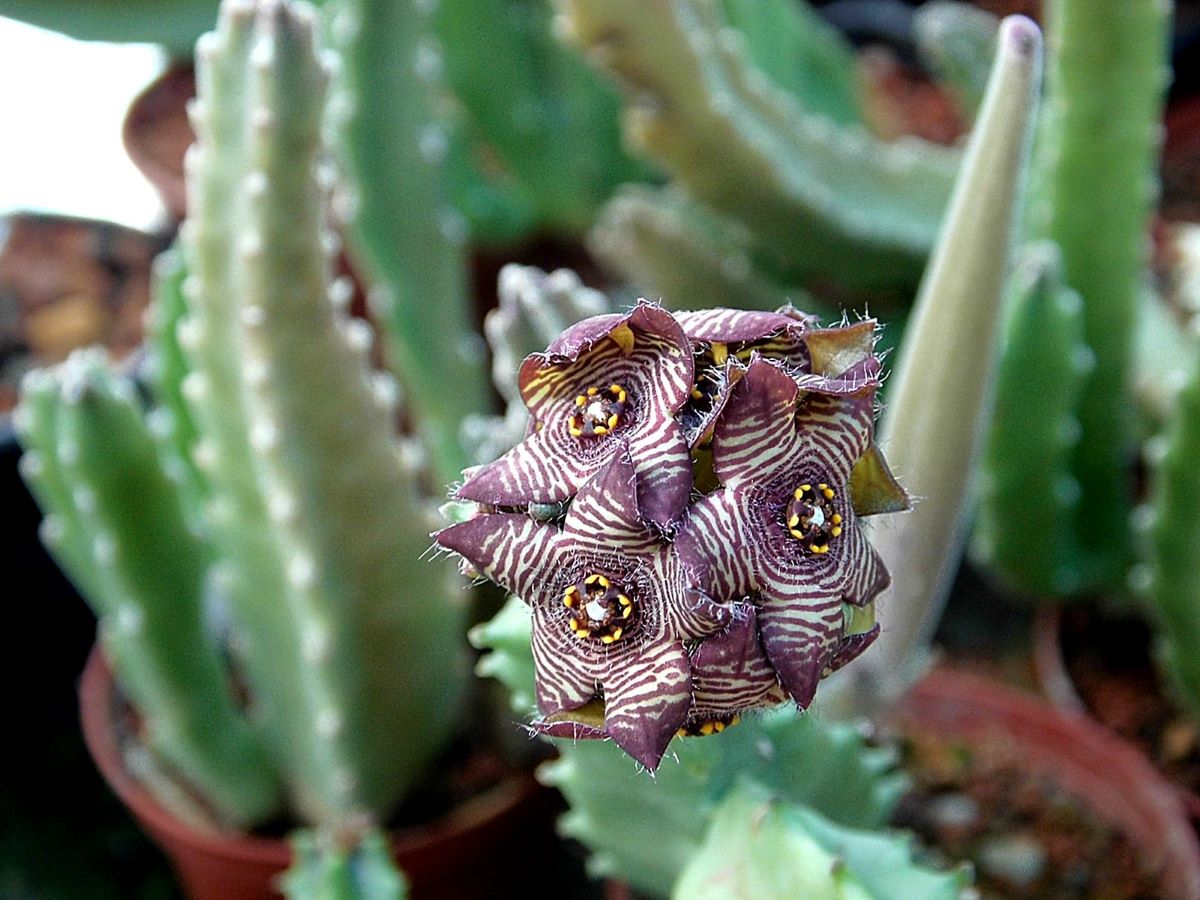
Image - Flickr / Skolnik Co
Known as mountain prickly pear or wolf's prickly pear, it is a succulent native to Spain (Murcia and Almería), North Africa, and southern Sicily. It has fleshy, green stems that grow to about 30 centimeters tall, as well as red flowers whose aroma attracts flies.
caralluma fimbriata
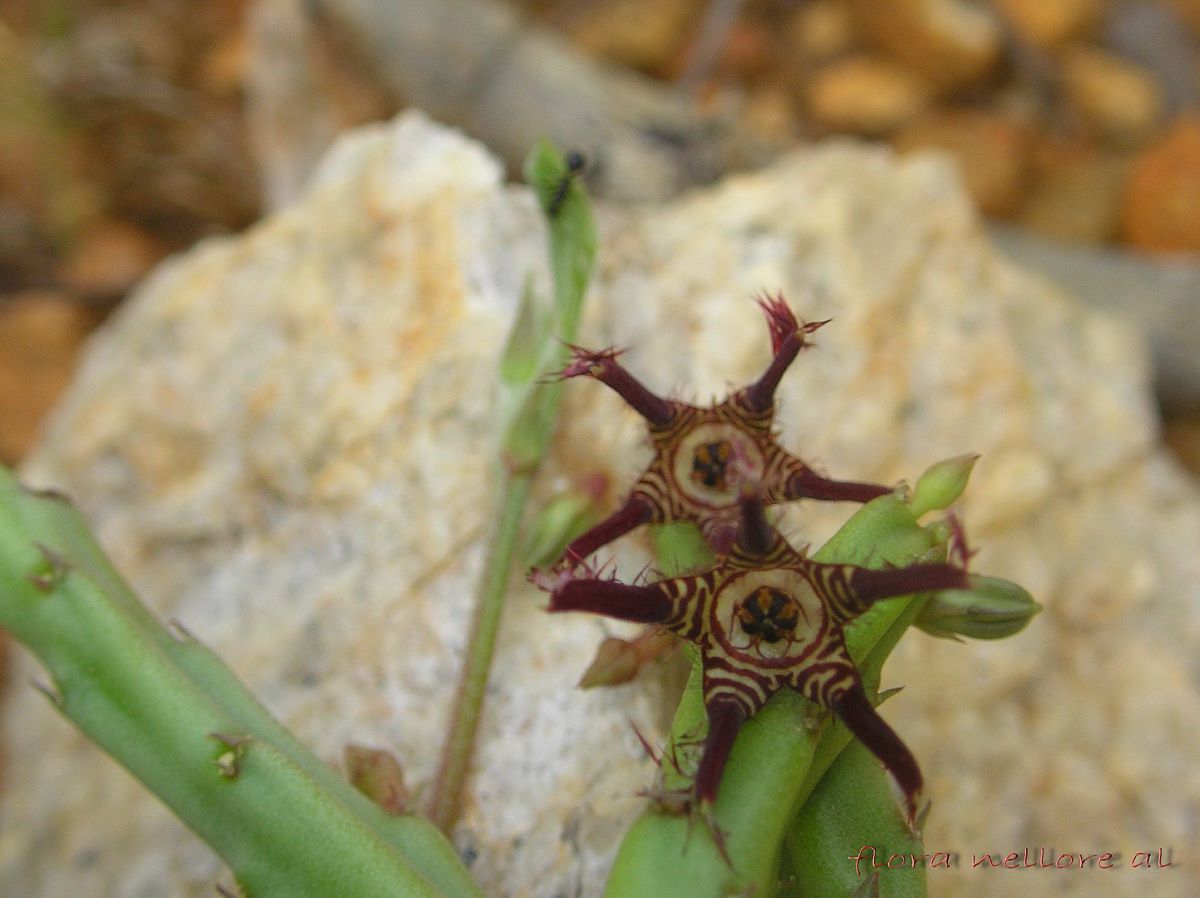
Image - Wikimedia / Lalithamba
It is a plant native to India that reaches a height of approximately 60 centimeters. Its flowers are red with yellow lines . It is also an edible plant. It is used for weight loss, as it is believed to "trick" the brain into thinking it is full, but there is no scientific study to support this claim.
Caralluma hesperidium

Image - Wikimedia / yakovlev.alexey
The caraluma is a plant native to Morocco that reaches a height of 20 centimeters. It produces green stems with reddish/brown spots, and velvety, dark brown flowers with a yellowish center.
Specious cararalluma

Image - Flickr / Rafael Medina
It is a plant that grows in Africa, forming clumps that can exceed one meter in width. It reaches a height of 90 centimeters and has purple flowers with a yellow-orange center, which form an inflorescence about 8 centimeters in diameter.
How do you take care of yourself?
Carallumas are small succulents, which can be in pots, either alone or with other small succulents. So why not have some copies? Next we will explain how to take care of them:
Location
These plants need light, so you'll have to place them either outdoors or in a very bright room . If you keep them indoors, avoid placing them near a window, as this will create a magnifying effect and cause them to burn.
Soil or substrate
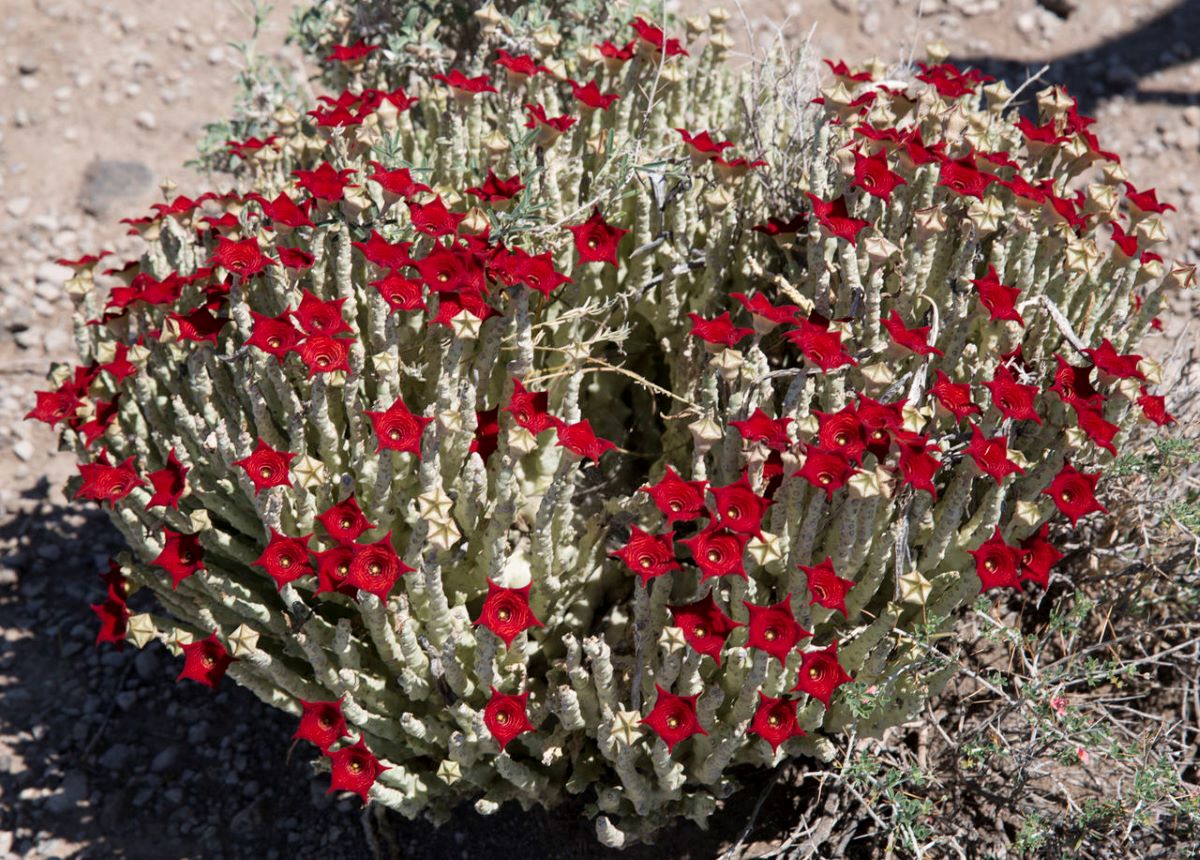
Image – Wikimedia/Ninaras // Caralluma socotrana
- Flower pot: it is important that the substrate that we put on the carallumas is light, porous, and of good quality. They are plants whose roots rot quickly when the soil is compact and heavy. For this reason, to avoid this we recommend making this mixture, for example: black peat with perlite in equal parts. Another option would be to put soil for cacti and succulents (for sale here).
- Earth: in the same way, if we are going to plant them in the garden soil, it is important that the earth does not get flooded when we water, or that it absorbs the water quickly. Now, as our protagonists are small plants, even if we have poor quality soil, we can make a 50 x 50-centimeter hole, cover its sides except the base with shading mesh or anti-rhizome cloth, and then fill it first with a layer. about 20 centimeters of volcanic clay or claystone (for sale here), and then with a mixture of black peat with 50% perlite.
Irrigation
Water when the soil is dry . Generally, water about twice a week during the summer if it's not raining, and once a week the rest of the year. However, when watering, avoid wetting the stems; in fact, this should only be done when they are not in direct sunlight, and only if the ambient humidity is low.
Whenever possible, it is best to use clean rainwater, although as not all of us can get it, one that is suitable for human consumption will do.
Subscriber
In spring and summer you can fertilize with a special fertilizer for succulents (available here ), always following the instructions for use found on the product packaging.
Multiplication
Caralluma plants are propagated by stem cuttings throughout spring and summer . To do this, cut a piece from the base and plant it in a pot filled with succulent potting mix. Place it in partial shade and water it whenever the soil appears dry. It will then develop its own roots in about two weeks.
Another option is to sow the seeds in spring , for example in a pot with seed-starting mix. Place them on the surface of the potting mix, which you will have watered beforehand, and then cover them with a thin layer of soil. If all goes well, they will germinate in about 5-10 days.
Pests
They are vulnerable to snail and slug attacks . Since they are succulent plants, these animals love them, so repellents (like this one ) should be used during the rainy season. Likewise, mealybugs can attack them in summer , but these are easily eliminated with diatomaceous earth (available here ) or even by cleaning the plant with soap and water.
Rusticity
They are sensitive to frost . C. europaea can withstand temperatures down to -1ºC, but they should not be kept outdoors if the winter is cold, as they would not survive it.

Image - Wikimedia / Skolnik Collection
What did you think of the Caralluma?
Table of Contents