

Few cacti are as popular as the Carnegiea gigantea . Much better known as the Saguaro, it is a very slow-growing species with the ability to amaze anyone who sees it in its natural habitat: the Sonoran Desert.
It's not easy to find it for sale in nurseries, and when you finally get lucky, the price can be quite shocking. It can cost up to 1 euro per centimeter. Growing such a beauty requires a great deal of patience . To give you an idea of how much you need, it takes 30 years to reach a meter in height. Incredible, isn't it?
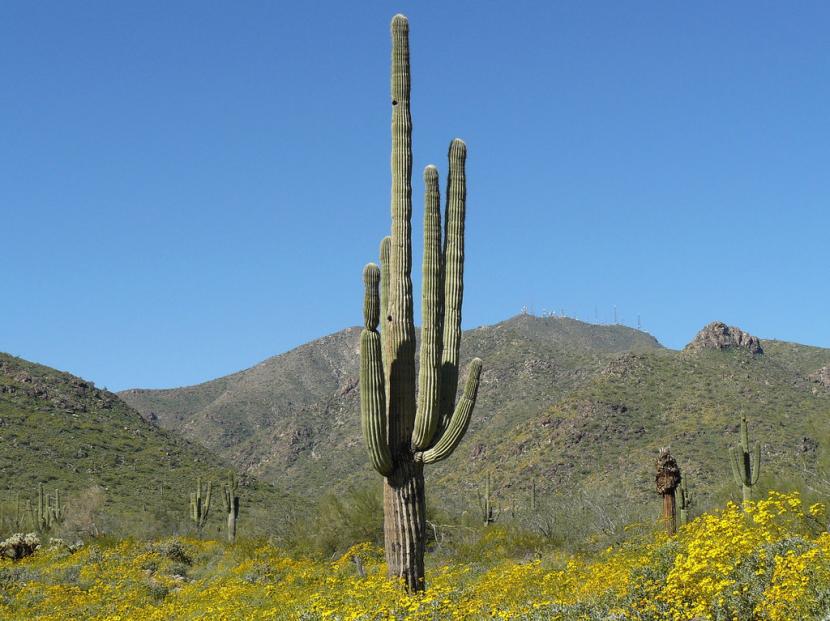
Carnegiea gigantea is the scientific name given to the tallest columnar cactus in the Sonoran Desert, and probably in the world. The species was described by Britton & Rose and published in Kakteenkunde in 1937, and since then it has become very popular among cactus enthusiasts.
It has a columnar stem that can easily reach 12 meters or more in height, with a diameter of 65 cm . It typically has up to 7 branches, but it is not uncommon to find it as a single stem. This stem is composed of 12 to 24 ribs, which are well-armed with spines; the radial ribs are 12 cm long, and the central ribs are between 3 and 6 cm long. These spines are brown, but turn white as the plant ages. It has a lifespan of approximately 300 years.
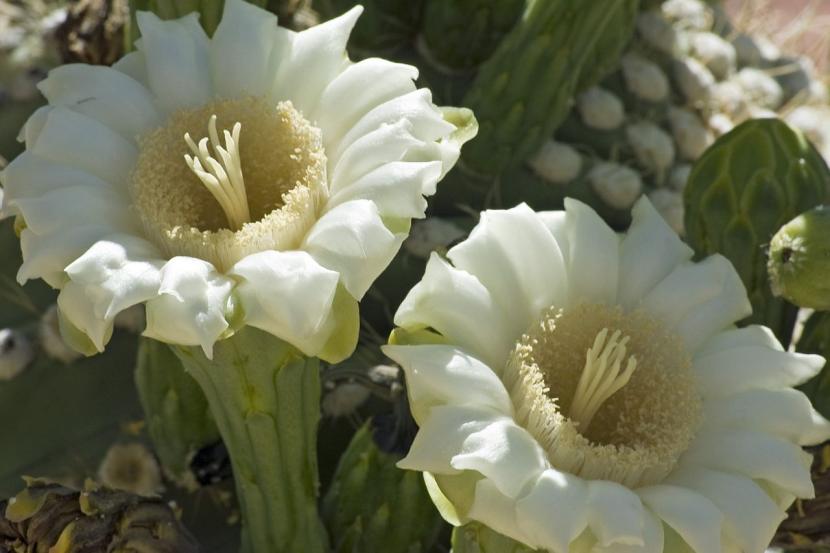
Mature specimens bloom from spring until early summer. Their large, white flowers are nocturnal , opening at sunset and closing at dawn. Bats pollinate them, resulting in the formation of a red, edible fruit that ripens at the end of summer.
In cultivation, the saguaro cactus needs a well-draining substrate (like pumice), plenty of sunlight, and, above all, infrequent watering to thrive . The substrate should be allowed to dry out completely before watering, otherwise it will quickly rot. Fertilize it during spring and summer with cactus fertilizer, following the instructions on the packaging.
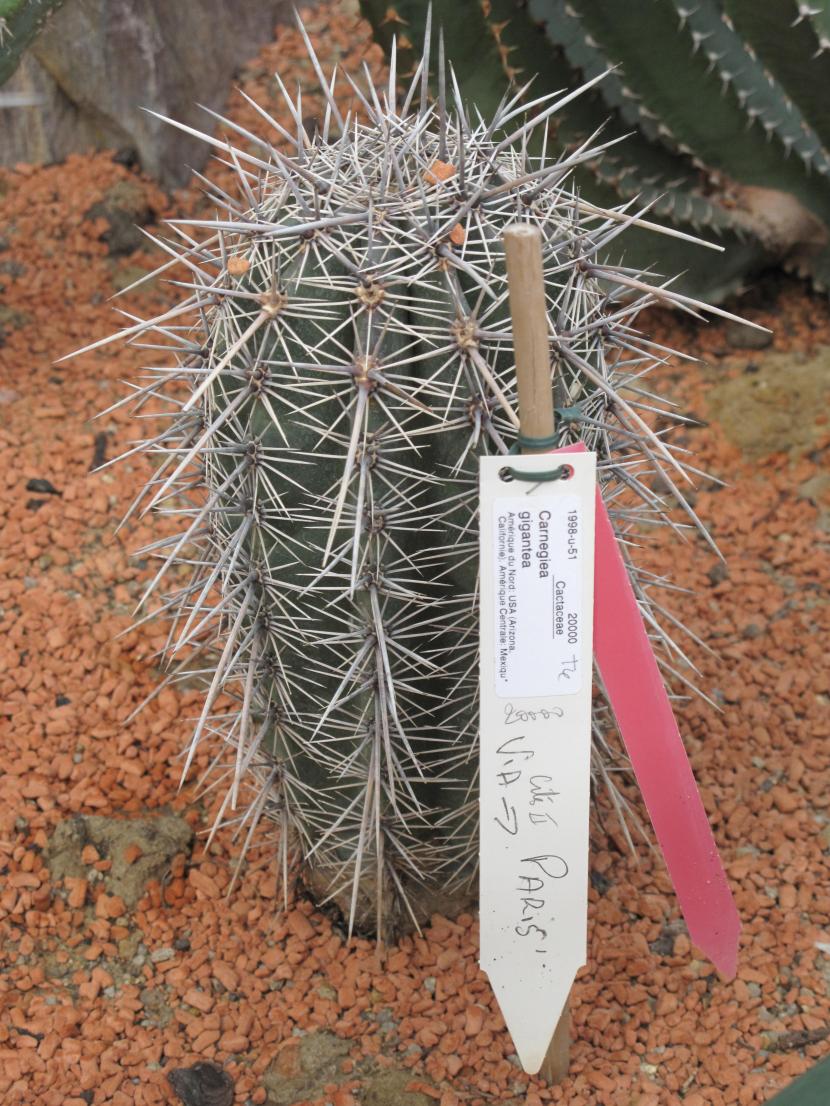
We shouldn't have to worry about the cold, as it withstands frosts down to -9ºC once acclimatized. However, if it's young, it's best to protect it from frost and especially from hail.