

Image - Wikimedia / Gonzalodutto
The Echinopsis chamaecereus is the quintessential cactus that looks fantastic in pots that are wider than they are tall, especially when placed outdoors. It doesn't grow very tall, but its stems can reach several centimeters in length. However, its flowers are undoubtedly the most appealing feature of this species, as they are large and a beautiful shade of red.
Furthermore, it's a cactus that won't require much care. In fact, it can go several days without a single drop of water , and it's not afraid of the cold either.
Origin and characteristics of Echinopsis chamacereus
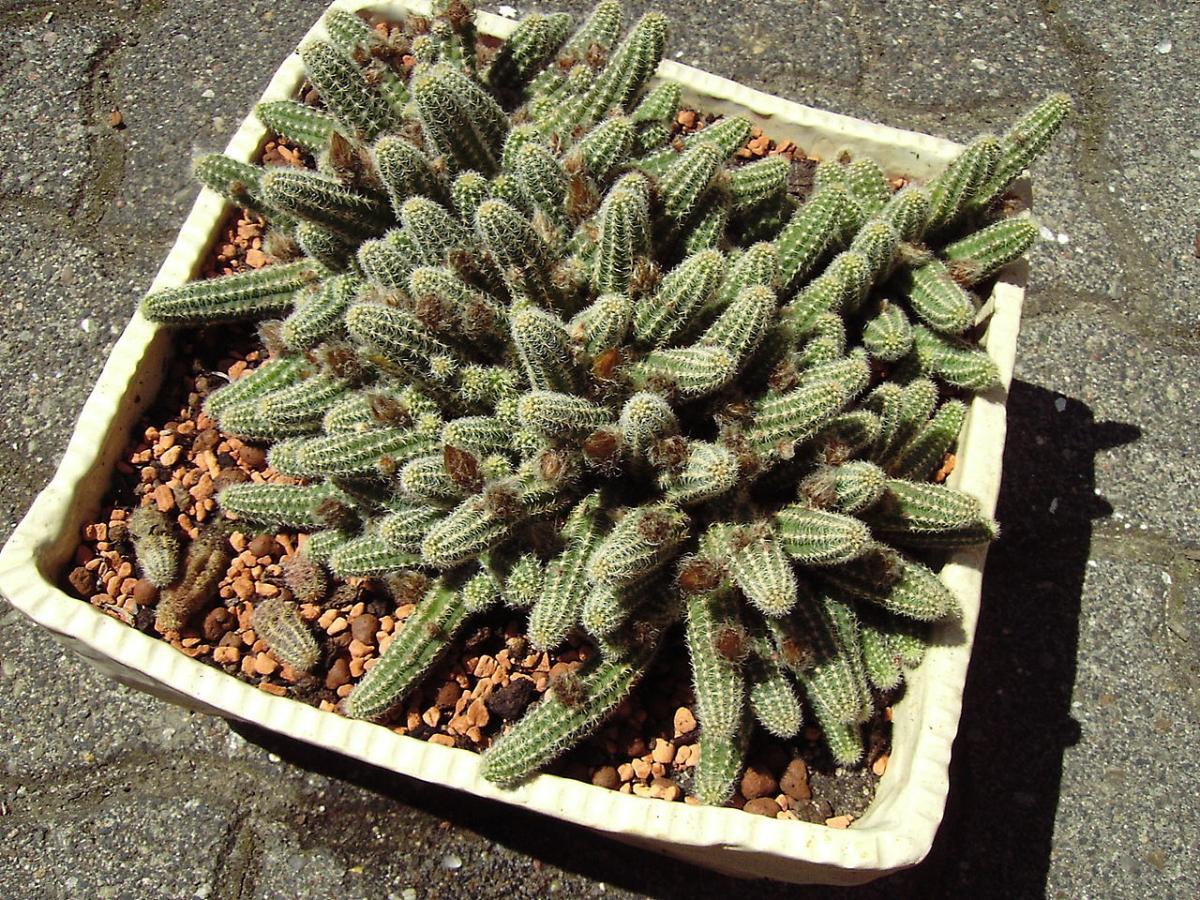
Image - Wikimedia / Dieter Weber
This species grows wild in Argentina, specifically in Tucumán. It develops multiple greenish, cylindrical stems that emerge from its base. These stems have 8 to 10 ribs with whitish areoles. From these areoles emerge 10-15 very short, white spines, barely 1,5 millimeters long.
The flowers are red and measure about 4 centimeters in diameter . The fruit is reddish, about 7 millimeters long, and contains numerous small black seeds.
Regarding the overall height of this cactus, it typically doesn't exceed 20 centimeters , but because it has a trailing or hanging habit, the stems can reach up to 50 centimeters in length. Therefore, for optimal display, it's advisable to cultivate it in wide, shallow pots or in rock gardens.
What are the care it requires?
If you want to grow an Echinopsis chamaecereus , you should know that it's a very easy plant to care for and propagate. In fact, once it's grown large enough, you could even give cuttings to your loved ones, as they're sure to root without any problems.
But in the meantime, we are going to see everything that needs to be done so that it is well and can flourish every year:
Location
This is a cactus that can be in full sun (which would be ideal, as long as it gets used to it little by little so that it doesn't get burned), or in an area where there is plenty of light.
Growing it indoors is not recommended, as it would have development problems caused by the lack of light, unless you buy a lamp that stimulates its growth, like this one they sell here for example.
Soil or substrate
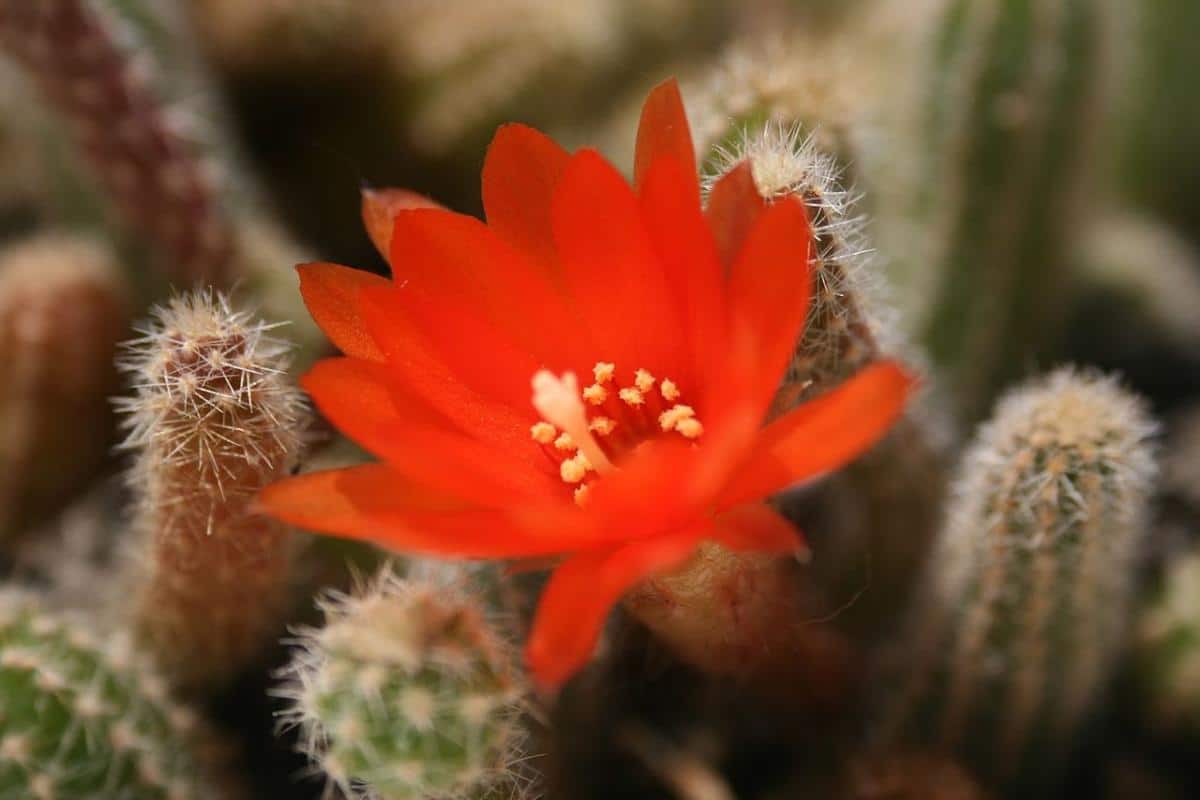
Image - Wikimedia / Sadambio
- Garden: The Echinopsis chamacereus It is a plant to be planted in light, well-drained soil. It can be on stony soils without problems.
- Flower pot: If you are going to have it in a container, it is advisable to use specific substrates for cacti, or to mix peat with perlite in equal parts.
Irrigation
Watering should generally be infrequent. This plant tolerates drought much better than overwatering, so it should only be watered when absolutely necessary. Therefore, it's best to water it only when the soil is completely dry.
If in doubt, you can check the humidity with a meter or by inserting a wooden stick. If you opt for this last option, when you extract it from the earth and you see that it has a lot of adherent earth, it will mean that the soil still has a lot of water and that, therefore, you have to wait a few days before re-moistening it.
Subscriber
When buying a cactus, subscribing is usually the most frequently forgotten task. Of course, reasons are not lacking: as they are plants mainly native to arid regions, it is easy to fall into the error that they do not need nutrients. In their places of origin there is very little decomposing matter, why do they have to be fertilized?
The truth is that fertilization is very important, especially when they are kept in pots, since the amount of soil and therefore the availability of nutrients is very limited . Echinopsis chamaecereus can live with little "food," but not without it. So don't hesitate to fertilize it with a liquid fertilizer (available here ) in spring and summer.
In this way, you will see how, in addition to growing in conditions and at a good pace, it will flower every year without effort.
Multiplication
The quickest way to obtain new plants is by propagating them from stem cuttings in spring . These should be cut with disinfected scissors, and then the cut end left to dry for about 7 days in a dry, protected place.
Once that time has passed, plant them in small pots, about 6,5 or 8,5 centimeters in diameter, with cactus soil (available here ). Finally, place them outdoors in partial shade and water them.
Another option is to propagate it from seed , also in spring. Sow the seeds in wide pots with a 50/50 mix of peat and perlite. Place the seed tray in partial shade and keep the soil moist. They will germinate in about ten days.
Transplant
Echinopsis chamaecereus should be repotted in spring . If it's in a pot, plant it in a larger one approximately every 3-4 years.
Rusticity

Image - Wikimedia / Le.Loup.Gris
It tolerates cold and light frosts. According to some sources, such as the English website Llifle, it can withstand temperatures down to -8ºC, but we don't recommend keeping it outdoors at those temperatures as it is very prone to rotting. In Mediterranean or warm climates, where there are no frosts or only down to -2ºC, it survives outdoors without problems.
What did you think of this cactus?
Table of Contents