

Image - Wikimedia / Cristóbal Alvarado Minic
Cacti of the genus Epiphyllum are characterized by many things, but above all by their magnificent flowers. These are large, usually white, and have a very limited lifespan.
These are fast-growing plants, ideal for growing in a large pot or on a tree trunk. However, they do have one drawback: they don't tolerate cold weather very well. But even that can be easily remedied by bringing them indoors.
Origin and characteristics of the Epiphyllum
Epiphyllum are epiphytic cacti native to Central America, commonly known as orchid cacti or night-blooming jasmine. The genus comprises about 19 species, all popularly called orchid cacti. They develop long, almost flat stems 1 to 5 centimeters wide and 3 to 5 millimeters thick.
Its flowers measure between 8 and 20 centimeters in diameter . They open at night and can be white or red. The fruit is edible but only about 4 centimeters long. It contains numerous small, blackish seeds.
Main species
Of the almost twenty species of Epiphyllum that have been described, the reality is that only a few have commercial interest, and they are:
Epiphyllum anguliger

Image - Wikimedia / Zapyon
Epiphyllum anguliger is a species endemic to Mexico, with highly branched and lobed stems. Each stem segment measures approximately 30 centimeters long by 3-5 centimeters wide. Its flowers are 6-7 centimeters across and are yellow, green, or pink . The fruit is ovoid, green, yellowish, or brown, and measures 3-4 centimeters.
Epiphyllum crenatum
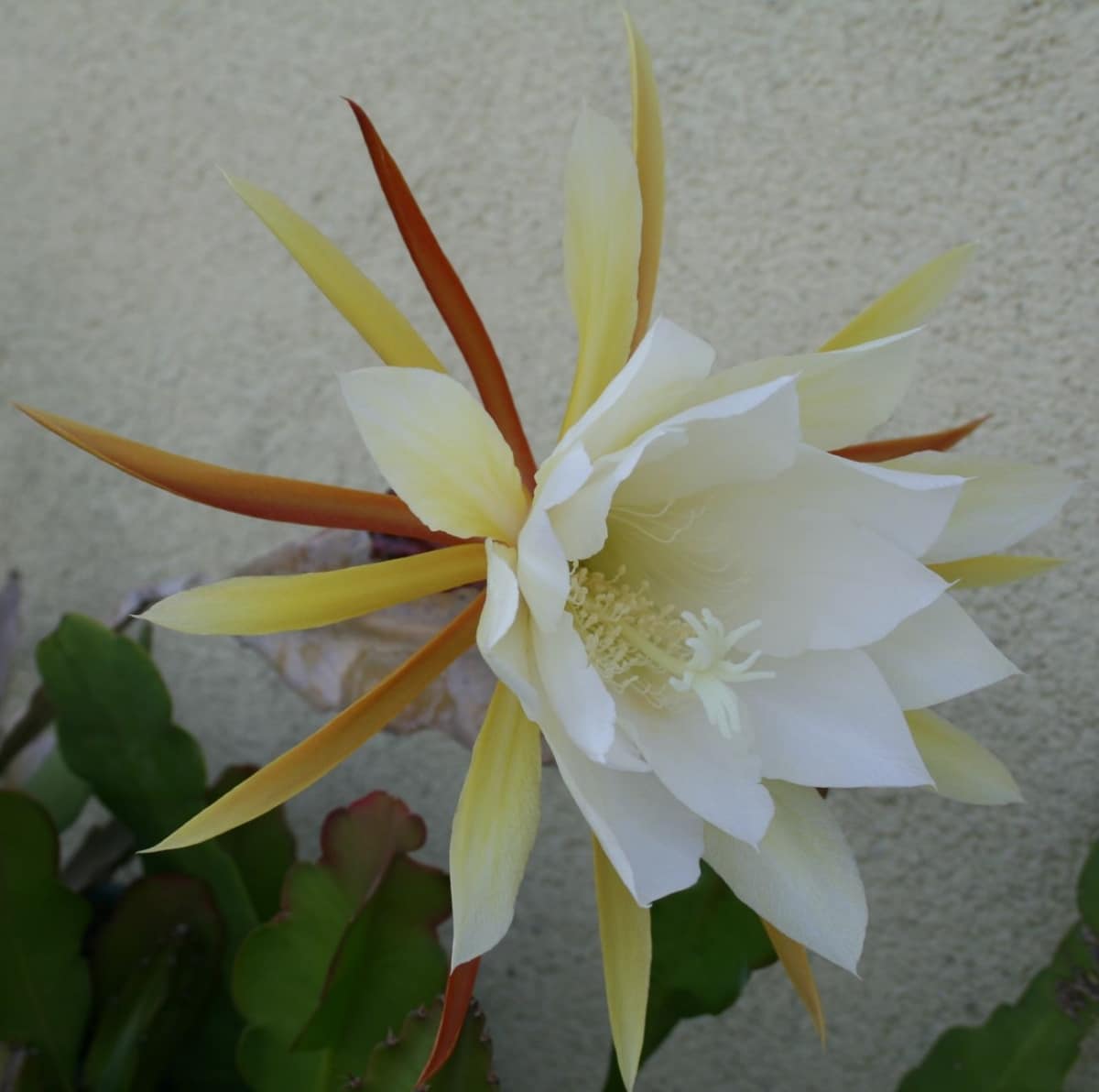
Image - Wikimedia / Sadambio
Epiphyllum crenatum is the species from which the vast majority, if not all, of commercially available Epiphyllum hybrids are derived. Its stems are flat and measure up to 60 centimeters long by 6-10 centimeters wide. The flowers are white and large, measuring 15-20 centimeters in diameter.
Epiphyllum oxypetalum
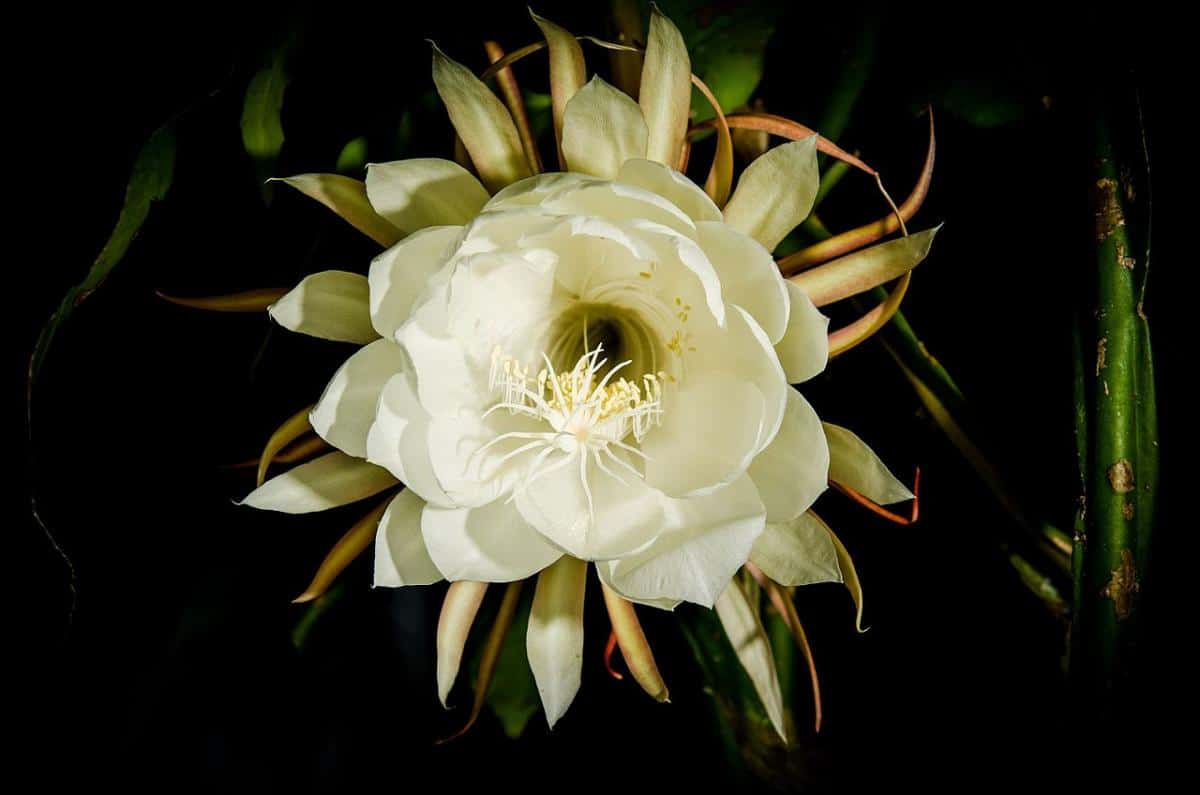
Image - Wikimedia / Alastair Woods Photography
Epiphyllum oxypetalum is a species native to Central America, with stems about 40 centimeters long and 1-10 centimeters wide. It produces fragrant white flowers up to 25 centimeters in diameter, and ovoid red fruits.
Epiphyllum pumilum
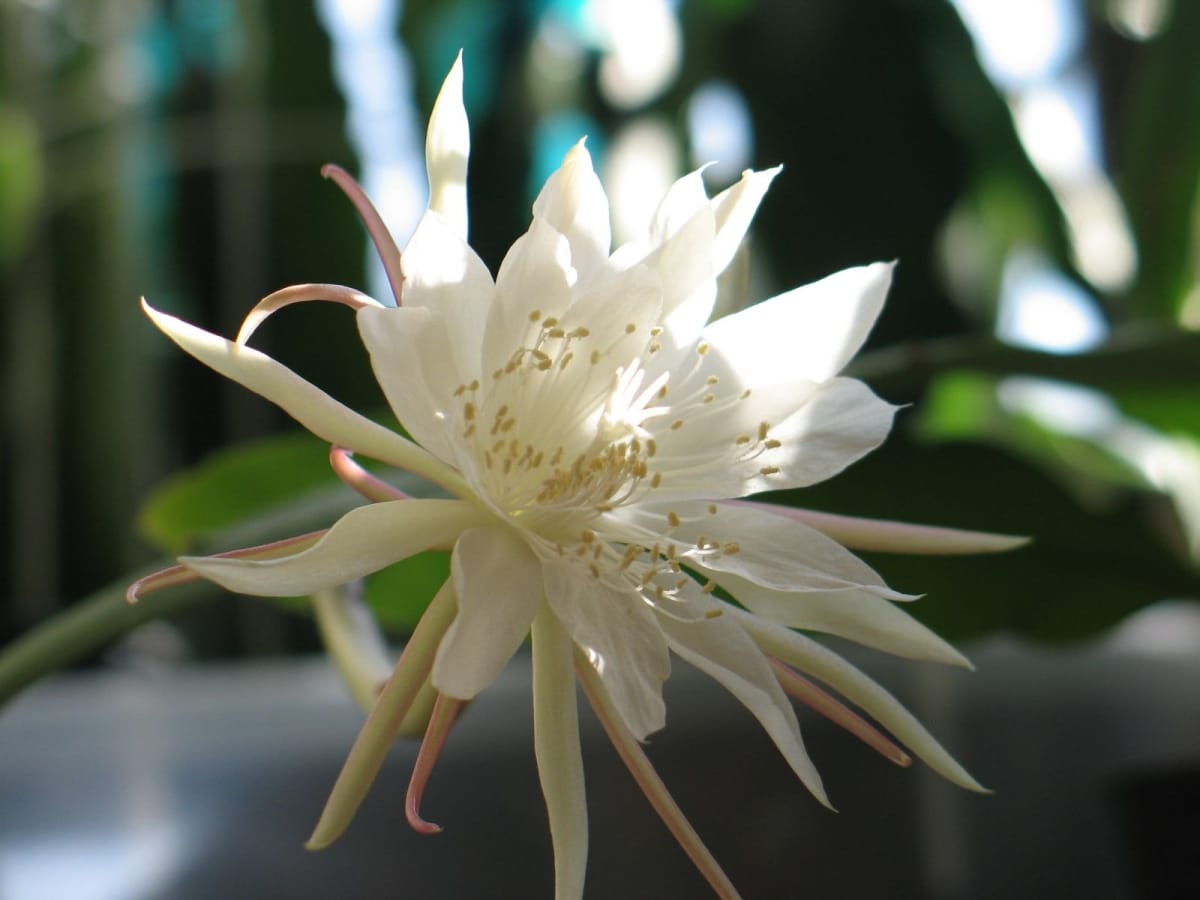
Image - Flickr / epiforums
Epiphyllum pumilum is a species native to Mexico, Belize, and Guatemala. It develops a primary stem up to 150 centimeters long, and secondary stems between 10 and 60 centimeters long. The flowers are 10 to 15 centimeters in diameter, white, and fragrant . The fruit is about 2,5 centimeters thick.
What are the care that must be given to them?
The Epiphyllum are cacti that grow well in places where there is a lot of natural light, and where they are protected from low temperatures. As they are tropical plants, it is important to avoid exposing them to cold and, above all, to frost.
In any case, below we tell you what are the basic care that we recommend providing them:
Location
Epiphyllums need to be in a bright area, but not in direct sunlight . The best plants are those in partial shade and those that receive filtered light.
Earth
- Flower pot: it has to be filled with substrate for cacti, or else make a mixture with peat and perlite (for sale here) with a little worm castings in equal parts.
- Garden: the soil must be light, and it must also have good drainage. There is no worse for Epiphyllum than growing on compact soils, since in them the roots cannot breathe normally.
Irrigation
They should be watered an average of twice a week in summer, and once or twice a week the rest of the year . It is advisable to use rainwater whenever possible, but if you live in an area with little rainfall, you can use any soft water.
Anyway, when you water you don't have to wet the cactus, only the soil. That is, you have to water from above, and not below or by immersion. It should only be watered from below if the soil is very, very dry, and you see that when you pour water into it, it is not absorbed.
Subscriber

Image - Wikimedia / Jim Evans
Epiphyllum should be fertilized from March/April to September/October in the Northern Hemisphere , coinciding with spring and summer. Fertilization could even continue until November in areas where frosts are possible but are light and late (January/February), such as in the Mediterranean region.
What to use for fertilizer? Well, since the fruits are edible, we recommend using fertilizers authorized for organic farming, and these are: manure, guano, worm humus (available for sale here ),… and any other that comes from animals and/or plants, such as seaweed extract (although if you are going to use this, do so in moderation as it is very alkaline).
Multiplication
These plants multiply by cuttings and by seeds in spring:
- Cuttings: the desired stem segments are cut and planted in individual pots with cactus soil. To get them to root faster it is possible to impregnate the base with rooting hormones, but they are not really necessary. They will have their first roots after approximately 14 days.
- Seeds: the seeds are sown in pots with soil for cacti (for sale here), and are left in a bright place, near a heat source. They will germinate in about ten days.
Rusticity
They are sensitive to cold. The minimum temperature they can withstand is 5ºC.
What do you think of the Epiphyllum?
Table of Contents