

Image - Wikimedia / Wer? Du ?!
Cacti of the genus Eriosyce are among the most special. Their growth rate is slow, but that doesn't stop them from being highly prized by cactus enthusiasts. Of course, this makes it quite easy: many species remain small, and most, if not all, produce beautiful flowers.
The genus comprises about 35 species that live in the arid regions of southern Peru, northern Chile, and west-central Argentina. Over the years, their names have changed, but their physical characteristics have remained the same. So, let's see what these plants look like and what care they require.
Origin and characteristics of the Eriosyce
Eriosyce cacti grow in South America, especially in Chile , which is why collectors often classify them as 'Chilean cacti'. This group includes the species found in that country, which tend to be very slow-growing because the conditions in which they live are quite extreme; so much so that preventing water loss is more important than growth. Therefore, in cultivation, they may give the impression that they haven't grown at all in years.
Furthermore, their roots don't find many nutrients in the soil, as these plants are found in deserts and surrounding areas, and in rocky or sandy terrain. To survive, they have evolved to develop a very thick, conical taproot, which is responsible for storing water and nutrients that will keep the plant alive during times of scarcity. Even so, their globular bodies, often armed with numerous spines, can reach a height of up to 1 meter; although most do not exceed 50 centimeters.
Another very interesting characteristic is its ability to flower at an early age. However, we don't want to raise your hopes unnecessarily: for an Eriosyce, "early age" means from 4, 5, or 6 years old. And this will depend greatly on the species as well as the conditions in which it lives: those that are larger as adults will take longer to produce their first flowers. These appear on the upper part of the body and can be yellow, orange, or pink.
Main species of Eriosyce
The most popular Eriosyce species are:
Eriosyce aurata
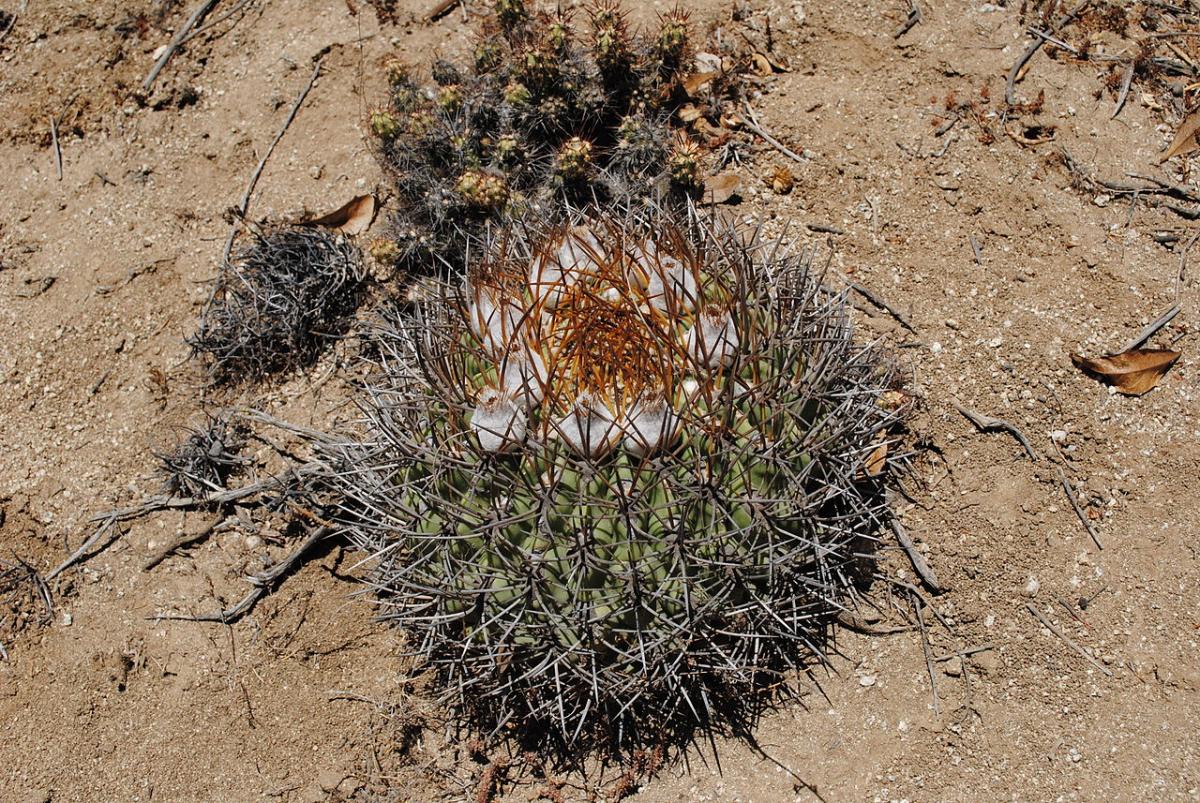
Image - Wikimedia / Wer? Du ?!
It is endemic to Chile, where it is known as sandillon or asiento de la suegra (not to be confused with Echinocactus grusonii , a species that also goes by that common name). Its body is spherical, although over time it becomes columnar, reaching up to 1 meter in height . Its spines are amber, bright yellow, or black.
emerald eriosyce
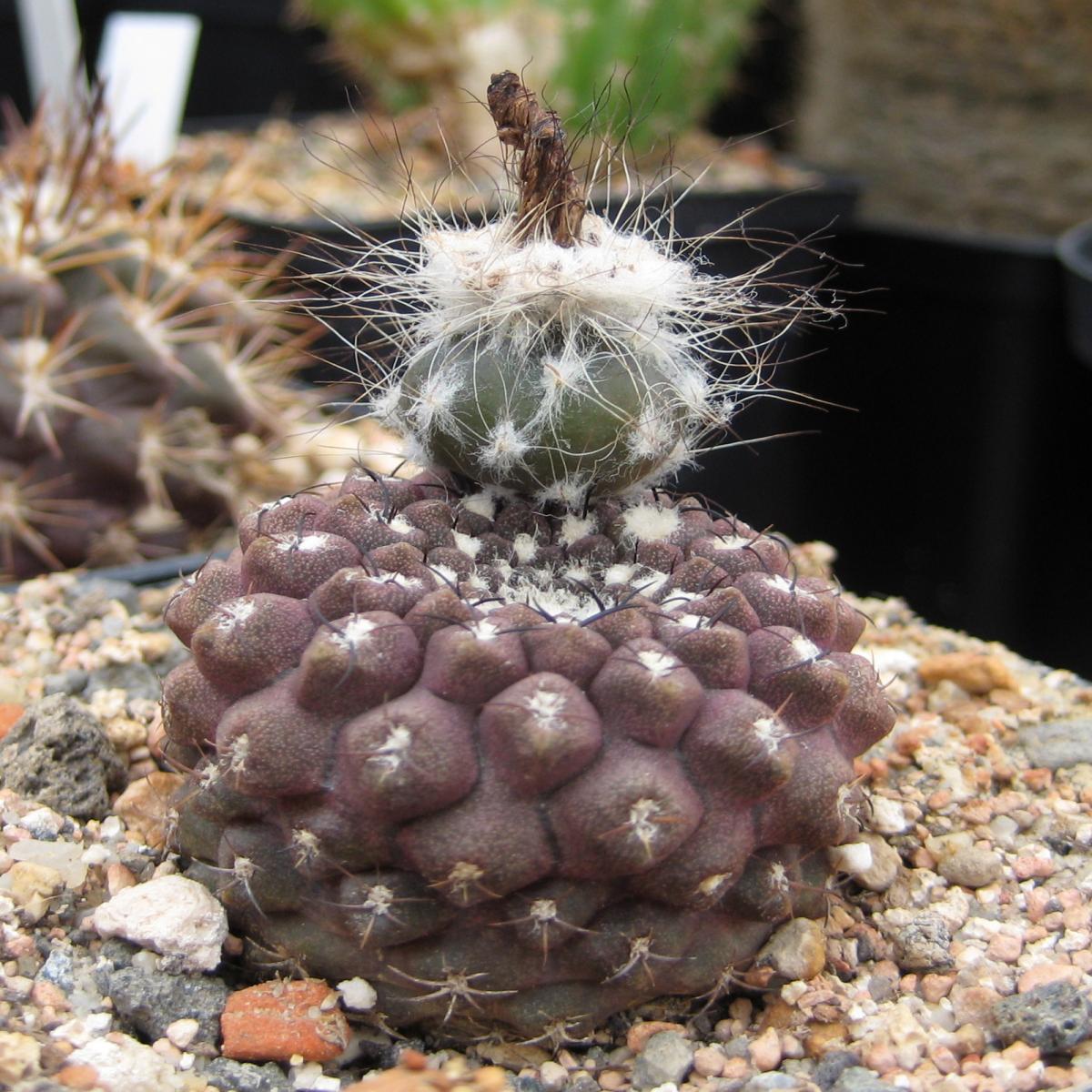
Image - Wikimedia / Michael Wolf
It is endemic to Chile, specifically to the Atacama and Antofagasta regions. It is a cactus with a brownish body, 3-4 centimeters in diameter and of similar height. Its spines are very thin, ranging in color from brown to black. The flowers are yellowish or reddish and measure 2-3 centimeters.
Eriosyce senilis
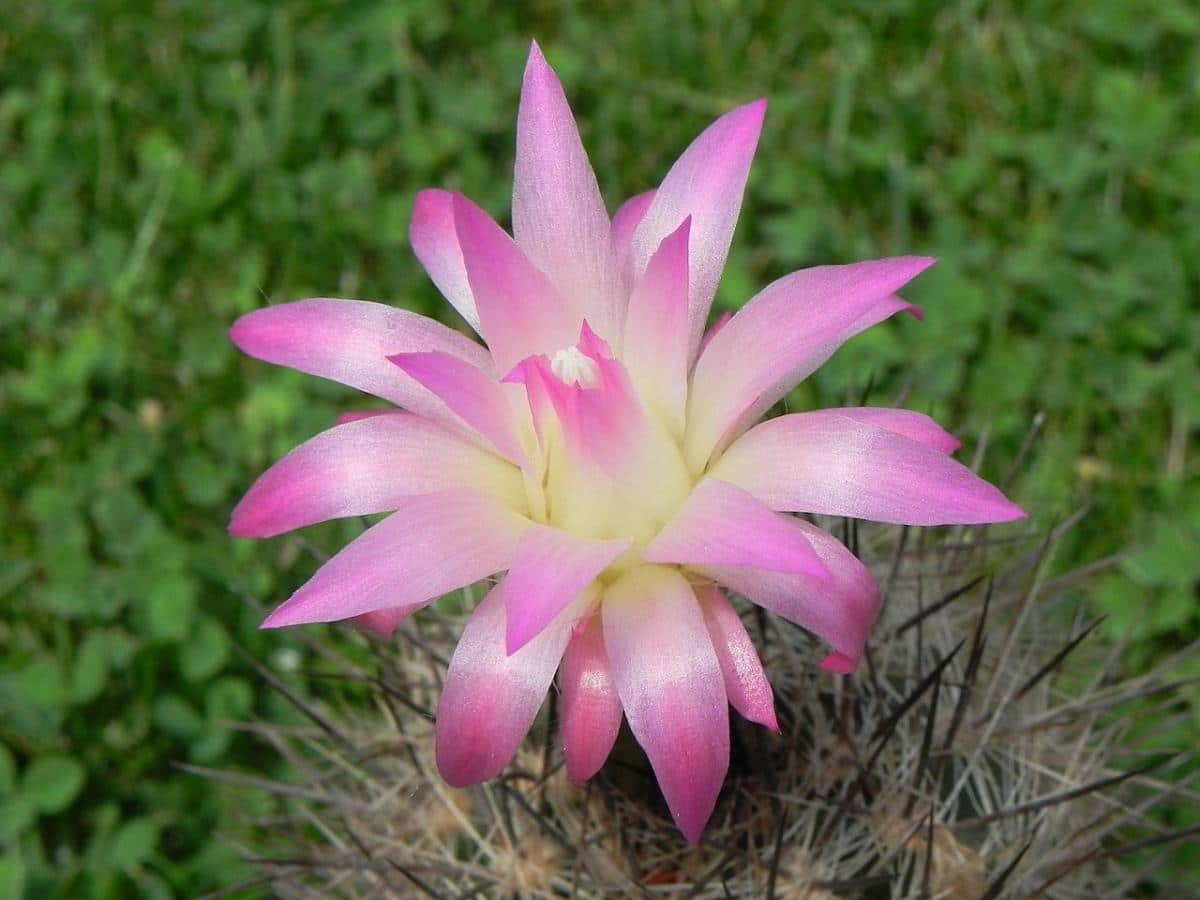
Image – Wikimedia/Marco Wentzel // Eriosyce senilis subsp. coimasensis
This species is endemic to Chile and is small, reaching up to 18 centimeters in height and 8 centimeters in diameter. Its entire body is covered in dense spines, which are white or brownish-black depending on the variety. The flowers are purplish-pink and approximately 2 centimeters in diameter.
Eriosyce napina
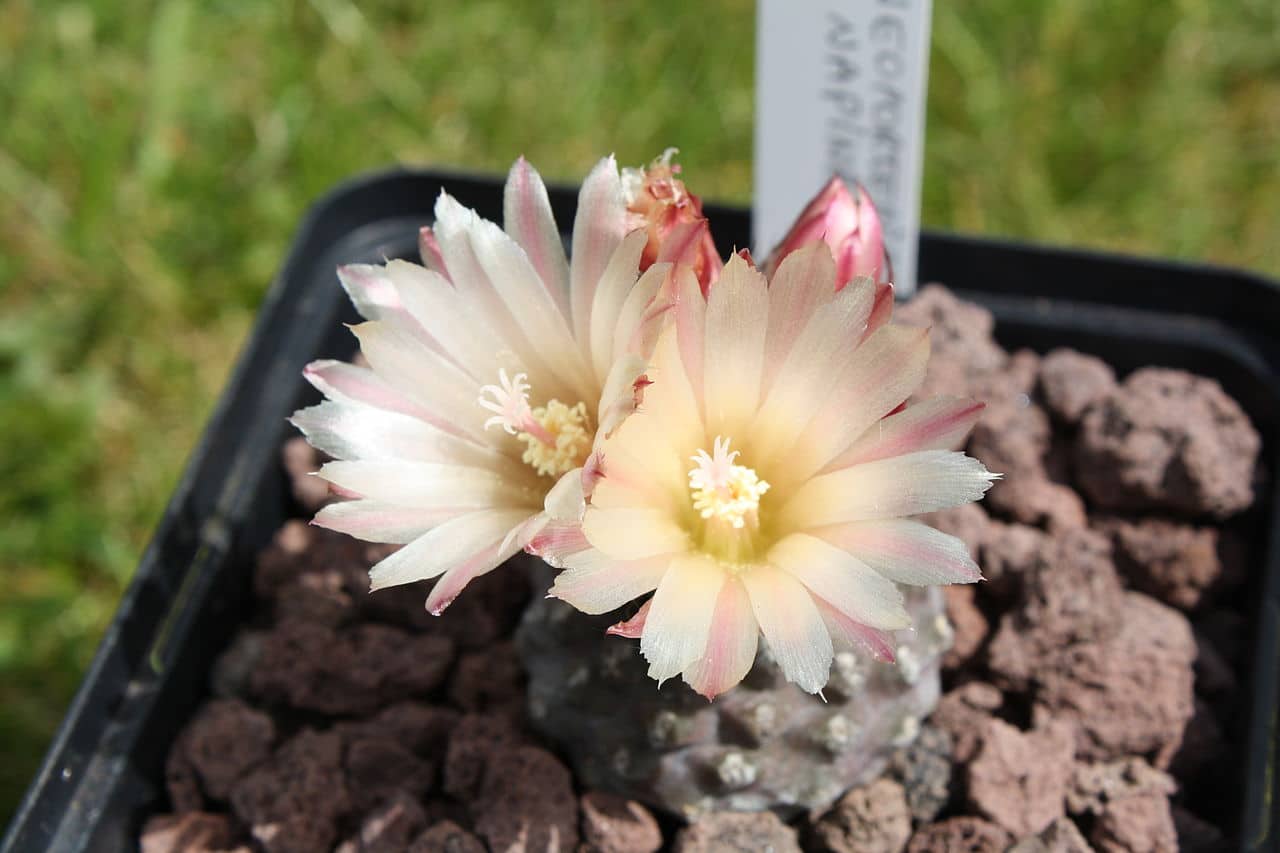
Image - Wikimedia / Florentin Guitton
It is a plant native to the Atacama region of Chile. Its body is small, not exceeding 6 centimeters in height or 5 centimeters in width . It is green or brown, although it is frequently grayish-brown, and has short, dark-colored thorns. Its flowers measure 4-6 centimeters in diameter and can be various colors: pink, red, yellow, or white.
eriosyce occulta
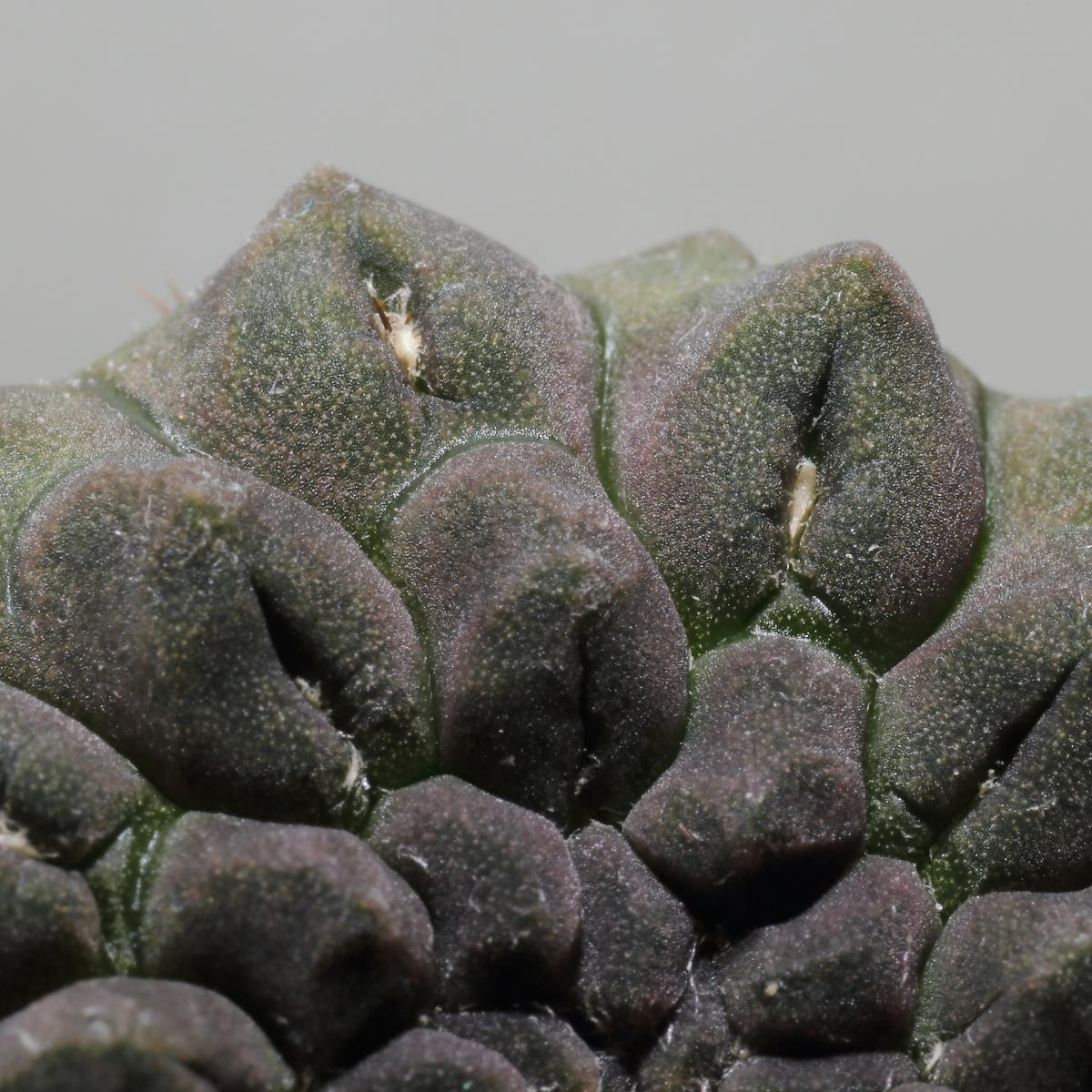
Image - Wikimedia / CT Johansson
Endemic to northern Chile, this cactus, only 5 centimeters in diameter and roughly the same height, has a brownish or greenish body with long or almost nonexistent spines. It is highly variable, so identification can be quite difficult. The flowers measure about 4 centimeters and are usually white or yellowish-white.
What are their cares?
If you want to grow these cacti and get them to grow well, we recommend that you follow the advice we offer below:
Location
Eriosyce cacti are sun-loving, so it's very important that they acclimate to sunlight as soon as possible . Only seedlings will need a little protection, but even then, the area where they are kept must be bright, otherwise their development will not be as expected.
Earth

Image – Wikimedia/Selso // Eriosyce curvispina
- Flower pot: it is necessary to use cheek-type substrates (for here) or similar. The use of peat or mulches pose a risk for these cacti, since they do not resist excess humidity.
- Garden: if we want to plant them in the garden, for example in a rockery, we will have to take this into account as well. If the earth puddles easily, we will make a large hole, of about 50 x 50cm at least, cover the sides with a piece of shading mesh (for example) and then fill it with pumice.
Irrigation
They need to be watered very infrequently. These plants may need one or two waterings a week during the summer if the environment is very hot (+35ºC) and dry , but in winter they will hardly need watering, beyond giving them the occasional watering once a month or so.
Of course, when we water, we have to pour water on them until all the earth is well moistened. This way the water will reach all its roots well.
Subscriber
During spring , and if desired also in summer, they can be fertilized with a specific liquid fertilizer for cacti (available here ) following the instructions.
Transplant
Because they grow slowly, they rarely need repotting. We'll only repot them when we buy them, provided they're well-rooted (and only in spring or summer), and again after 3-5 years . Smaller species will only need 3 or 4 repottings throughout their lifetime.
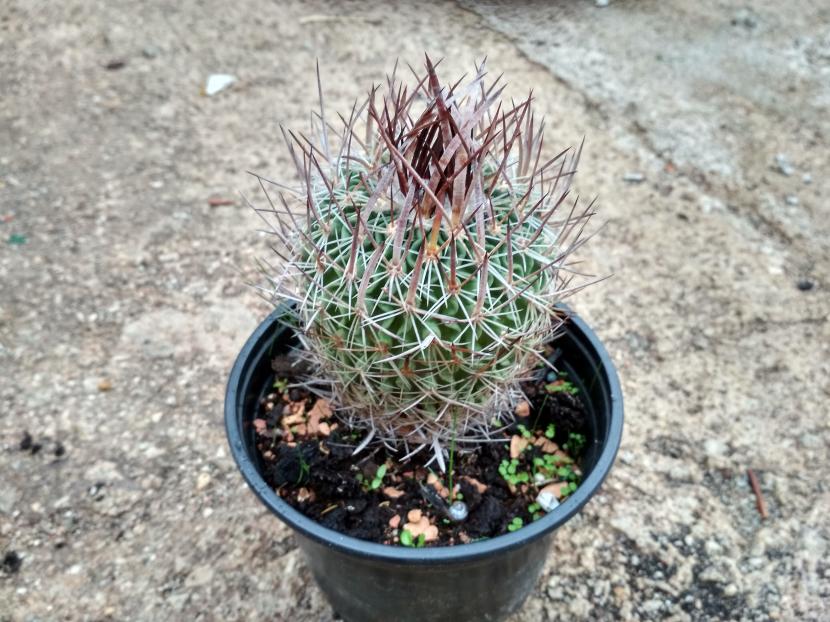
Rusticity
They can withstand temperatures close to 50ºC and frosts down to -5ºC for short periods . Even so, we recommend not exposing them to these temperatures, as they can be particularly harmful if they are young.
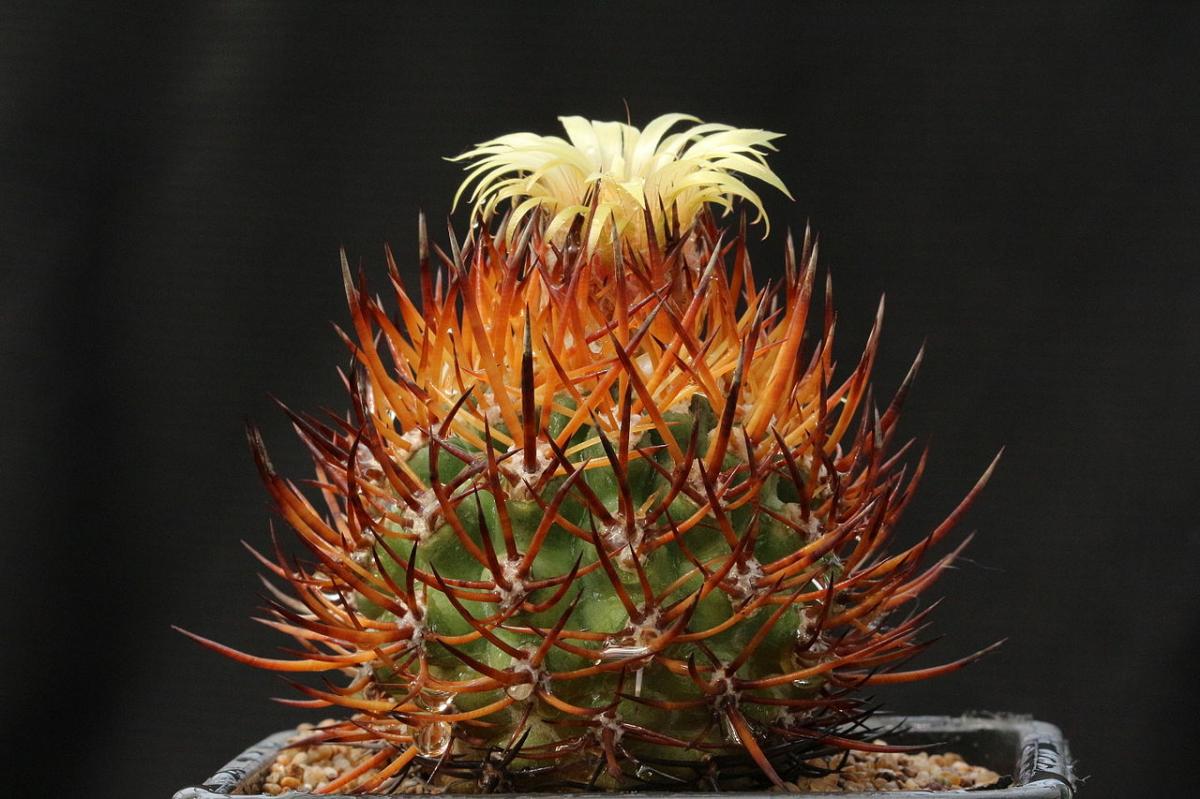
Image – Wikimedia/Anatoly Mikhaltsov // Eriosyce bulbocalyx
What did you think of the Eriosyce? Do you like or prefer others?
Table of Contents