

Image - Wikimedia / Jacopo Werther
The euphorbia genus comprises several types of plants: herbaceous plants, trees, and shrubs. One of the most popular species is Euphorbia suzannae , a succulent that can be cultivated in warm, tropical, or subtropical gardens.
If you go to a plant nursery, you'll likely find it on the shelf with cacti and succulents, so it will be very easy to spot. Furthermore, it has characteristics that make it easy to identify , as we'll see below.
Origin and characteristics of Euphorbia suzannae
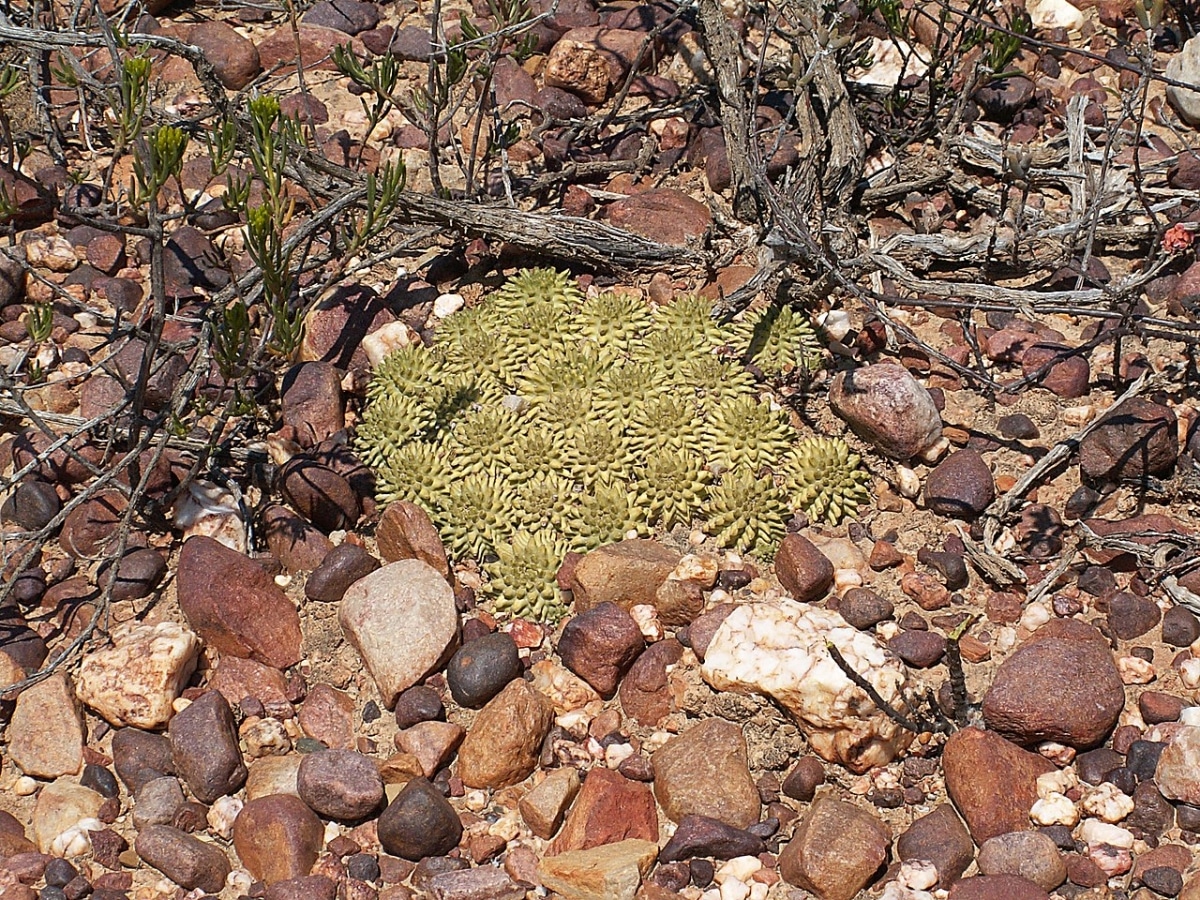
Image - Wikimedia / Winfried Bruenken (Amrum)
Euphorbia suzannae is a herbaceous plant with green, succulent stems native to South Africa. It lacks thorns; however, it is protected by fleshy spines, but don't worry, they are harmless. The plant reaches a total height of about 10-20 centimeters , although it grows in clumps about 20-25 centimeters wide.
Its flowers bloom in spring and are yellow . They emerge from the top of the stems. But for this, it needs warm weather, otherwise it will struggle to flower.
How do you take care of yourself?
This plant looks great in a window box with other small succulents , as well as in a wide, shallow pot on a table. It doesn't grow very quickly, so it doesn't need to be repotted often, especially since it's a small euphorbia.
It's also worth noting that this plant is ideal for those new to succulent care who want easy-to-grow varieties. It's drought-resistant, so much so that you can go on vacation for a few days and find it exactly as you last saw it when you return.
But sometimes problems can arise, so what better way than to have a care guide handy to know everything that needs to be done to keep you healthy:
Location
As soon as you get home with your succulent, you should place it either in a bright room or outdoors in partial shade . The choice is yours, but we do recommend growing it indoors if you live in an area prone to frost; however, it's also nice to have it outside in spring and summer, and indoors during the colder months.
Soil or substrate
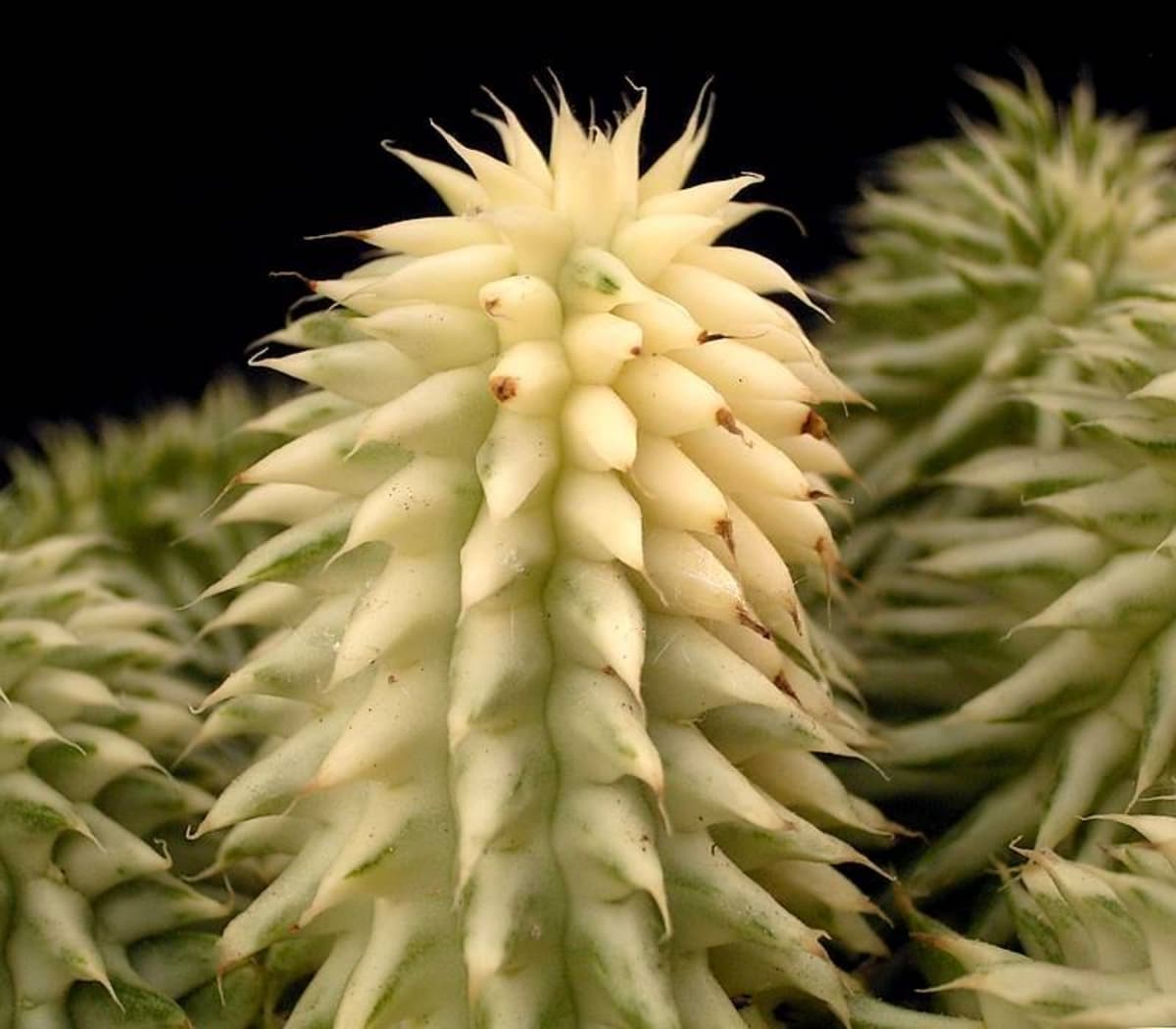
Image – Wikimedia/Frank Vincentz // Euphorbia suzannae f variegata
Euphorbia suzannae is a plant that doesn't like waterlogged soil. For this reason, it should be planted in sandy, light soils that drain quickly. In very compacted soils, the grains are packed tightly together, preventing good air circulation. This is a problem for the roots, as they can suffocate and die.
If you choose to grow it in a pot, it's also important to keep in mind what we just mentioned. Some substrates are good for the plant, but many others are not. Choosing one that is light and contains perlite, like this one , will facilitate root development for the euphorbia; however, this is not the case if it has a very high percentage of black peat.
Irrigation
Water sparingly. Water very little to prevent the plant from becoming soggy. Roughly twice a week during the summer , and only when the soil is very dry the rest of the year. However, be especially careful in winter, particularly if it rains frequently and/or the humidity is very high. In fact, it might be beneficial to water it only once every 15 days, or even every 20.
But be careful: just because it needs to be watered infrequently doesn't mean you should use very little water. Far from it. When watering, always water until the soil is thoroughly moist ; that is, until the water seeps out through the drainage holes in the pot.
Subscriber
In spring and summer, you can fertilize with any fertilizer or food formulated for succulents . Liquid fertilizers are especially recommended if the plant is in a pot (like this one ), as their effects will be noticeable sooner because they are absorbed more quickly.
On the contrary, if it is going to be on the ground, you can use granulated or powdered fertilizers. Follow the manufacturer's instructions, so there will be no problems for sure.
Multiplication
It multiplies by seeds, and sometimes also by cuttings, although it is difficult to root. In any case, it is done in spring-summer.
Transplant
Euphorbia suzannae is a succulent that will only need repotting a few times during its lifetime : only when it's purchased, and then two or three more times. The pot must have drainage holes at the bottom so that water can escape when watering, preventing it from rotting.
Rusticity
It is sensitive to cold . It should not be kept outdoors if the temperature drops below 15ºC.
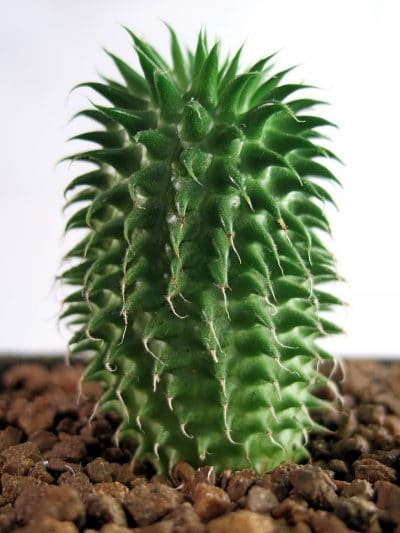
Image - Flickr / Zruda
Were you familiar with Euphorbia suzannae?
Table of Contents