

Sedum x Echeveria
There is still a lot of confusion about what a cactus is, what a succulent is, what a caudex plant is, and what a succulent is . While they all have something in common—the ability to absorb water to survive in places with very little rainfall—they are actually quite different. Or perhaps not so different.
It's time to learn the main characteristics of each one . That way, it will be easier to identify them each time we see them.
What are cacti?
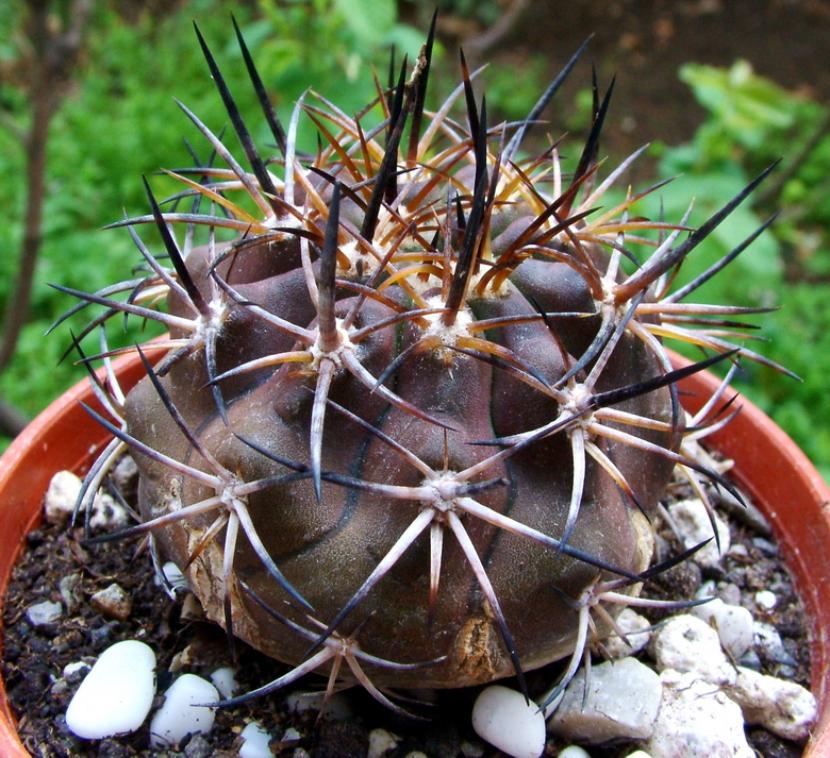
Copiapoa echinoides cv hard
Let's start with them, the cacti. Plants that have spines… almost always . Yes, indeed: there are species that don't have them or whose spines are so small they're barely visible, such as Astrophytum asterias or Echinopsis subdenudata . However, the vast majority protect themselves thanks to them, which is why cacti are called spiny plants, to distinguish them from others.
But to avoid any confusion, rather than focusing on the spines, we need to look at something else: the areoles . What are they? They are protuberances found on the ribs of these plants. Both the main spine (the longest one) and the secondary spines, as well as the flowers, arise from them.
They can take two main forms: globular and columnar . However, you should know that there are also hanging and/or epiphytic cacti, and creeping ones.
What are succulent plants?
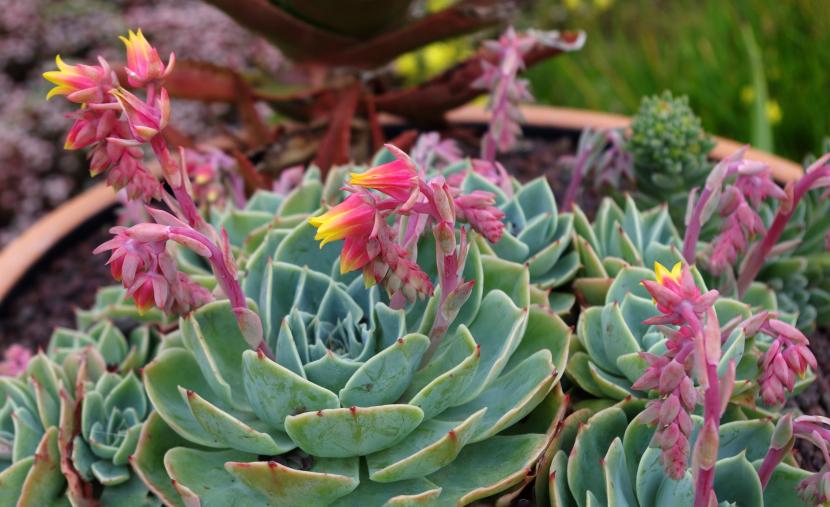
echeveria secunda
In its strictest sense, we could say that they are those plants that belong to the Crassulaceae family , that is, those species that are part of these three botanical tribes:
- Crassuloideae: Crassula and Tillaea.
- Kalanchoideae: Kalanchoe and Tylecodon.
- sempervivoideae: Dudleya, Echeveria, Rhodiola, Sedum and Sempervivum.
However, we also include those plants that, while not belonging to these tribes, also have the characteristics of succulents, which are having fleshy stems and/or leaves and flowers that sprout from a flower stalk and not from the plant body itself.
Some have something resembling spines, like Euphorbia enopla , but these lack areoles. Furthermore, they can take many forms: shrub, small tree, hanging plant, creeping plant, ground cover, etc.
What are caudex plants?
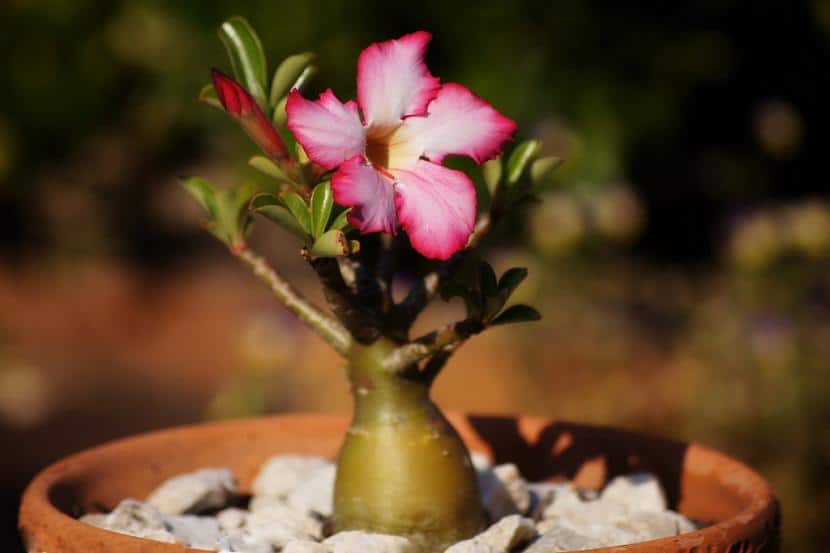
Adenium obesum
When we talk about plants with a caudex or caudiciform plants, we are referring to those plants, mostly tree-like, that have made their trunk their own water storage container . Thus, they often take on a bottle-like shape.
The best known are Adenium obesum (Desert Rose) and Adansonia digitata (Baobab).
What are succulents?
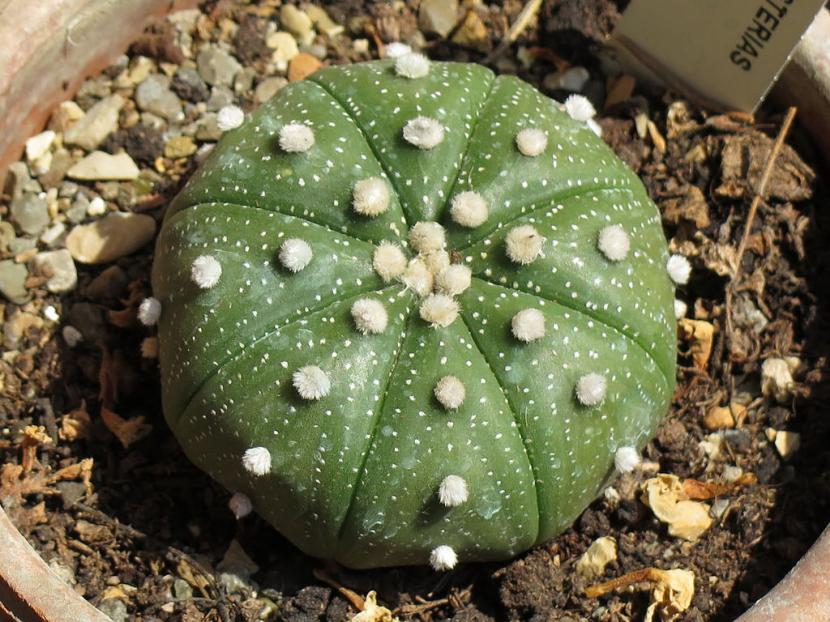
Astrophytum asterias
The term "succulent" encompasses everything: cacti and other succulents. These are all plants that absorb water through their pores and store it in some part of their body to survive even in the worst of times.
If you have any questions, don't leave them unanswered .
Table of Contents