

Mammillaria longimamma is a very curious cactus plant: if it weren't for its long spines, it could easily resemble a sea urchin. It produces large, beautiful yellow flowers that are quite striking.
Its small size makes it an ideal cactus for deep pots . Let's learn more about this beautiful Mammillaria.
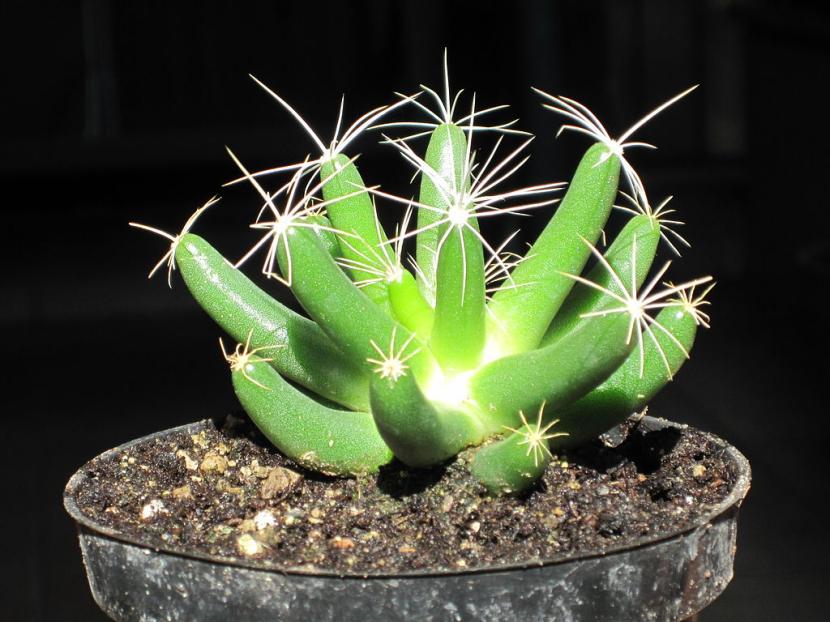
Mammillaria longimamma is a species belonging to the Cactaceae family that lives in the arid deserts of Mexico , specifically in Hidalgo and Querétaro, and also in Texas (United States). It was described in 1829 by Augustin Pyrame de Candolle.
Its name means something like "cactus with large breasts." The word Mammillaria is the genus name, which derives from the Latin word mamilla, meaning tuber, referring to the tubers of these plants. Its genus name, longimamma , is a Latin epithet meaning "with large breasts."
Since it was described, it has received three different names before receiving the one it has now:
- Dolichothele longimamma
- Mammillaria uberiformis
- Dolichothele uberiformis
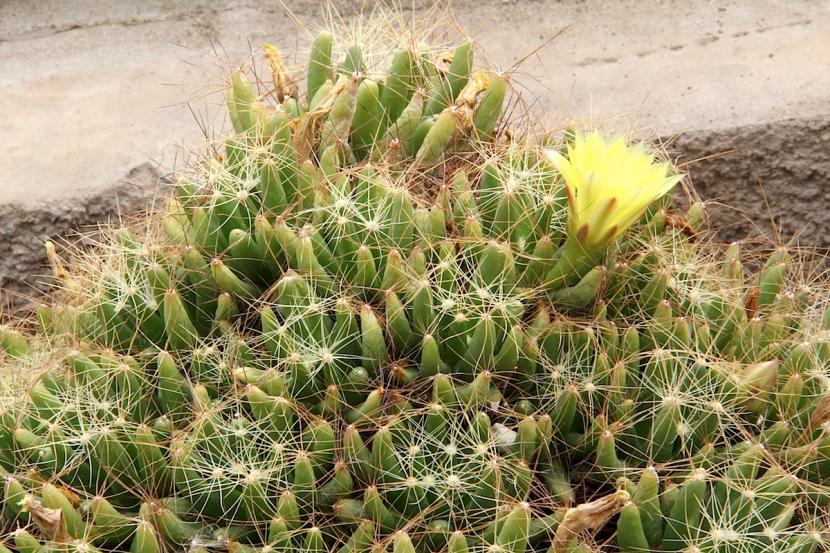
It is characterized by its globular shape and a maximum height of 10 cm. The "mammary glands" are less than 0,5 cm wide, but longer than those of other species, measuring up to 1 cm . At their ends are the areoles, from which emerge white spines up to 1 cm long.
It blooms in spring, although it can flower in late winter if the weather is mild and warm. The flowers are yellow and 2 cm in diameter . To pollinate them, you need two or more plants blooming at the same time; then you can gently brush each flower with a small paintbrush.
If everything has gone well, the fruit will develop , which will have a more or less cylindrical shape and inside there will be numerous tiny seeds that you can sow as soon as you harvest them and clean them beforehand with water.
Mammillaria longimamma is cold-resistant, but needs protection from frost.