

Mammillaria tayloriorum
To speak of Mammillaria is to speak of one of the most diverse genera of cacti, with no fewer than 350 accepted species and varieties. What's most interesting is that they not only produce very showy flowers, but practically all of them are suitable for growing in pots.
And I couldn't say whether that's a blessing or a curse, because, honestly, some of them are truly beautiful. Get to know them.
Origin and characteristics
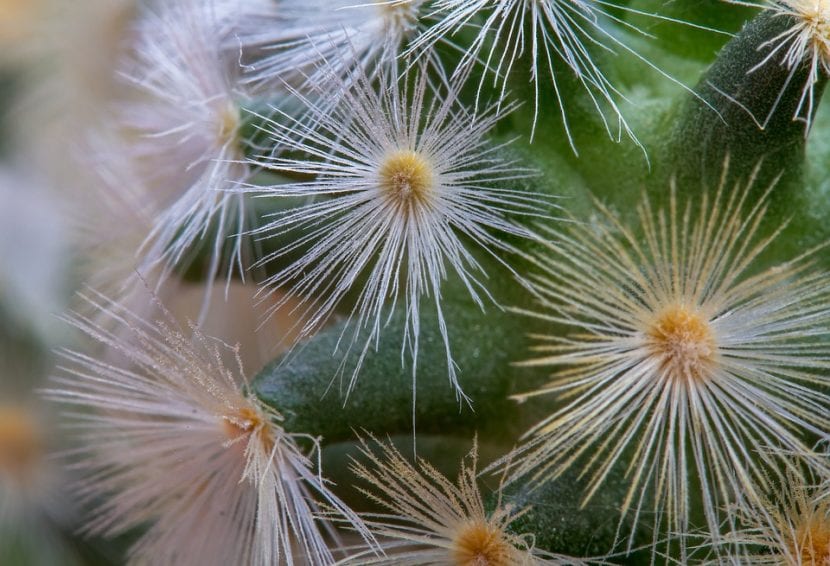
Mammillaria are tuberous cacti native to Mexico, the southern United States, the Antilles, and the coasts of Venezuela. The genus was described by Carl Linnaeus in his book Cactus mammillaris in 1753, and they are characterized by their globose or cylindrical shape, ranging in size from 1 to 40 cm in height and 1 to 20 cm in diameter.
They do not have ribs like other cacti, but rather have conical, cylindrical, pyramidal or round tubercles that are called mamilas. The spines, long or short, straight or hooked, sprout from the areoles, which may be covered by wool or bristle.
The flowers usually sprout along the body of the cactus, almost as if they wanted to form a crown, and they are small, with colors ranging from white to pink to red. And the fruit is a globular or elongated bright red, green or white berry, containing 1-3mm brown or black seeds.
Main species
Writing about the more than 300 species that exist would take us a book , so I'm going to tell you which ones are the most popular:
Mammillaria bombycina
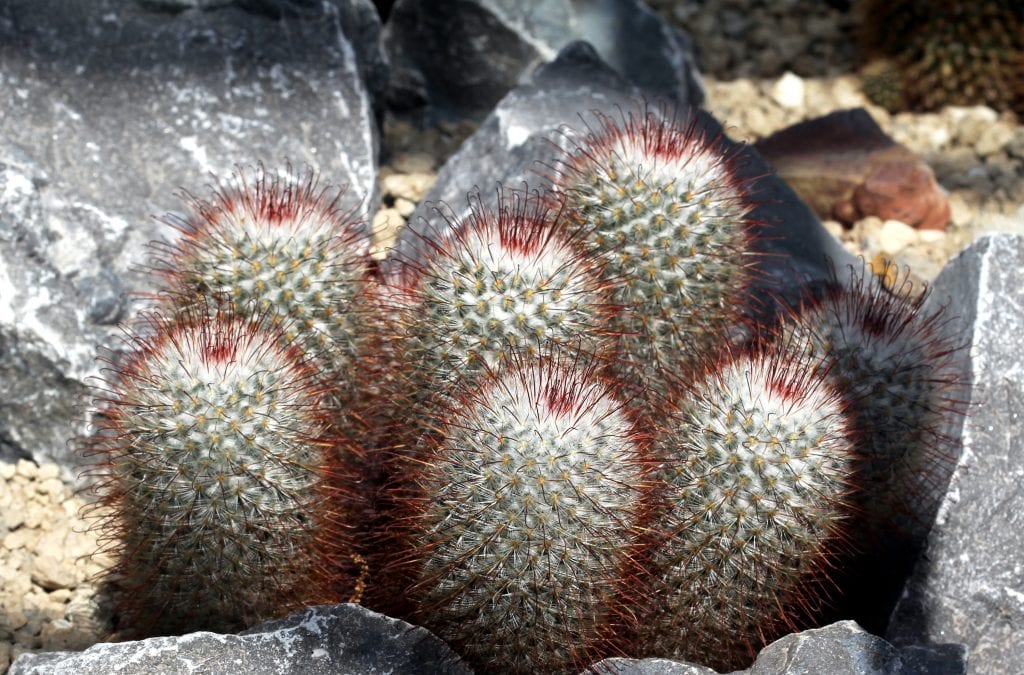
It is endemic to Aguascalientes and Jalisco in Mexico. Its body is globose, with a height of 20 cm and a diameter of 6 cm. From the areoles sprout 30 to 40 radial spines, rigid and thin, and a central reddish spine shaped like a hook. The flowers are pink, about 2 cm in diameter. It usually grows in clusters.
Mammillaria gracilis

It is now called Mammillaria vetula. It is endemic to the Mexican states of Guanajuato, Hidalgo, and Querétaro. Its stems are spherical or cylindrical, green, and about 10 cm tall and 2 cm in diameter . The areoles are covered with a little wool, or they may be completely bare. They typically produce 1-2 sharp spines up to 10 mm long, and 11-25 thin, radial spines, 3-10 mm long. The flowers are lemon-colored and measure 1,7 cm. It grows in clumps.
Mammillaria hahniana
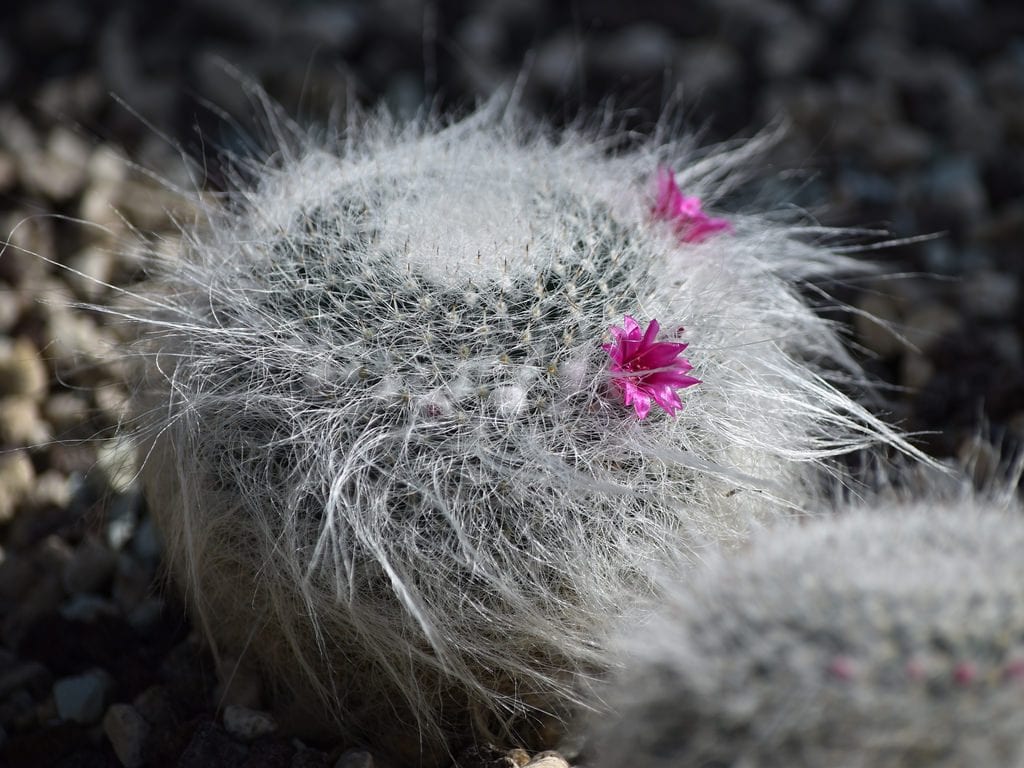
It is endemic to the states of Guanajuato, Querétaro, and Tamaulipas in Mexico. It has a globular body and usually grows in clumps. Each individual stem reaches 9 cm in height and 10 cm in diameter . From each areole sprout 20 to 30 radial spines, 1,5 cm long, that resemble white hairs, and 1 to 4 shorter, whitish spines. The flowers measure up to 2 cm in diameter and are purple.
Mammillaria elongata
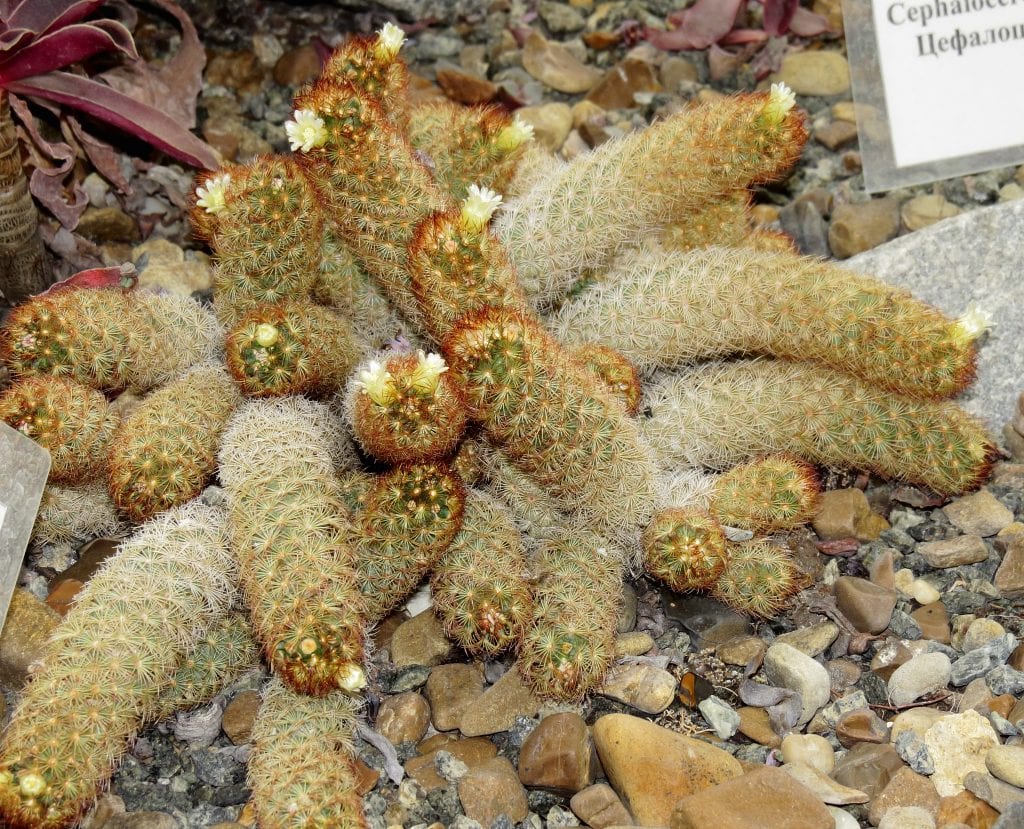
It is endemic to the states of Hidalgo, Guanajuato, and Querétaro in Mexico. It grows by developing erect or semi-prostrate, more or less cylindrical stems 6-15 cm long and 1,5-3,7 cm in diameter . The stems are green, but the spines are yellow-orange or reddish-yellow. Its flowers are tiny, barely 1 cm across, and yellow or white. They grow in clusters.
What are their cares?
If you want to have a copy, we recommend you take care of it as follows:
Location
These plants need to be outdoors in direct sunlight . But be careful, if they've never been in direct sunlight before, acclimate them gradually to avoid sunburn.
Earth
- Flower pot: not too demanding; Now, if you have volcanic sand (pomx, akadama or similar) it will cost less to root than if it had peat. But if you can't get it, mix universal growing medium with perlite in equal parts.
- Garden: grows in sandy soils, with good drainage. As the plant is rather small, if the soil you have is not like that, make a hole of about 40 x 40cm, cover its sides and the base with shading mesh and then fill it with the substrate mentioned above.
Irrigation
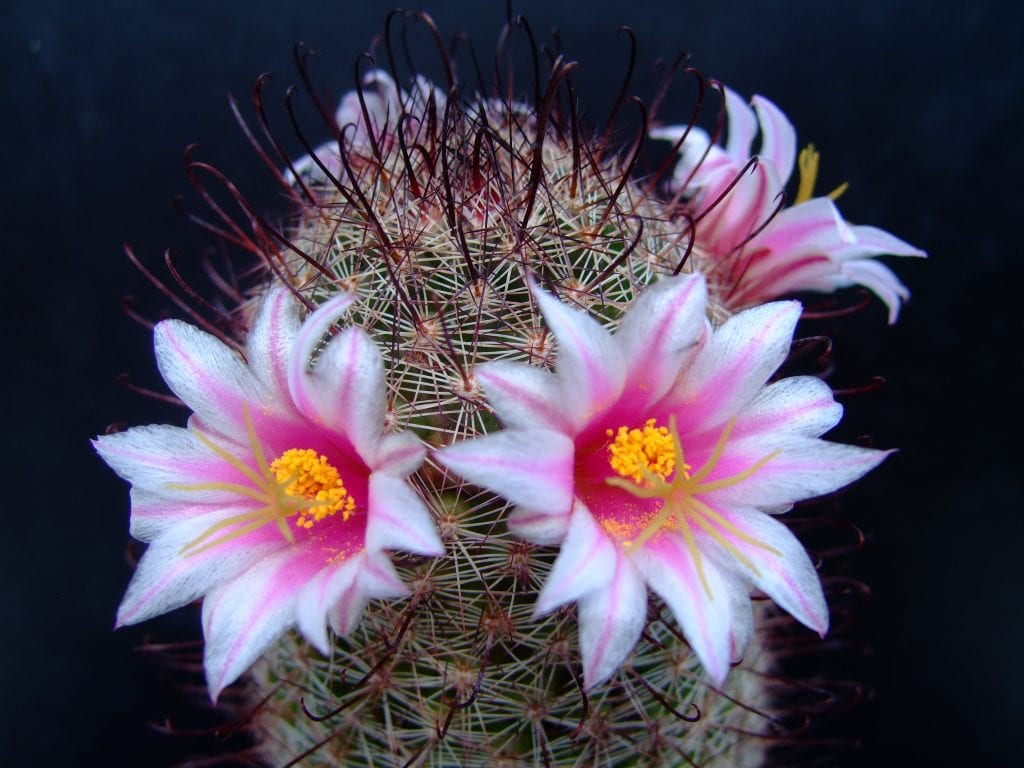
Mammillaria swinglei
From moderate to infrequent . During the summer, it should be watered an average of twice a week, and the rest of the year an average of once every 10 days. But you should see this as a guideline, never as a fixed rule, because if, for example, you live in an area where it doesn't rain much and it's also very hot, you might have to water it up to three times a week in the summer and up to twice a week the rest of the year.
So that there are no problems, check the humidity of the soil before watering. This can be done by inserting a thin wooden stick (if when you extract it it comes out with a lot of adhering soil, do not water), or weighing the pot once watered and again after a few days (this difference in weight will help you know when to water ).
And by the way, never plant it in containers without holes or put a plate under it, as doing so will rot. Nor should you water it overhead, for the same reason and also because it could burn with the sun.
Subscriber
In spring and summer , use a cactus-specific fertilizer, following the instructions on the packaging. You can also use chemical fertilizers, such as blue nitrophoska , adding one or two small spoonfuls every 15 days.
Multiplication
Mammillaria plants reproduce by seed and, in some species, by stem division in spring and summer . Let's learn how to proceed in each case:
Seeds
The step by step to follow is as follows:
- First, fill a tray with holes - small - with black peat mixed with perlite, and moisten it with a sprayer / atomizer.
- Then, sow the seeds on the surface, making sure they are slightly separated.
- Then cover them with very fine-grained volcanic sand.
- OPTIONAL (although recommended): now sprinkle powdered sulfur, as if you were adding salt to a salad, thus avoiding the appearance of fungi.
- Finally, place the tray near a heat source and in a bright area but protected from direct sun.
Keeping the substrate always moist - not waterlogged - they will germinate in about two weeks.
Cuttings
To multiply the Mammillaria by separating the stems, you simply have to cut one with a serrated knife previously disinfected with pharmacy alcohol, let the wound dry in semi-shade for a week and then plant it in a pot with volcanic sand that we will moisten with a sprayer.
Protecting it from direct sunlight, it will emit its own roots after 2 or 3 weeks.
Plagues and diseases
It can be affected by:
- Mealybugs: mostly cottony, but they can be limpet type. They are fought with diatomaceous earth (the dose is 35g per 5l of water), or with specific insecticides.
- Mollusks (snails and slugs): these little animals don't care about thorns. In the rainy season they appear to feed on everything they can, including cacti. They are fought with molluscicides, beer or by taking them and taking them as far as possible from the plants.
Another option is to protect these crops with mosquito netting (both from the sides and above, as if it were a kind of greenhouse). - Mushrooms: When overwatered the roots rot and the stems become soft. You have to control the risks and treat with fungicide.
Planting or transplanting time
In spring . If it's in a pot, repot it every two or three years.
Rusticity
It depends a lot on the species , but from experience I can tell you that light frosts (down to -2ºC) do not harm them as long as they are short and isolated.
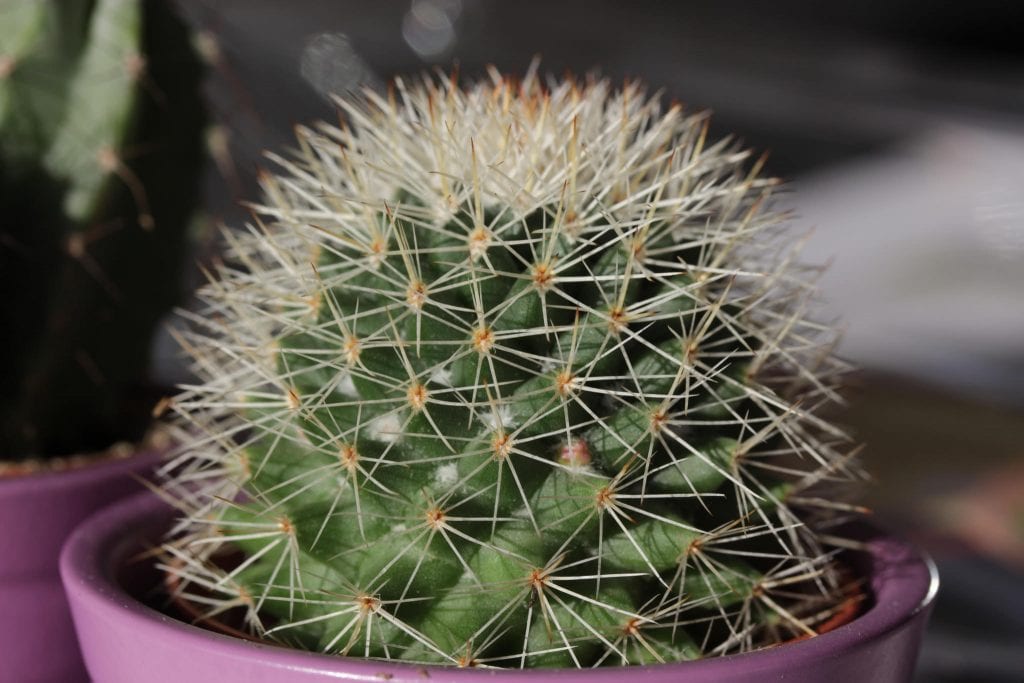
Mammillaria backebergiana
What did you think of the Mammillaria?
Table of Contents