

Image – Wikimedia/ Tomascastelazo
Pachycereus pringlei is one of the easiest columnar cacti to care for, and also one of those that most closely resembles Carnegiea gigantea (saguaro). In fact, it's not uncommon to confuse them when they are adults, but when they are young… when they are young it's a different story .
Its growth rate isn't particularly fast, but it's a plant that will get bigger year after year. Furthermore, it withstands light frosts without damage, making it a very interesting species for xeriscapes.
Origin and characteristics of Pachycereus pringlei
Known as cardón, giant cardón, or saguesa, this cactus is endemic to Baja California and Sonora in Mexico, as well as northern Argentina . Its scientific name is Pachycereus pringlei , a name given to it by Sereno Watson, Nathaniel Lord Britton, and Joseph Nelson Rose in 1987 in honor of Cyrus Pringlei.
It can reach a height of 19 meters, with a trunk up to 1 meter in diameter , although in cultivation it typically does not exceed 6-7 meters in height. Its stems grow almost completely straight and are composed of very pronounced ribs at the ends of which are the areoles, which are large, oval, and have short, grayish-brown woolliness. The spines emerge from the areoles, numbering around 20, and are reddish or dark brown, turning grayish; the radial spines measure between 2 and 3 cm in length, and the central spines (1 or 2) measure up to 5 centimeters and are stronger.
It blooms in summer , but only if the plant is at least 3-4 meters tall. The flowers are funnel-shaped and measure 5-8,5 cm in length. They are red on the outside and whitish on the inside. They sprout from the top of the cactus, but can also grow on the lower stems.
What are their cares?
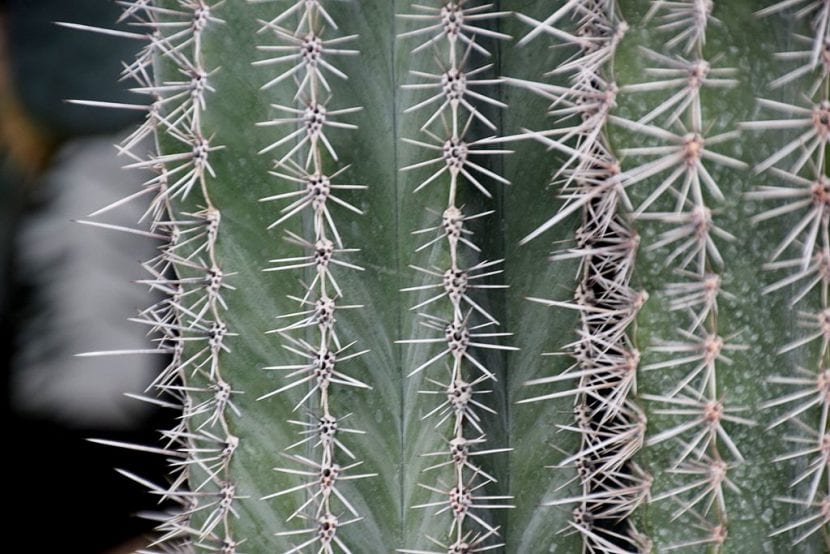
Image - Wikimedia / Krzysztof Golik
Location
The Pachycereus pringlei needs to be outdoors in full sun . However, in nurseries it's usually kept in partial shade, especially when young, so don't hesitate to place it in a spot somewhat protected from the sun and gradually acclimate it. This way, you'll prevent it from getting sunburned.
Earth
- Flower pot: it has to be porous for good drainage. Mix universal substrate with perlite in equal parts, but if you can get pumice (on sale here), akadama (for sale here), or even fine gravel (1-3mm) better.
- Garden: the same. If the soil has a tendency to compact, make a hole of about 50cm x 50cm (ideally 1m x 1m), and fill it with the substrates mentioned above.
Irrigation
Rather scarce . It is a cactus that dislikes waterlogging, which is why the soil or substrate must be allowed to dry out completely before watering again.
If you have it in a pot, make sure it has drainage holes. If you have a plate underneath, remove the excess water 30 minutes after watering to prevent the roots from rotting.
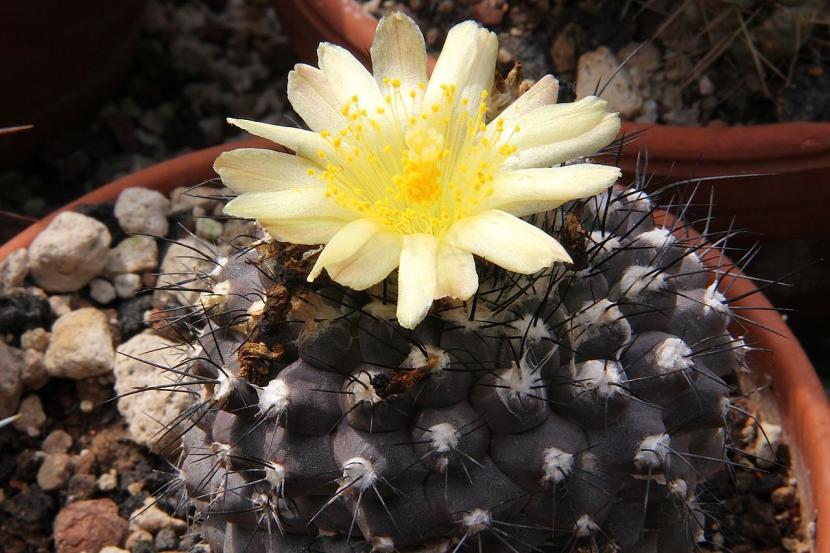
When watering, don't wet the cactus, just the soil.
Subscriber
It is highly recommended to fertilize it from the beginning of spring until the end of summer with cactus fertilizers (available for purchase here ) following the instructions specified on the packaging.
Multiplication
The giant cardon cactus is propagated by seeds and cuttings in spring and summer . Let's learn how to proceed in each case:
Seeds
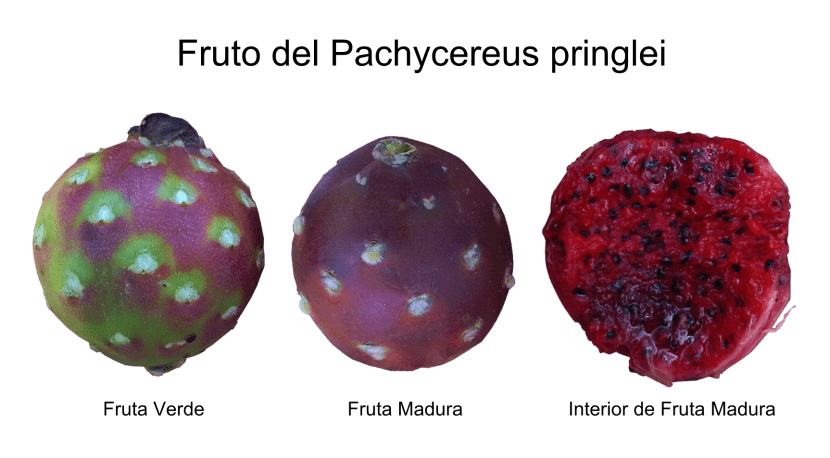
Image - Wikimedia / The Photographer
Cactus seeds are very small, and those of this species are no exception. To avoid losing them, we recommend keeping them in a closed room so the wind can't carry them away. Then, simply follow these steps :
- First, fill the pot with universal substrate (for sale here) with perlite (for sale here) in equal parts.
- Water conscientiously.
- Then sow the seeds, trying not to make piles.
- Finally, cover them with a thin layer of substrate, and water again this time with a sprayer.
Now you will only have to place the pot outside, in semi-shade, and keep the substrate moist but not flooded. Thus they will germinate in about 15 days.
Cuttings
This is the quickest way to obtain a new Pachycereus pringlei specimen . To do this, cut a piece about 30cm long, let the cut dry for around 7-10 days, and then plant it (not stick it in) in a pot with pumice or similar material.
You can impregnate the base of the cuttings with rooting hormones (for sale No products found. ) before planting to help it root faster, but it's not necessary.
Plagues and diseases
You might think that with those thorns it has no enemies, but it does. It needs protection from snails and slugs , as well as from overwatering.
To repel mollusks you can use diatomaceous earth (for sale No products found. ), however to avoid the second problem you have to carefully control watering, let the soil dry out and, if in doubt, check the moisture of the substrate.
Rusticity
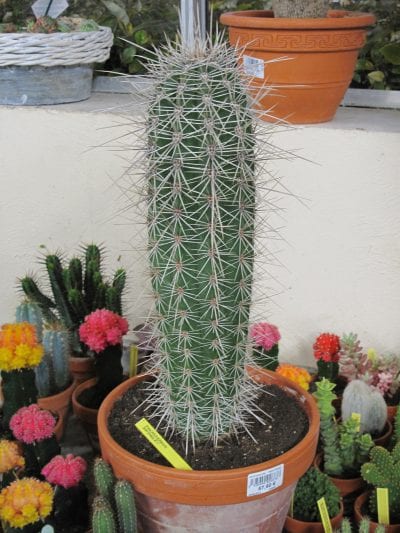
It withstands light frosts down to -3ºC , provided they are short-lived and isolated.
What did you think of the Pachycereus pringlei?
Table of Contents