

Image - Wikimedia / Petar43
Pilosocereus azureus is a cactus with columnar, spiny stems and great ornamental value . Although it grows at a rate that could be described as slow, it is not nearly as slow as others, such as Ferocactus, or even more so the Carnegiea gigantea (saguaro).
In fact, it is an interesting species to grow in gardens, because it can be taken for granted that in a few years you will get a good size specimen.
Origin and characteristics of Pilosocereus azureus

Image - Wikimedia / Facheiro
Pilosocereus azureus is a cactus endemic to Brazil, although its beauty has led to its cultivation in gardens throughout the warm regions of the world. It reaches a height of 2 to 10 meters , and over time becomes a highly branched plant, with branches sprouting close to the ground.
The stems are bluish in color , with a diameter of between 5 and 11 centimeters. They have between 5 and 19 ribs, from whose areoles arise between 1 and 12 central spines which measure up to 30 millimeters long, as well as radial spines that measure between 5 and 15 millimeters.
It flowers once it reaches adulthood, producing flowers between 2 and 5 centimeters in diameter. The fruit is spherical with magenta pulp , in which numerous dark-colored seeds can be seen.
Its currently accepted scientific name is Pilocereus pachycladus , but it is still more commonly known by its synonym, P. azureus. It is also called the blue cactus.
Caring for the Pilosocereus azureus
To learn how to care for this cactus, it's important to understand how it lives in its natural habitat, its origin, as this will give us an idea of how to care for it. That said, it's a cactus native to scrubland , where it grows alongside other plants, most of them small.
It is found from 50 to 1550 meters above sea level, which is very interesting because it makes it a plant capable of living in both tropical climates with a marked dry season , and in temperate-warm climates where very mild and occasional frosts occur.
The typical soil in which it grows is sandy or rocky , so when it rains, the water is quickly absorbed, preventing its roots from remaining wet for long periods. Therefore, we should not plant it in heavy or compacted soil, as we risk losing it.
Based on this, let's see how it should be cared for :
Location
Ideally, it should be placed outdoors in a bright location. This cactus thrives in full sun, as it needs sunlight to develop properly.
But things will change if our plant has not acclimatized, or if there are intense frosts in the area where we live. In the first case, we will have to put it in semi-shade, and in the last, we must protect it either by putting it at home or in a greenhouse.
If you choose to have it at home, we will take it to a room where there is a lot of light, and we will place it away from drafts.
Soil or substrate
- Flower pot: in pot you will need light substrates, such as the pumice, the small volcanic clay of 1-3mm, or substrate for cacti (on sale here).
- Garden: if the garden soil is heavy and compact, we will make a hole of 1 x 1 meter, and we will fill it with some substrate mentioned before.
Irrigation
In general, water sparingly. Allow the soil to dry out between waterings to prevent root rot . It's also important to avoid wetting the cactus itself, meaning don't water it from above, especially if it's in direct sunlight (in fact, it's always better to water in the late afternoon when the sun is low, as this not only prevents the plants from burning but also gives them more time to absorb the water).
Another important topic to talk about is the plate under the pot. It is not good that it has it, because the water that is not absorbed by the substrate, will end up there, and that would rot the cactus. It should only be had if we always remember to drain it after each watering.
Subscriber
If you want it to grow faster and healthier, it's very beneficial to fertilize it throughout spring, summer, and even autumn if the climate is warm . For this, use fertilizers specifically formulated for cacti, choosing liquid ones (like this one ) if it's in a pot to ensure proper drainage.
Multiplication
Pachycereus azureus is propagated by seeds and cuttings in spring ; but in any case it is important to use light and porous substrates, such as vermiculite (for sale here ) which is ideal for seedbeds, or the aforementioned pumice (for sale here ) so that the cuttings root better.
They will be placed in a bright area, and will be kept watered.
Pests and diseases of the blue cactus
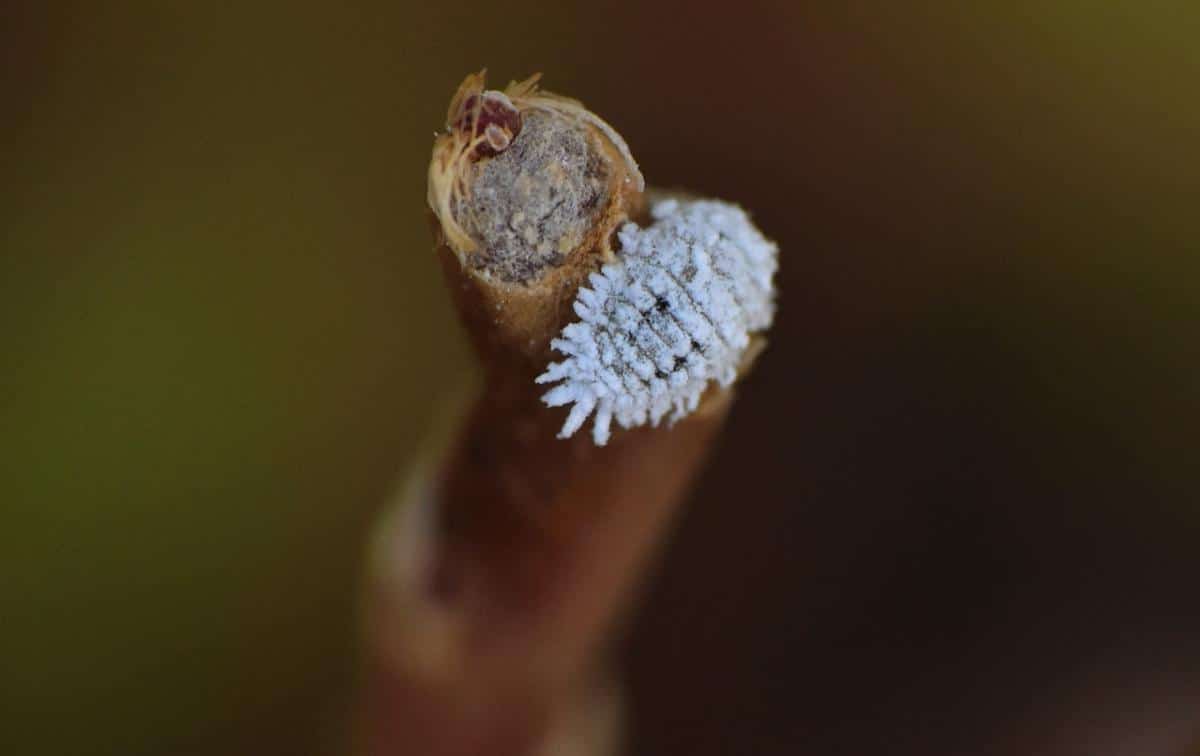
It's a cactus that's quite resistant to pests and diseases. In fact, I have one, and it's only ever had mealybugs , but nothing else. These can be eliminated with diatomaceous earth (available here ), as it dehydrates them.
You also have to be careful with slugs and snails , as they tend to devour cacti.
Rusticity
From experience, I can say that it can withstand temperatures down to -1,5 or -2ºC , but only if the frosts are brief and localized. According to some sources, it can withstand temperatures as low as -3ºC.
Where to buy Pilosocereus azureus?
Would you like to have your own plant? Then click here:

Table of Contents