

The pitahaya is one of the most widely cultivated epiphytic cacti; it's no wonder, as it produces a delicious fruit every summer. While it's not ideal for growing in pots, as it can become quite large, it's a great option to plant in the garden, even if space is limited.
However, to achieve a good harvest, it is necessary to know the water and nutrient needs of Hylocereus undatus.
Origin and characteristics of the pitahaya
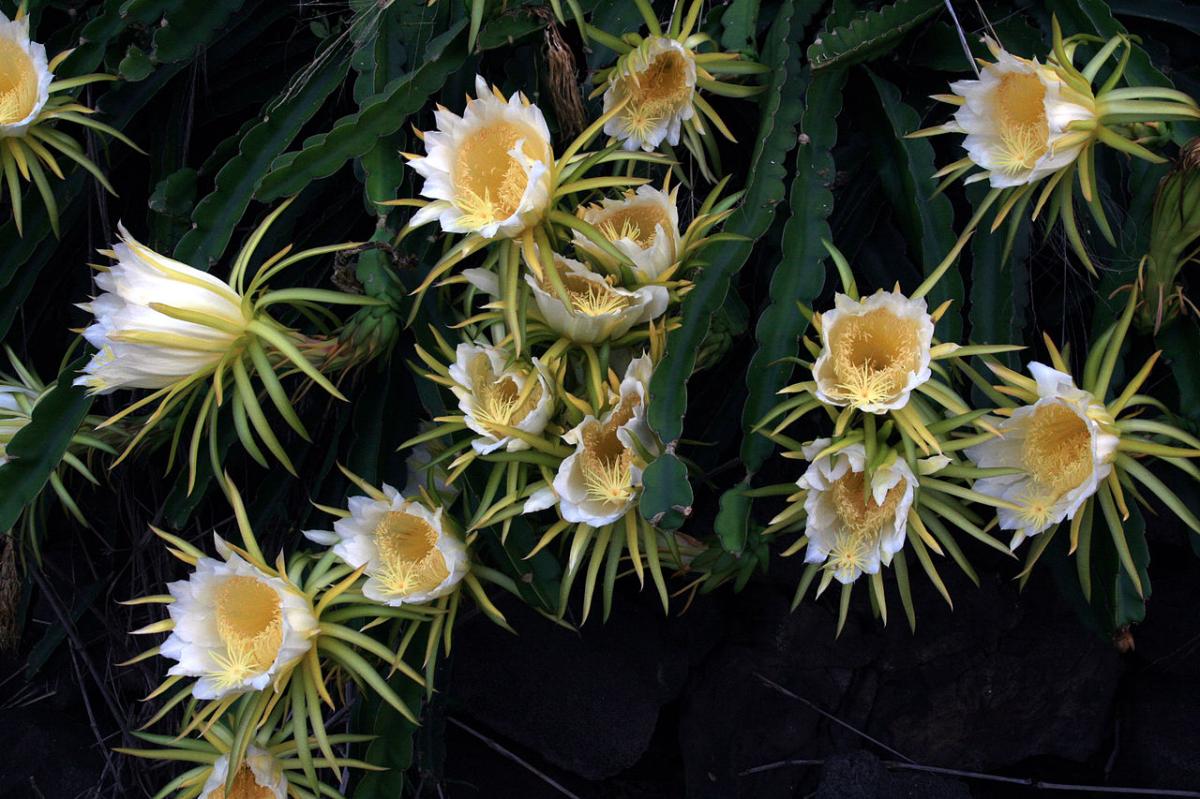
Image - Wikimedia / Brocken Inaglory.
The pitahaya is an epiphytic cactus that can grow on a support, such as a tree trunk, or by creeping along the ground. Native to Central America, it is now cultivated in virtually every warm-climate region of the world. It can reach up to 10 meters in height if it can climb , although in a garden or orchard it is usually kept below 3-4 meters to allow for easy harvesting of its fruit.
Its stems are succulent, green, and can reach up to 5 meters in length. They have areoles from which sprout 1 to 3 very short, brown or blackish spines, usually about 4 millimeters long. The flowers are white with green tepals, measure 30 centimeters in length, and are fragrant . They open at night and close the following morning. If they are pollinated, which requires pollen from another plant, the fruit will begin to ripen.
Once it ripens, it will be a berry between 6 and 12 centimeters in diameter with a red to yellow rind , and the pulp will be transparent. The seeds inside will be black, small, but very numerous.
Caring for the Hylocereus undatus
Hylocereus undatus is a plant that can be kept alive for a long time if cared for in the following way:
Location
This plant needs to be placed in a sunny spot . It needs plenty of light to grow and bloom, so don't be afraid to expose it to sunlight from a young age.
Of course, and as we always say, if we have bought our pitahaya in a nursery where they had it sheltered, when we get home we must put it in semi-shade, not in the sun because otherwise the next morning we would see that it has burns.
Earth
- Flower pot: it is highly recommended to fill it with a substrate that drains the water well. An interesting mix is the following: 50% black peat + 50% perlite (for sale here).
- Garden: the earth must have a correct drainage so that the roots of the pitahaya do not rot. For this reason, it will grow well in sandy soils, which absorb and filter water quickly.
Irrigation
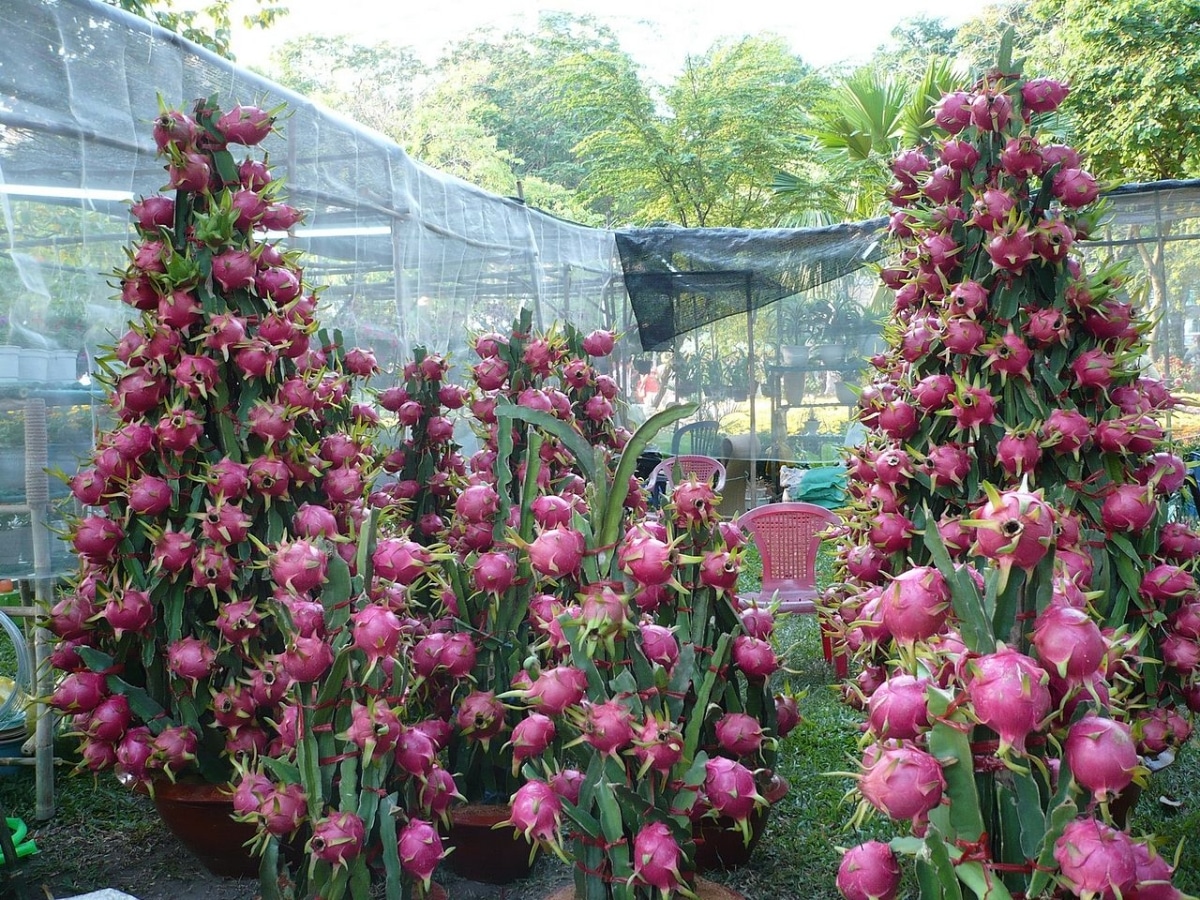
Image - Wikimedia / Prenn
During the summer, when temperatures are high and there is little or no rain, it's important to water it once or twice a week . In winter, however, since the weather will be different—colder and perhaps more humid—the plant will go dormant and its water needs will decrease, so we'll only need to water it about once a month.
Whenever possible, rainwater should be used, since it is the best that the plants can receive, regardless of what it is. Now, you should know that any soft water that has little lime will also work for you.
Subscriber
The Hylocereus undatus should be fertilized to maximize the plant's yield and keep it healthy from spring through late summer . As we know, its fruit is edible, so we recommend using fertilizers approved for organic farming, such as guano (available here ) or worm castings. If you make compost to fertilize your crops, you can also apply it around the base of the pitahaya and mix it into the soil.
Multiplication
It is a cactus that multiplies by seeds and cuttings, from spring to early summer.
- Seeds: they must be sown in pots with cactus soil, keeping them separated from each other and covering them only with a little substrate.
- Cuttings: They are made by cutting stems and planting them in individual pots with vermiculite for example. Then water and put them in semi-shade.
Transplant
If it's being grown in a pot , we'll need to repot it in a larger one roughly every two or three years, ideally in spring. The new pot should be about 7-10 centimeters wider and taller than the previous one, as this cactus grows quite quickly. It also needs drainage holes at the bottom; otherwise, the roots will rot as water accumulates inside the pot.
If we want to plant it in the garden , it should also be done in spring. If we have more than one, they should be spaced about a meter apart to give them enough room to grow.
Rusticity
The pitahaya is a plant that withstands light frosts , down to -1, maybe -2º if it is sheltered and it is occasional.
What are the benefits of pitahaya?
The fruit of the Hylocereus undatus is edible and has numerous health benefits. In fact, it is an antioxidant, aids digestion, improves the cardiovascular system thanks to its high content of essential fatty acids such as omega-3, is a diuretic, and helps combat anemia.
How do you eat pitahaya?
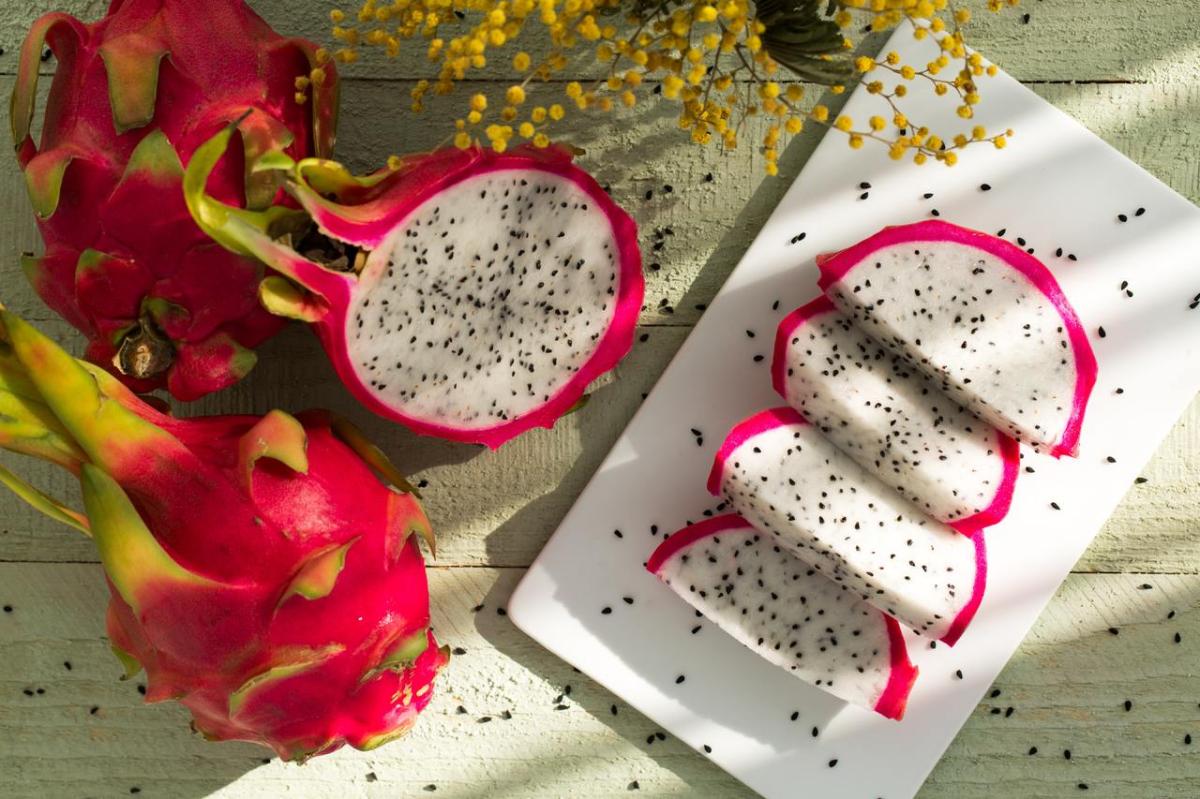
You can eat it raw , for example in ice cream or salads. It's also used to make other desserts, such as cakes or yogurt. Simply cut it in half and scoop out the pulp with a spoon.
What did you think of the Hylocereus undatus?
Table of Contents