

If there is one species of euphorbia that is very, very popular all over the world, being cultivated both in gardens and inside homes, that is undoubtedly Euphorbia pulcherrima , better known as the poinsettia.
It is a plant that we do not usually find in succulent nurseries, since we have made it a symbol of Christmas and therefore we often label it as an indoor plant, but the truth is that it is beautiful even in a cactus garden.
Origin and characteristics of the poinsettia
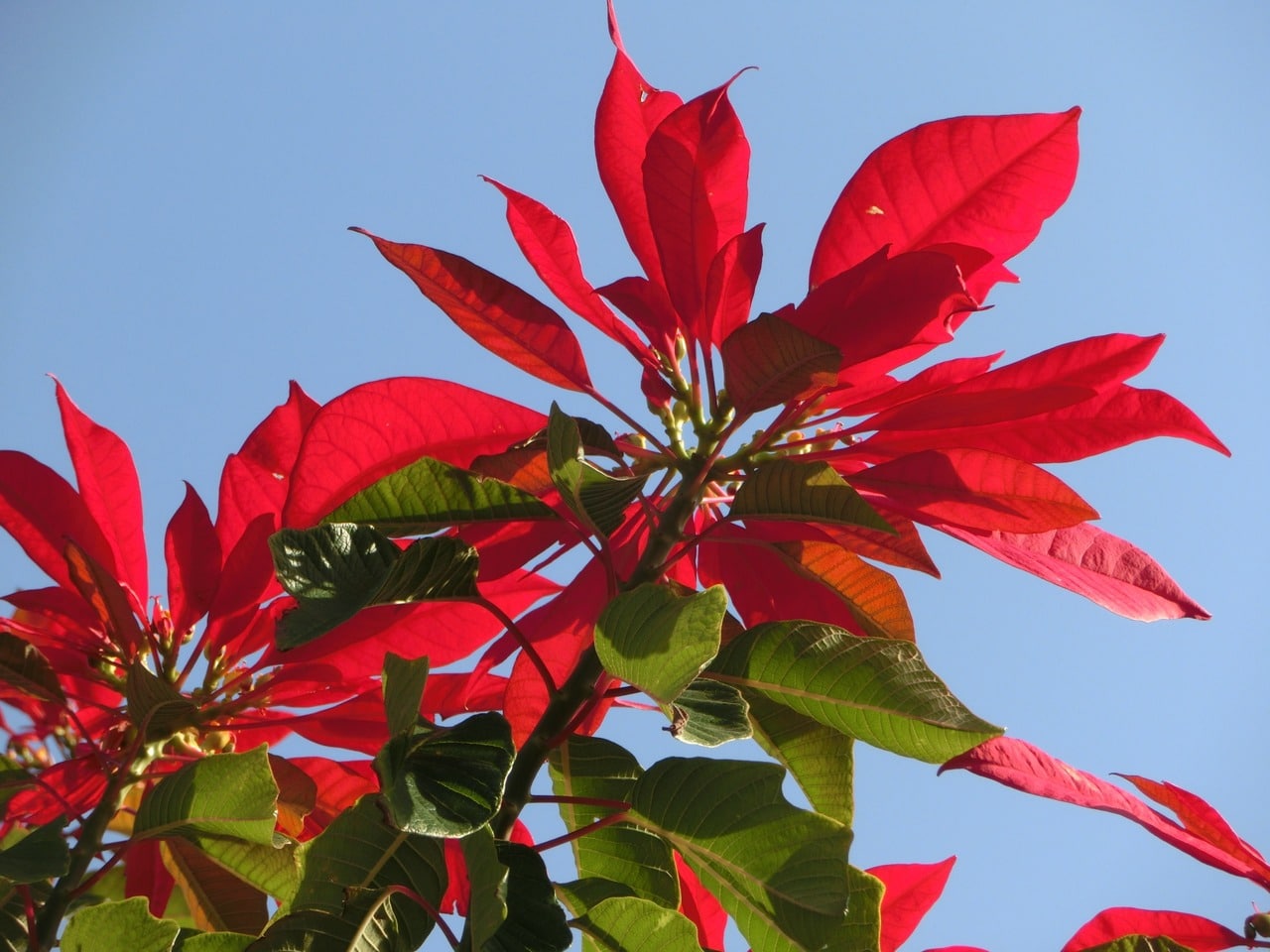
It is a deciduous shrub or small tree native to Mexico and Central America, commonly known as poinsettia, Christmas flower, or Christmas flower, and scientifically as Euphorbia pulcherrima . It grows to a height of 4 meters , with a sparsely branched crown formed by hollow stems filled with a white substance: latex, which irritates the skin.
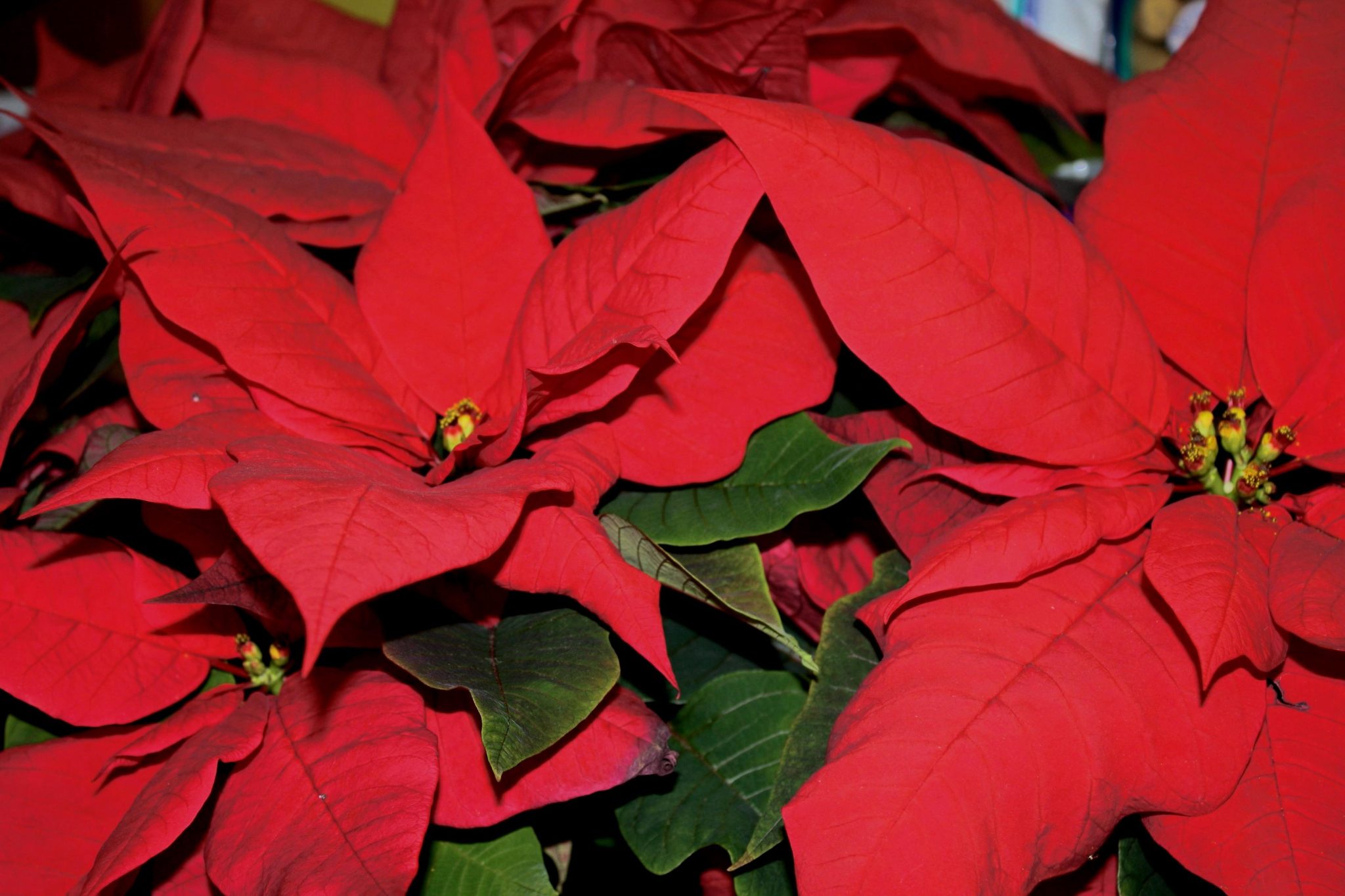
The leaves are lanceolate or ovate-elliptic, with entire or slightly toothed margins, and are green. The flowers are grouped in inflorescences consisting of a female flower without petals or sepals, surrounded by male flowers that sprout from a structure called a cyathium, which appears to be a single flower but is actually several. These inflorescences are surrounded by bracts, that is, modified leaves, which are red, yellow, or variegated.
It blooms in winter . Naturally, it does so in winter, sometime between November and January in the Northern Hemisphere, but you can trick the plant into blooming at Christmas by placing it in a location where it receives no light for 12 hours starting in October.
How do you take care of yourself?
If you want to have a copy, we recommend that you provide it with the following care:
Location
Euphorbia pulcherrima is a plant that prefers to be outdoors in partial shade . However, if winters are cold and frosty, it should be brought indoors during that season, always away from drafts and in a bright room.
Earth
- Flower pot: fill it with a substrate rich in organic matter and that has good drainage. For example, a good mix would be 70% universal substrate + 30% pearlite.
- Garden: grows well in fertile, well-drained soils. Keep in mind that it is very sensitive to overwatering and waterlogging, so if the soil you have tends to compact, make a planting hole of at least 50 x 50cm (better if it is 1m x 1m), and fill it with black soil mixed with perlite in equal parts and plant your poinsettia in it.
Irrigation
The poinsettia, or Christmas flower, is a plant that needs to be watered occasionally . Waterlogging is harmful, but so is drought; therefore, to avoid problems, we advise the following:
- Before watering, check the humidity of the soil, for example by inserting a stick: if when removing it it comes out with a lot of soil attached, do not water. When in doubt, wait a few days.
- Do not put a plate under it or put it in a pot without holes: stagnant water rots its roots.
- Do not spray / mist it with water: its leaves rot easily. It is better to put containers with water around it.
Subscriber
From early spring through summer, it's beneficial to fertilize it with liquid guano, following the instructions on the packaging. In autumn and winter, you can add a small spoonful of blue nitrophoska once a week; this will help keep its roots warmer, making it easier for them to survive the winter. This trick is especially useful when growing outdoors in areas with a mild climate, where there may be light frosts down to -2°C.
Pests
It's vulnerable to spider mites , mealybugs, aphids , whiteflies, and thrips. Fortunately, it's a relatively small plant, so you can remove them with a brush dipped in rubbing alcohol.
If it is very widespread, you can use diatomaceous earth or potassium soap.
Diseases
If overwatered or in a very humid environment, it can be affected by fungi such as rust , botrytis , and Pythium. Watering should be controlled, and if signs of rot appear, the plant should be cut back and treated with a fungicide.
Problems
The most common problems are:
- Fall of leaves: it may be due to cold or drafts.
- Loss of leaf color: lack of light.
- Withered leaves that fall fast: excess of water.
- Leaves that turn yellow leaving the nerves well visible: iron deficiency. Apply iron chelates and water with lime-free water.
Multiplication
The poinsettia is propagated by cuttings in spring , following these steps:
- First, a stem is cut that has already begun to lignify, that is, that is semi-woody.
- The base is then infused with powdered rooting hormones.
- Then, a pot is filled with vermiculite previously moistened with water.
- Next, a small hole is made in the center.
- Finally, the cutting is planted in said hole, and the pot is completed.
Now you just have to put it outside, in semi-shade, and keep the substrate moist but without flooding.
Planting or transplanting time
In spring , when the risk of frost has passed.
Rusticity
It can withstand frosts down to -2ºC , but nursery plants are very delicate, which makes the first year the most difficult.
Where to buy?
You can get it from here:

Table of Contents