

There are many types of succulent plants with curious and / or pretty flowers. Some of them produce large sizes, others have smaller ones, but there is such a variety that it is very difficult for you to get tired of looking at them. In fact, it is common for people to say that it is a shame that they last so little, because they are, in most cases, real beauties.
Want to know which ones are available? If so, stay tuned because we've selected some of the most beautiful ones , which are also easy to find in nurseries and/or specialty stores.
Since there are basically two types of succulents (cactus and succulents), we are going to present you some species of each one so that, in this way, it is easier for you to choose:
Cactus with lovely flowers
Cacti are plants native primarily to the Americas. They live in arid and semi-arid regions, where temperatures can rise and even exceed 40°C. Some can withstand (light) frosts, such as those that grow near or in the Andean regions, like Espostoa or Cephalocereus.
Focusing on those that produce showy flowers, we definitely recommend the following:
The giant carnage
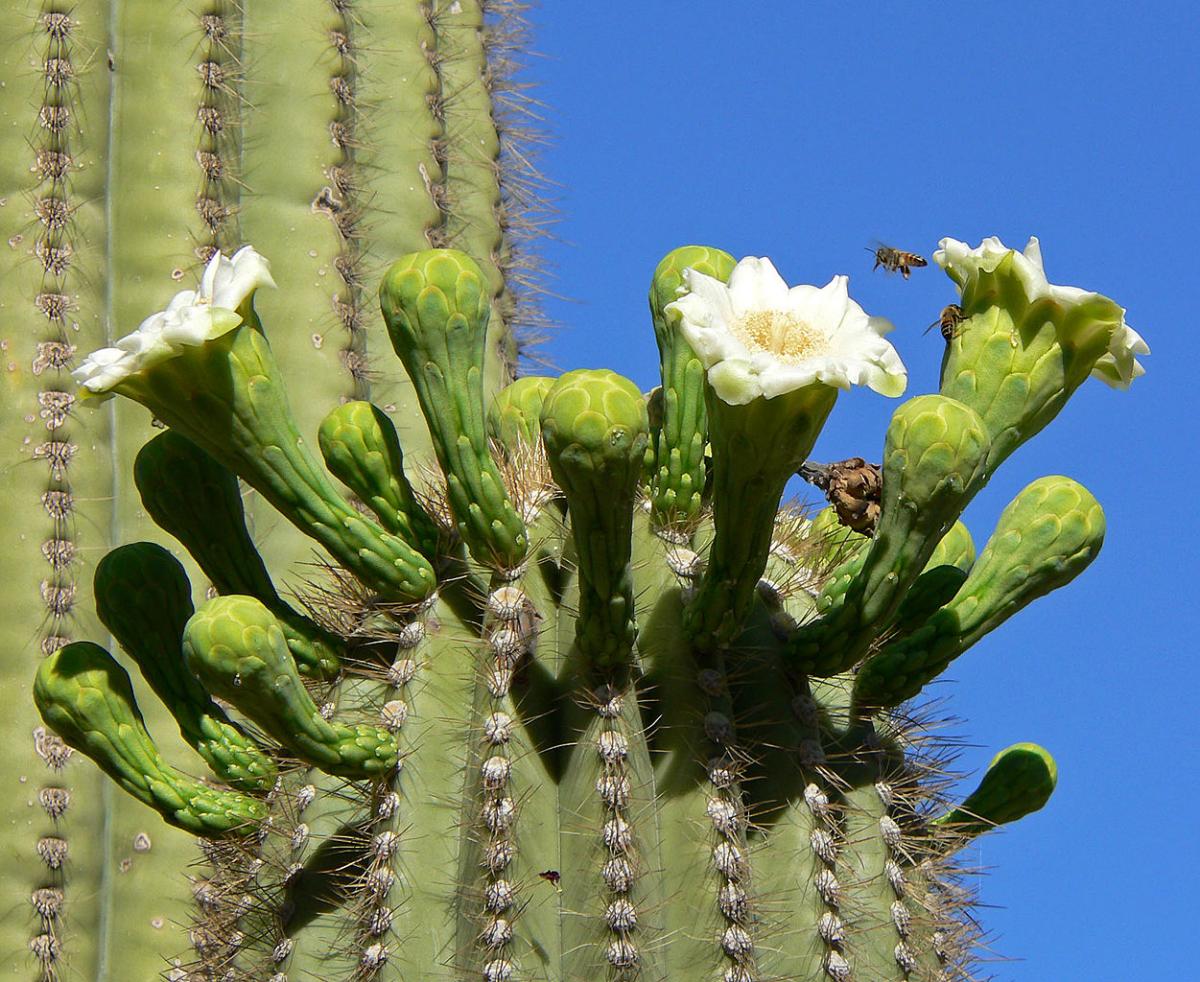
Image - Wikimedia / Stan Shebs
The Carnegiea gigantea , much better known as the saguaro, is the slowest-growing columnar cactus: it can take about 20 years to reach one meter in height, and grows to 16-18 meters tall. Its stem is usually solitary, but it may branch as it matures. When young, it has long, sharp spines, but older specimens tend to lose them. Flowers only appear on saguaros that are already over 4 meters tall, and they grow at the top of each stem. They are white and large, measuring up to 13 centimeters in diameter.
Echinopsis chiloensis
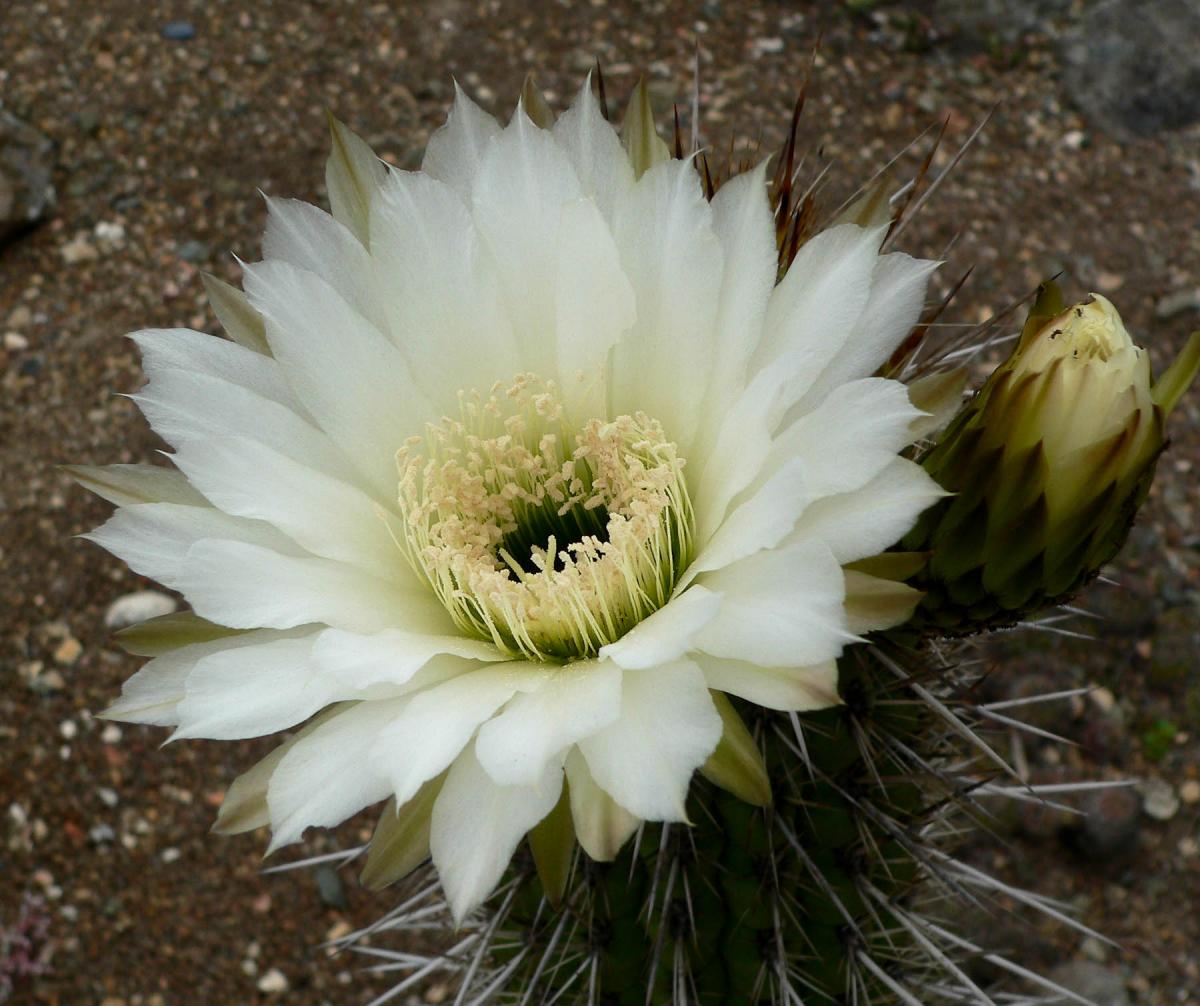
Image - Wikimedia / Stan Shebs
Echinopsis chiloensis is a columnar cactus endemic to Chile, known locally as quisco. It develops cylindrical, branching stems, taking on a candelabra-like shape, reaching up to 8 meters in height and 12 centimeters in diameter. It has 8-12 radial spines and one central spine, which measures between 4-7 and up to 20 centimeters in length. These spines are straight and sharp, so the plant must be handled with care. The flowers are white and open during the day.
Mammillaria proliferates
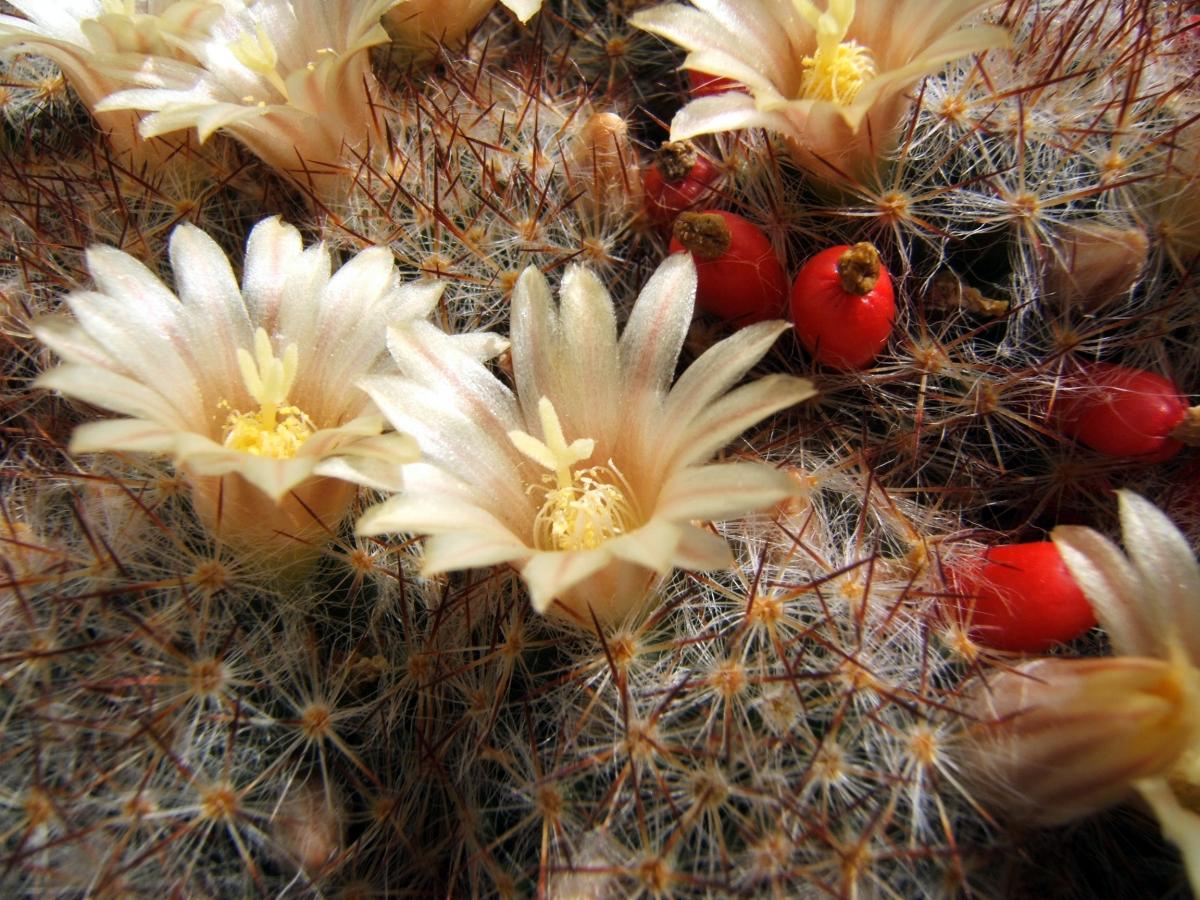
Image - Wikimedia / Tim Parkinson
Mammillaria prolifera , commonly known as the female hedgehog cactus, is a species endemic to Mexico and Texas. Its body is globular, and it forms colonies or clumps that reach 10-15 centimeters in height and roughly the same in diameter. It is well-armed with spines, possessing 5-12 central spines and approximately 40 radial spines. These are not very painful, but it is advisable to wear gloves when handling it. The flowers are cream-colored and measure 1,4 centimeters.
Rebutia pulvinosa
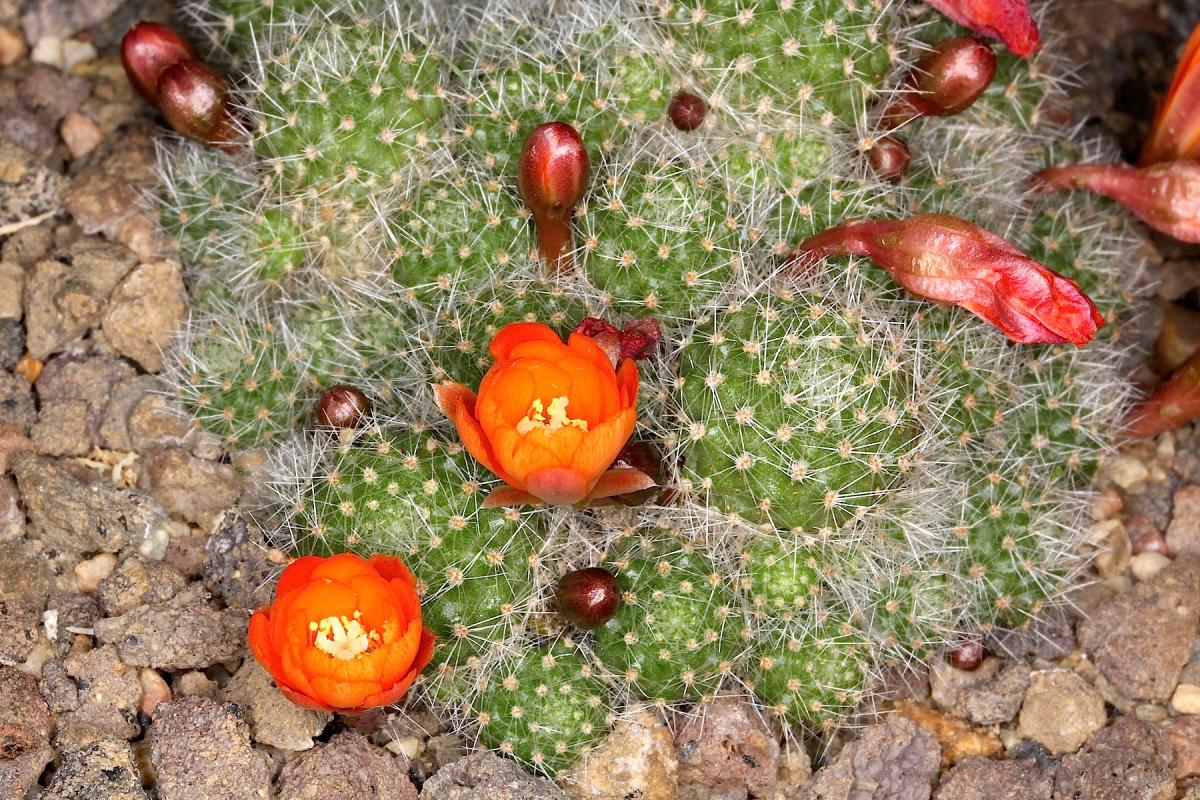
Image - Wikimedia / Peter A. Mansfeld
Rebutia pulvinosa is a small cactus, rarely exceeding 5 centimeters in height. It is endemic to Tarija, a region in Bolivia. Its body is spherical and covered in spines, but these are harmless. It forms small clumps, usually no more than 10 centimeters in diameter. Its flowers are white or orange.
Turbinicarpus valdezianus
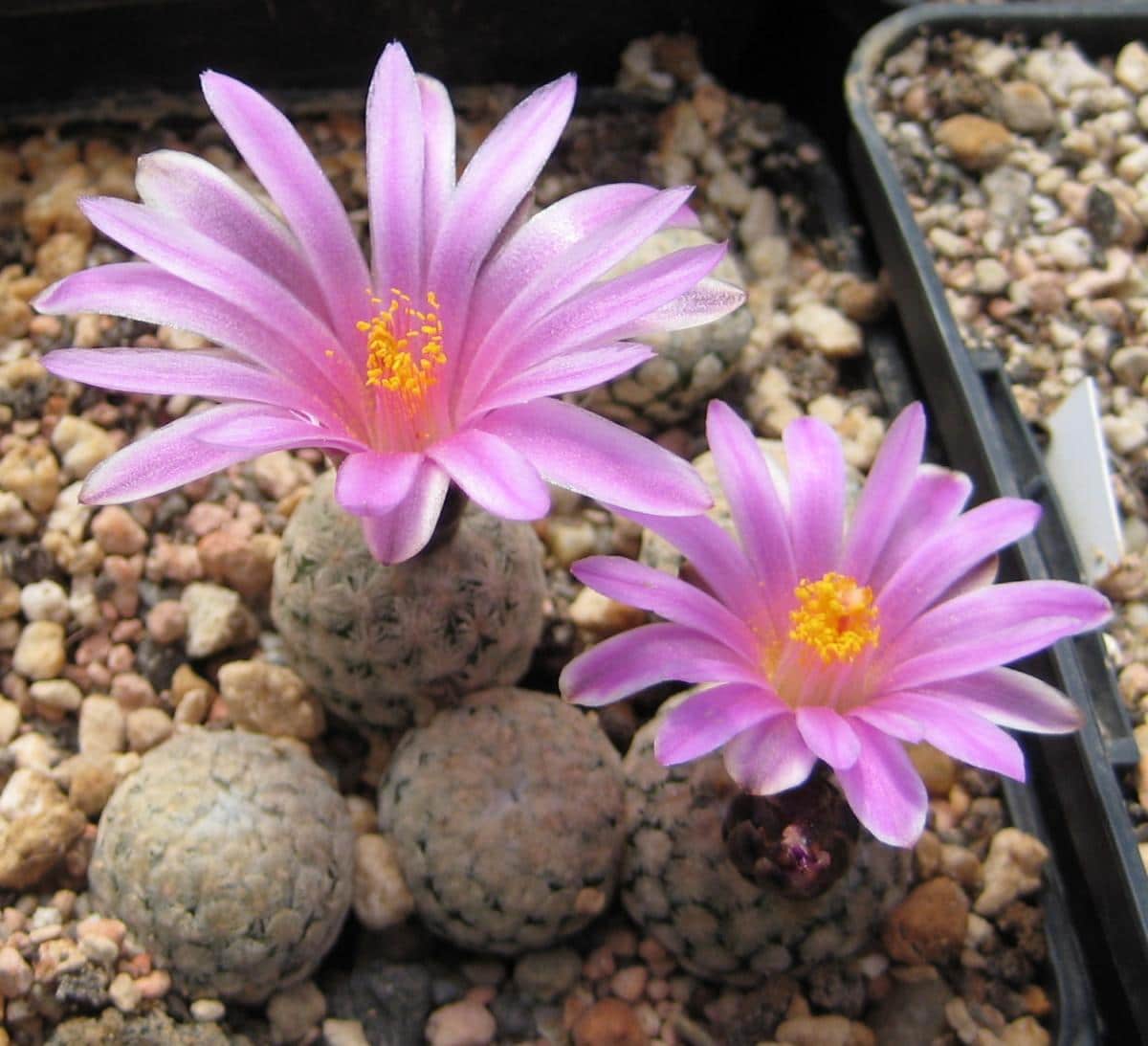
Image - Wikimedia / Michael Wolf
Turbinicarpus valdezianus (formerly Pelecyphora plumosa ) is a cactus endemic to Mexico, specifically the states of Coahuila de Zaragoza and San Luis Potosí. It grows very slowly, but is beautiful whether in bloom or not. It reaches a height of 2,5 centimeters and a diameter of approximately the same, and has 25 radial spines up to 1,5 mm long. The flowers are white or magenta and bloom at the top of the stem.
Succulents with lovely flowers
Now we are going to see what are some of the succulents, that is, plants that do not have areoles like cacti, which produce beautiful flowers. These have fleshy leaves and are usually colored that attract attention, so they are interesting for this reason as well.
Most of those that are cultivated are native to Africa, especially the south of the continent, but there are species throughout most of the world.
Conophytum minutum
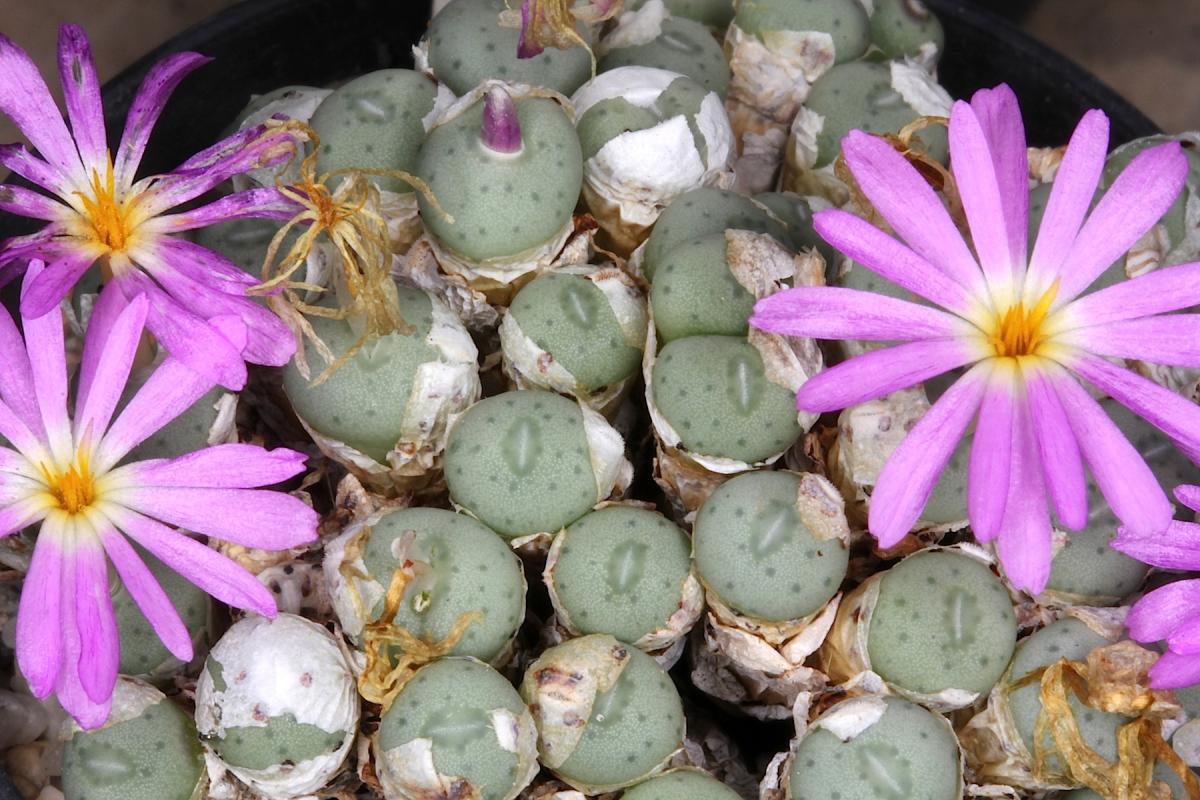
Image - Wikimedia / Peter A. Mansfeld
Conophytum minutum is a plant that, like Lithops, is very small. It grows to about 4 centimeters tall, and its leaves are also arranged in pairs. At the top, there is a small fissure from which new leaves and lilac flowers emerge.
echeveria elegans
-

- Image - Wikimedia / Jacopo Werther

-
- Image - Wikimedia / Diego Delso

Echeveria elegans , known as the alabaster rose, is a plant native to Hidalgo, a state in central Mexico. Its leaves form stemless rosettes, about 10 centimeters in diameter. It tends to produce numerous stolons (offshoots from thin stems), so over time it forms attractive clumps. The flowers are grouped in spikes and are orange.
Lithops karasmontana
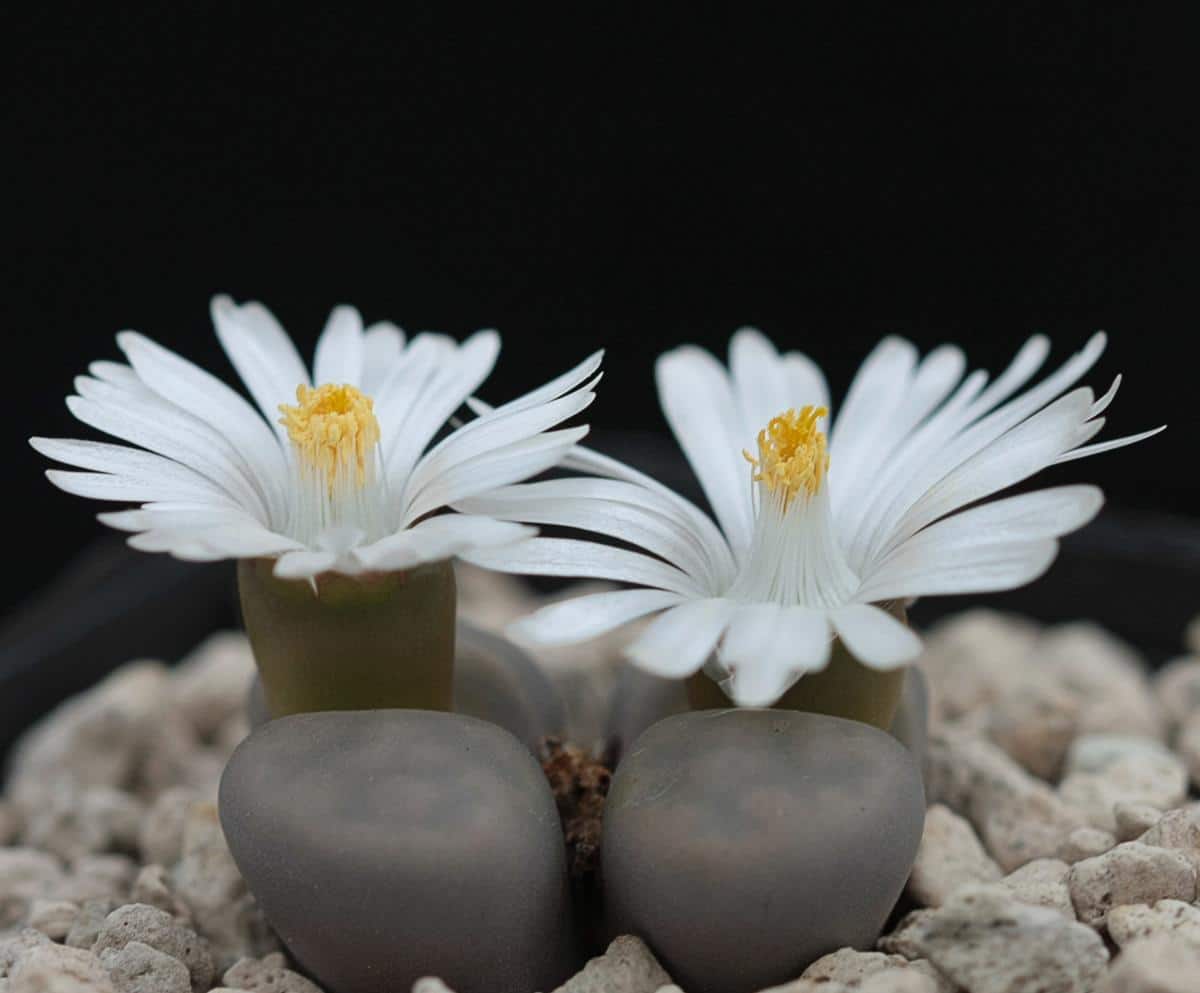
Image - Wikimedia / Dornenwolf
Lithops karasmontana , known as the stone plant or living stone , is a succulent native to Namibia that grows to about 5 centimeters tall. It has only two leaves, which are fused together and divided by a fissure at the top. From this fissure emerge two new leaves that replace the old ones, as well as small, white flowers.
sedum palmeri
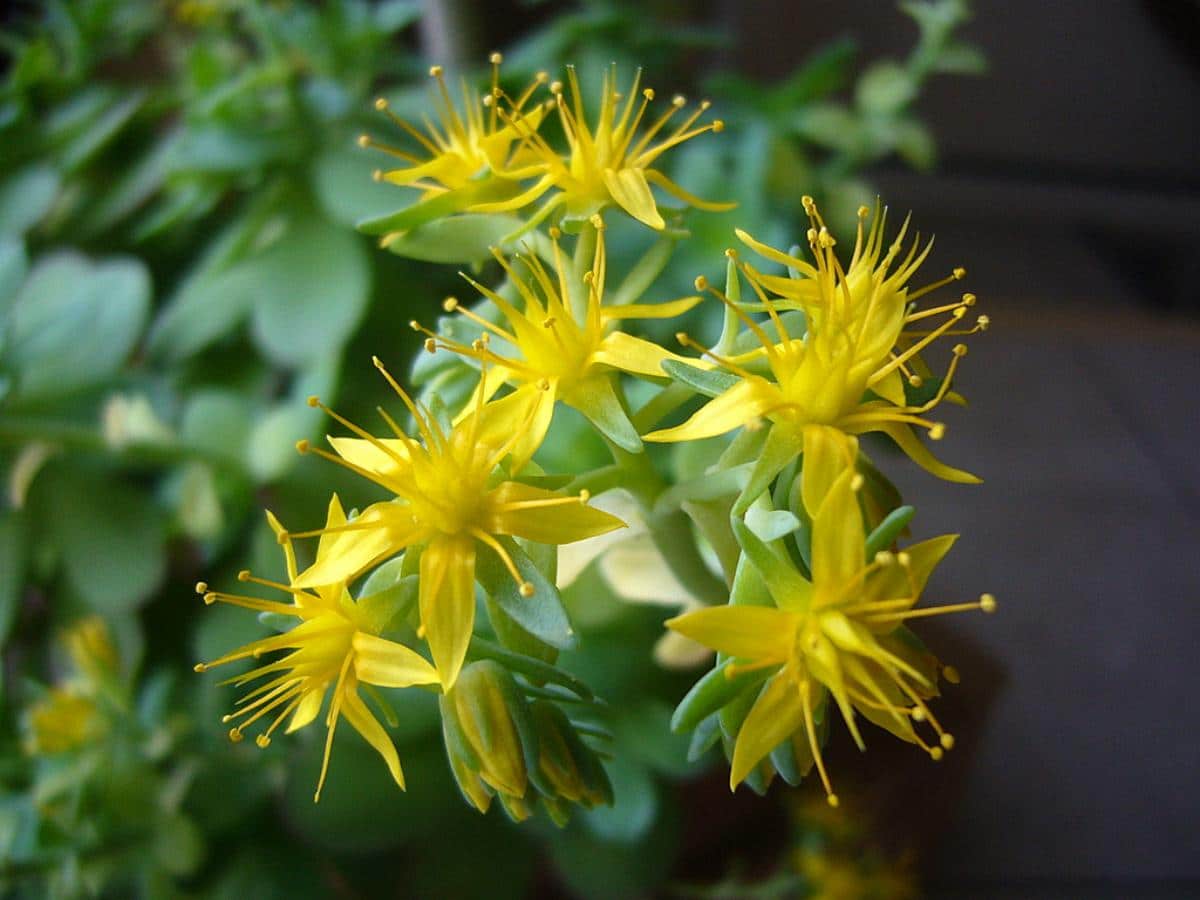
Image - Wikimedia / Abrahami
Sedum palmeri is a succulent plant native to Mexico, with creeping or trailing stems. The leaves form rosettes and are more or less triangular, green with pink margins. The flowers are grouped in terminal inflorescences and are yellow.
Sempervivum tectorum
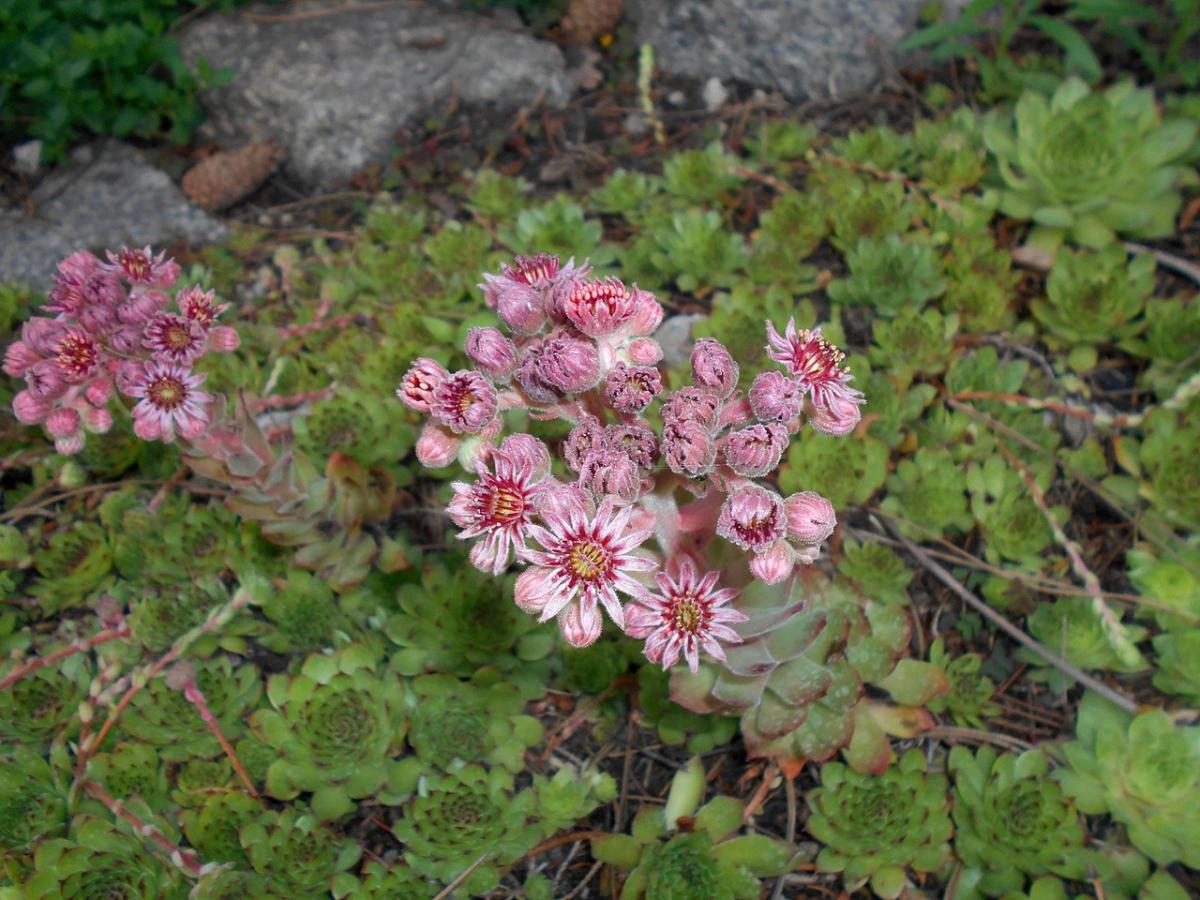
Image - Wikimedia / Salicyna
Sempervivum tectorum is a plant commonly known as common houseleek or rockrose. It is native to the Pyrenees, Alps, Apennines, and Balkans. It reaches a height of 20 to 30 centimeters and a diameter of 15 to 30 centimeters. The leaves form rosettes and are bright green with purple tips. The flowers are star-shaped and pink or reddish.
Which of these flowering succulents did you like the most?
Table of Contents