

Image – Wikimedia/MidgleyDJ
Aloe vera is a very popular plant: we grow it in gardens and patios, as well as on terraces and balconies. We also use it for our benefit, taking advantage of its medicinal properties. It's so common among us that people began to believe there were different types of Aloe vera.
Some have white spots, others green; some have longer, narrower leaves than others, or different flowers. But if you want to know if there are different types of Aloe vera , we'll explain it below.
Are there different types of Aloe vera?
The answer is: no . For many, many years it was thought to be true; in fact, if we investigate its taxonomy, that is, the science that deals with classifying living beings by grouping them into categories such as family or genus, we will see that from 1753, when Carl Linnaeus named it Aloe vera , until 1880, it has been given up to 17 different names :
- Aloe barbadensis Miller.,1768.
- Aloe barbadensis there. chinensis Hawaii, 1819
- Aloe chinensis Steud. former Baker, 1877
- aloe elongata Murray, 1789
- aloe flava Person, 1805
- aloe indicates Royale, 1839
- Aloe spear All., 1890.
- Aloe littoralis J. König ex Baker, 1880 nom. invalid
- aloe maculate Forsk.,1775 name illeg.
- Aloe perfoliata there. barbadensis (Mill.) Aiton, 1789
- Aloe perfoliata there. true L., 1753.
- Aloe rubescens A.D., 1799
- Aloe variegata Forsk,.1775 name illeg.
- Aloe vera there. chinensis (Steud. ex-Baker) Baker, 1880
- Aloe vera there. launch Baker, 1880
- Aloe vera there. littoralis J. König ex Baker, 1880
- aloe vulgaris lam., 1783
Currently, it is known that of all these, A. maculata, A. perfoliata, and A. variegata are three types of aloe distinct from A. vera . The rest are synonyms, meaning they are names that designate the same species: A. vera.
Aloe vera with or without spots
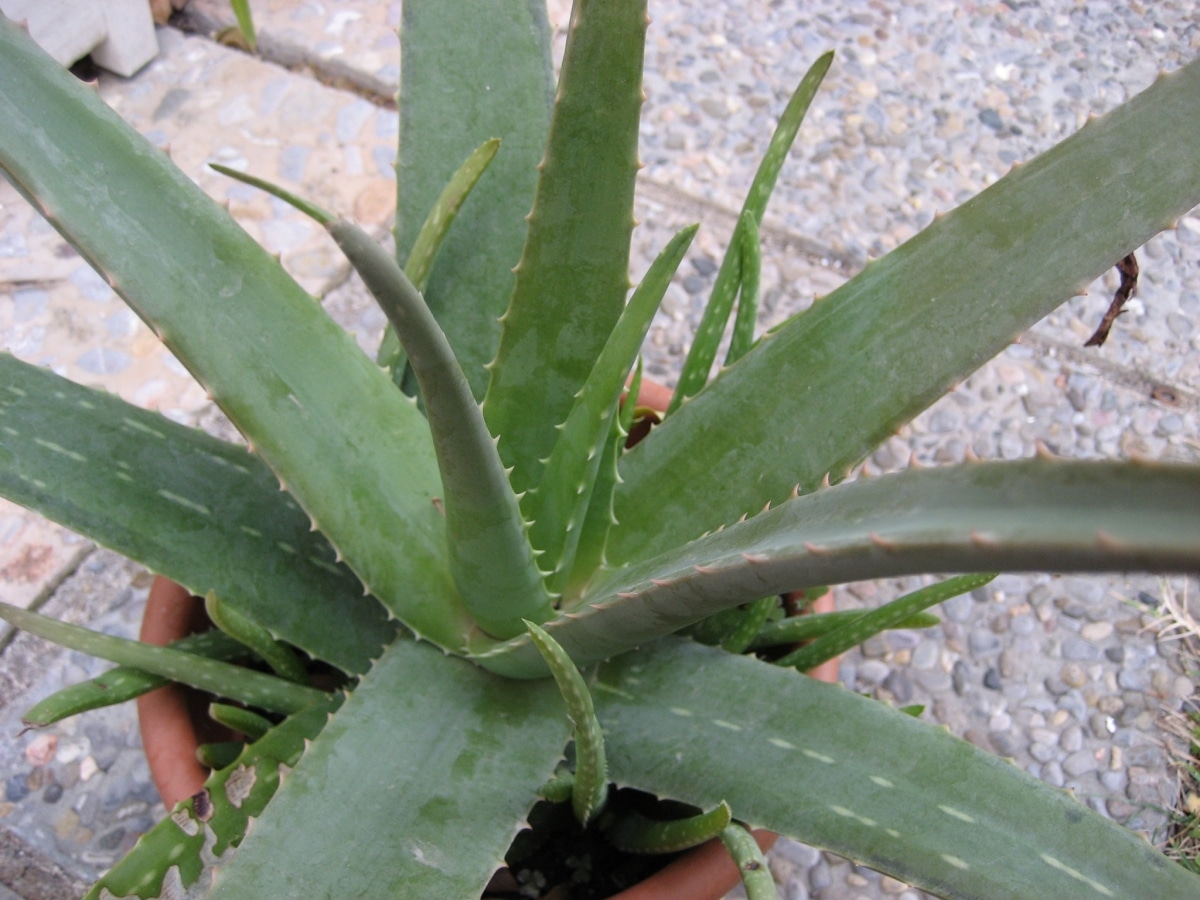
Image – Flickr/Fotero
The small white spots we sometimes see on the leaves can be quite confusing. Are they different varieties? Not at all: those with spots are simply younger than those without . Indeed, a young Aloe vera typically has green leaves with white spots, but as it grows, it loses these spots, and sometimes they disappear altogether.
And no, aloe vera gel with spots is no more or less beneficial than that from a plant without spots. In fact, it's identical. However, you should keep in mind that you must wait until the plant is at least four years old and flowers , because if you remove the leaves from a young aloe, you will delay its growth and could weaken it.

What are the characteristics of Aloe vera?
This plant may (or may not) have a small stem about 30 centimeters long, from which sprouts a rosette of green, fleshy leaves, with or without spots, up to 50 centimeters long and about 7 centimeters wide. Their edges are serrated, with teeth that are hard to the touch but completely harmless, measuring about 2 millimeters. It begins to flower around 4 years of age, producing a flower cluster with yellow blossoms that can reach a height of 1 meter.

It tends to produce several suckers throughout its life, although these can be easily separated from the mother plant as soon as they reach 10 centimeters in height and planted elsewhere. This will be done in spring, when the minimum temperatures exceed 15ºC.
What types of aloe can be confused with the Aloe vera?
There are several widely cultivated aloes that resemble A. vera, such as the following:
Aloe arborescens
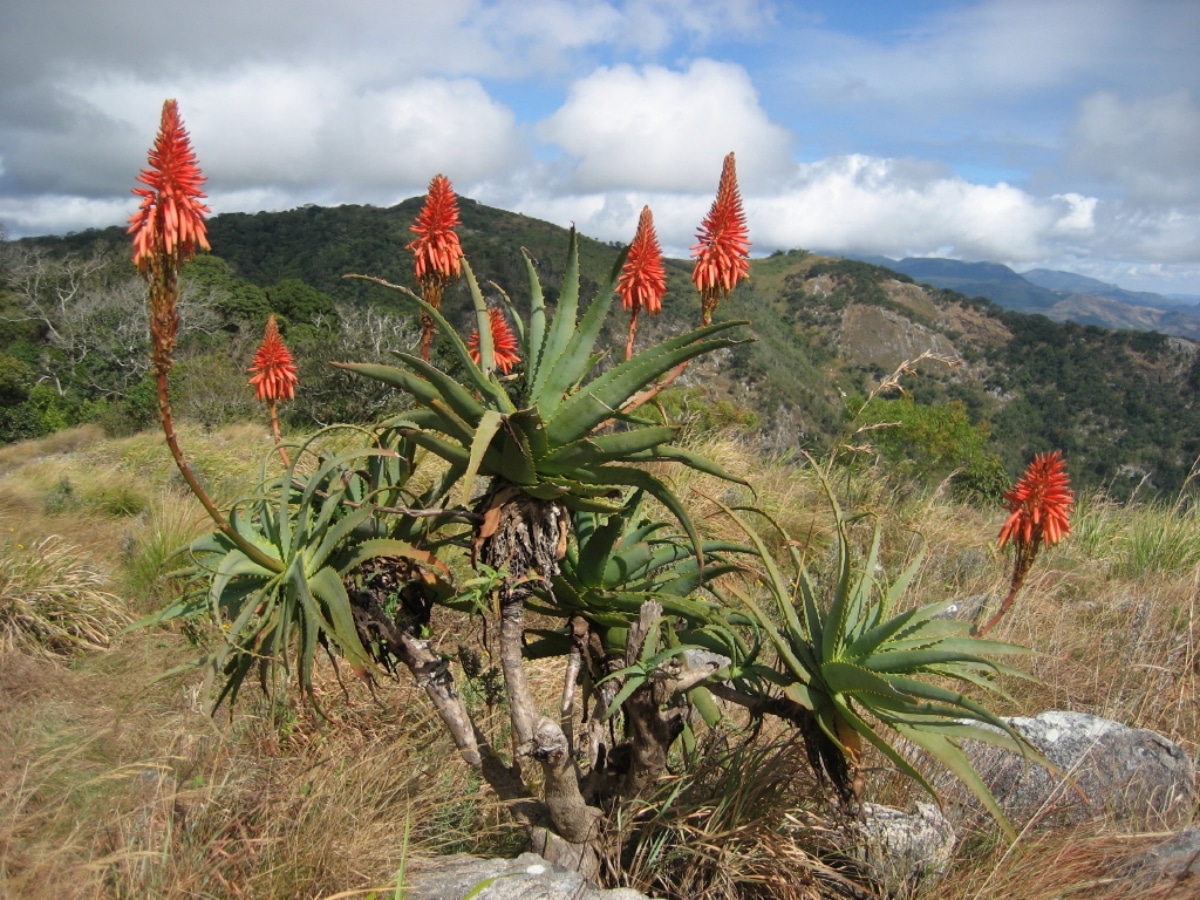
Image - Wikimedia / Ton Rulkens
Aloe arborescens is a shrubby plant that reaches a height of 1-1,5 meters. It has glaucous green leaves with serrated edges. Its flowers grow in clusters and are reddish-orange. They bloom in winter and spring, but it takes several years for the plant to flower.
Aloe aristata (is now Aristaloe aristata)
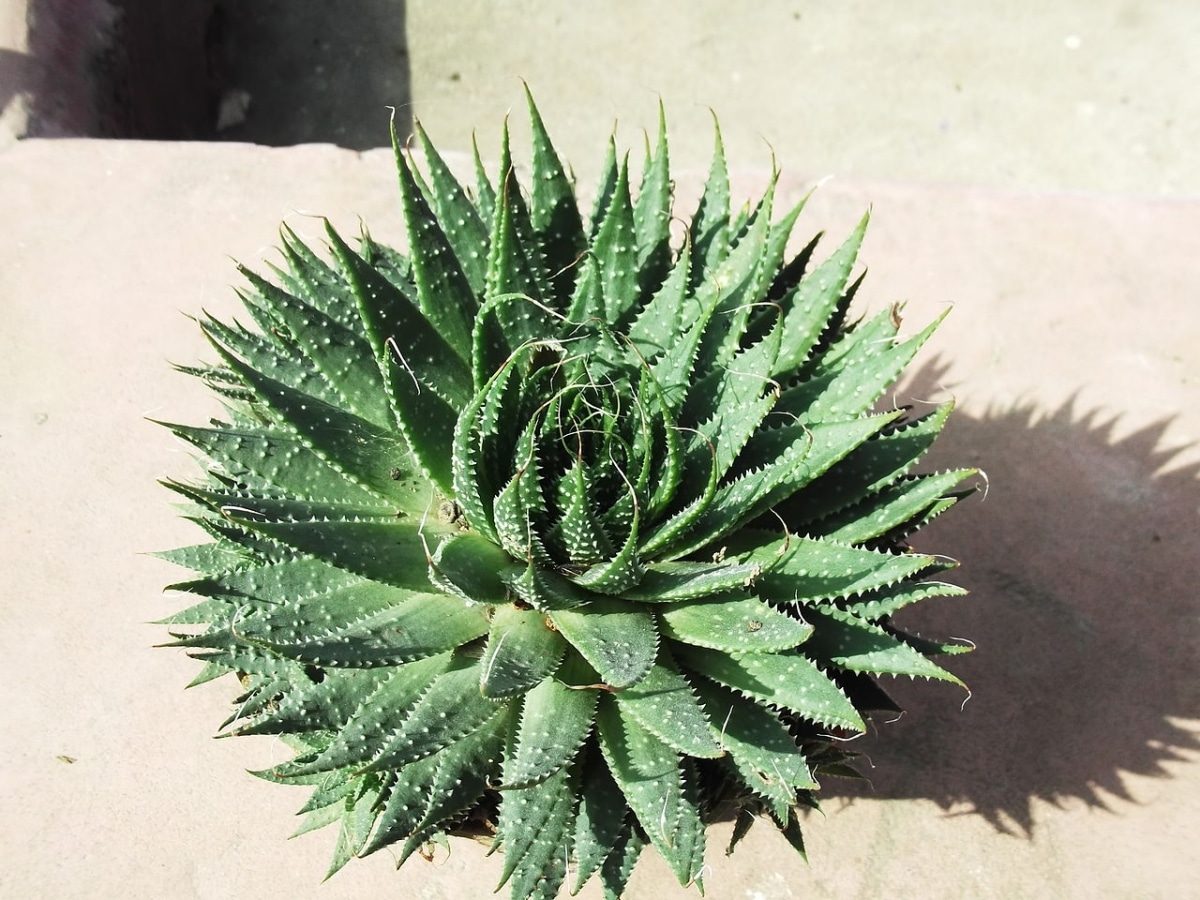
Image - Wikimedia / Yercaud-elango
Formerly known as Aloe aristata , this succulent plant has dark green, triangular leaves with white spots that it never loses . The tips of the leaves have very short, white hairs, about 1 centimeter long. It grows to 10-15 centimeters tall, although it can reach 40 centimeters in width due to the production of offsets. The flowers are red and appear in spring.
aloe maculate (before aloe soapwort)
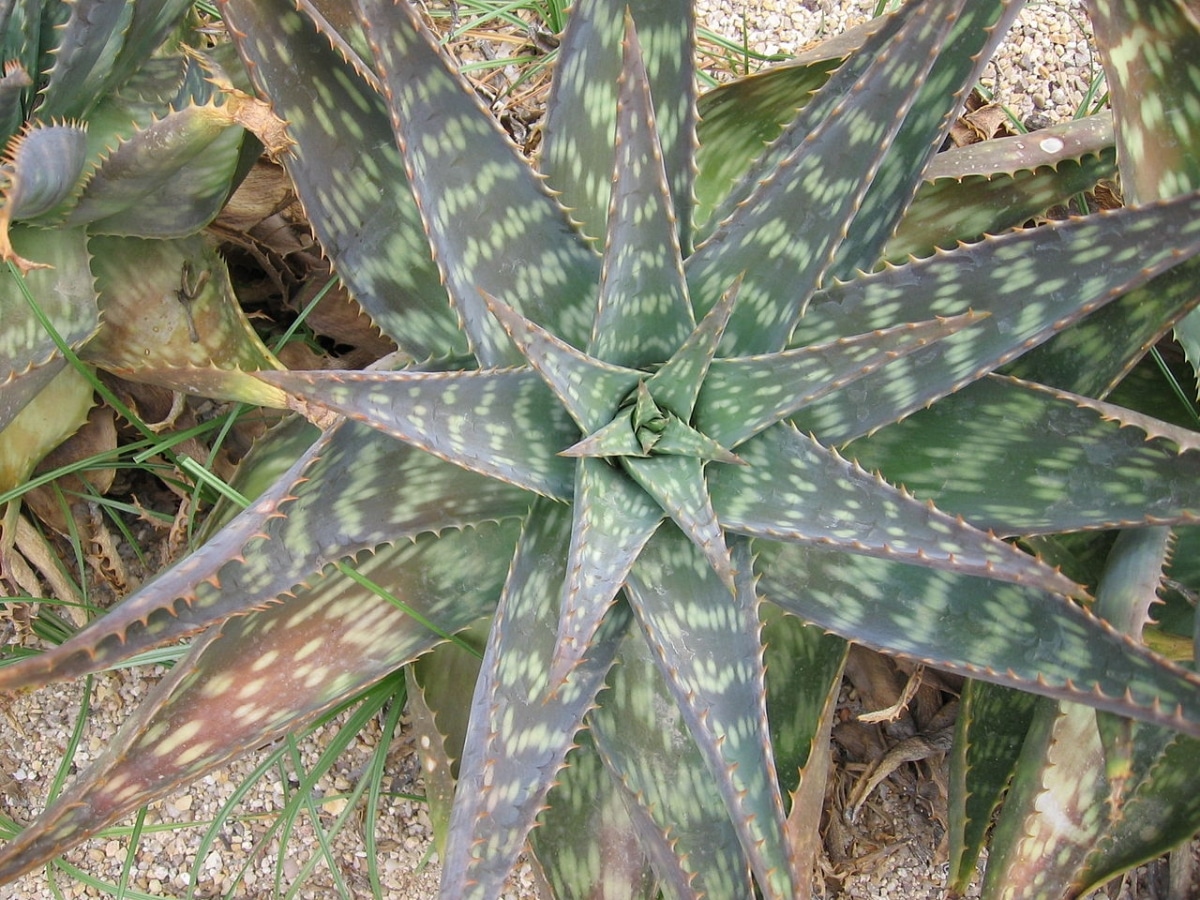
Image - Wikimedia / Digigalos
Aloe maculata is a plant with fleshy, dark green leaves speckled with white spots, which, unlike Aloe vera, it retains year-round . It grows up to 50 centimeters tall and produces offshoots at a young age, which can be separated in spring and summer. Its flowers are reddish-orange, and it blooms in winter and spring.
Aloe x delaetii
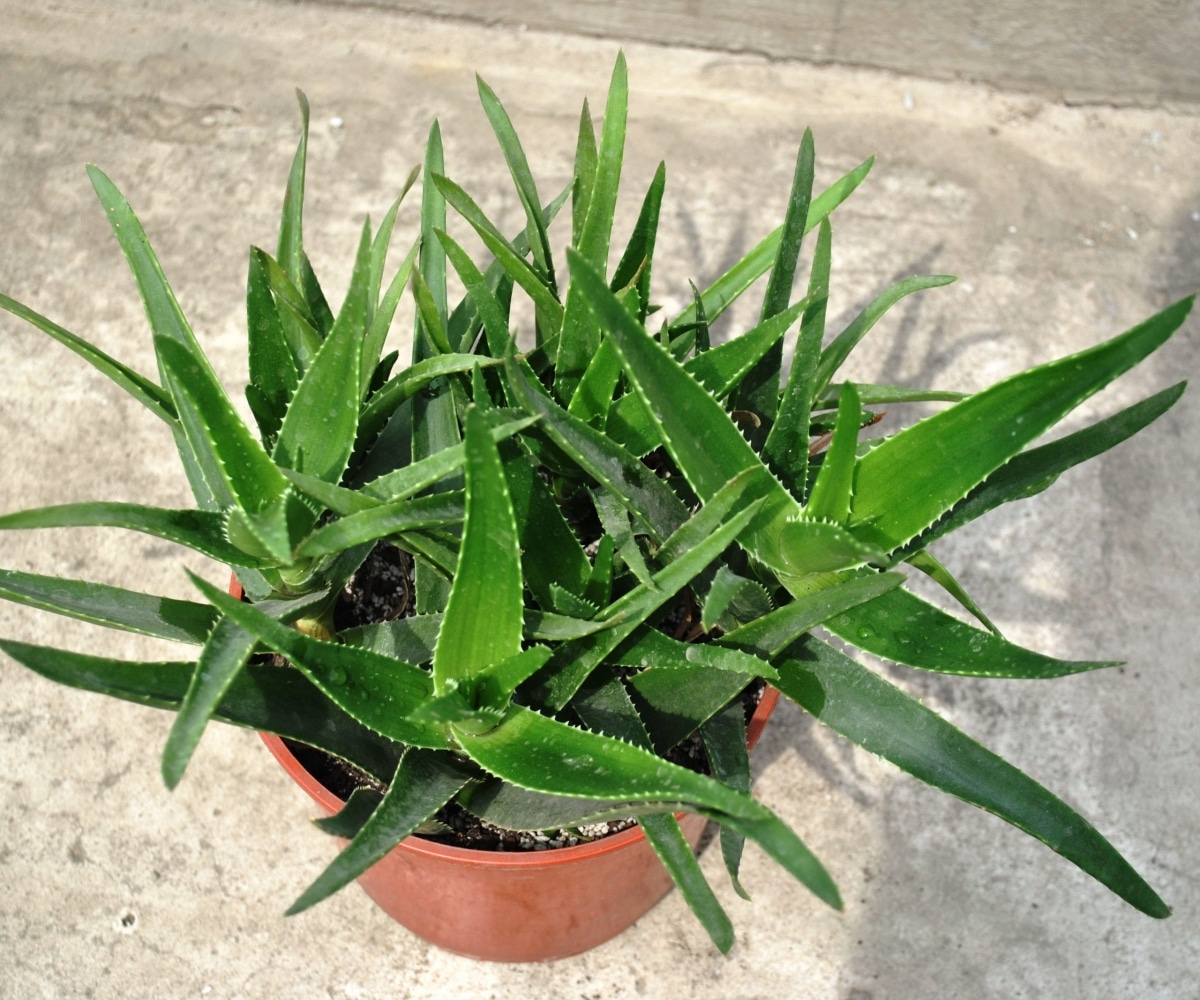
Image – cactus-shop.com
This is a hybrid of Aloe ciliaris and Aloe succotrina , which has completely green , unspotted leaves with finely serrated edges. It reaches 50 centimeters in height and produces greenish-orange flowers. It grows very quickly and produces offsets very soon as well.
Therefore, there is only one type of Aloe vera , and that is precisely it, Aloe vera.
Table of Contents