

The Welwitschia mirabilis is a plant that presents a challenge to all succulent enthusiasts . It's not particularly decorative, but it's so difficult to care for that succeeding with it is a source of pride.
Because it originates from one of the driest and hottest regions in the world, trying to adapt it to a milder climate often ends badly. Nevertheless, this is a succulent blog, and it has to include profiles of all species: the Welwitschia mirabilis profile is a must.
How is it?
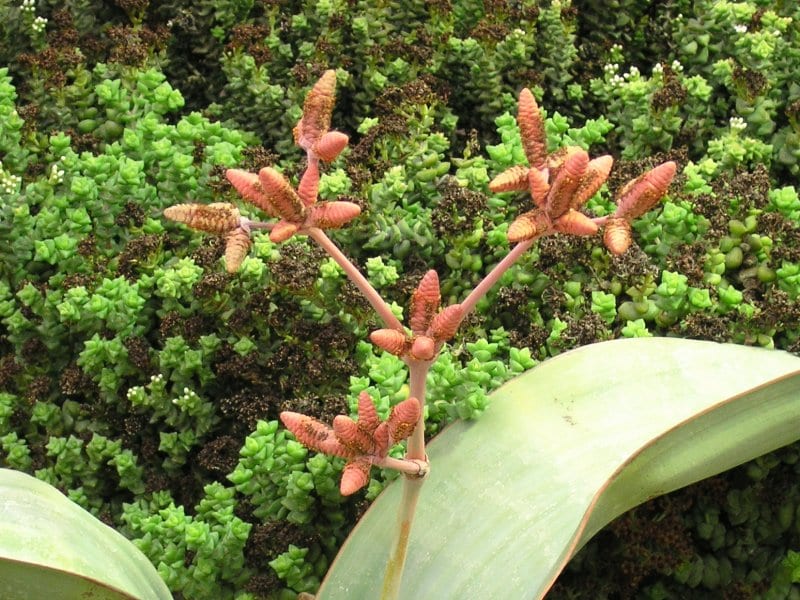
Welwitschia mirabilis is a monotypic species (the only one in the genus Welwitschia) that was described by Joseph Dalton Hooker and published in The Gardeners' Chronicle & Agricultural Gazette in 1862. It is a plant endemic to the Namib Desert that grows from a thick trunk from which only two leaves sprout . Immediately after germination, the cotyledons emerge, which then develop into these two leaves.
The flowers arise from a terminal stem in the center of the plant, and are orange in color. The seeds are plants, with laminar wings, and they measure about 2cm.
What are their cares?
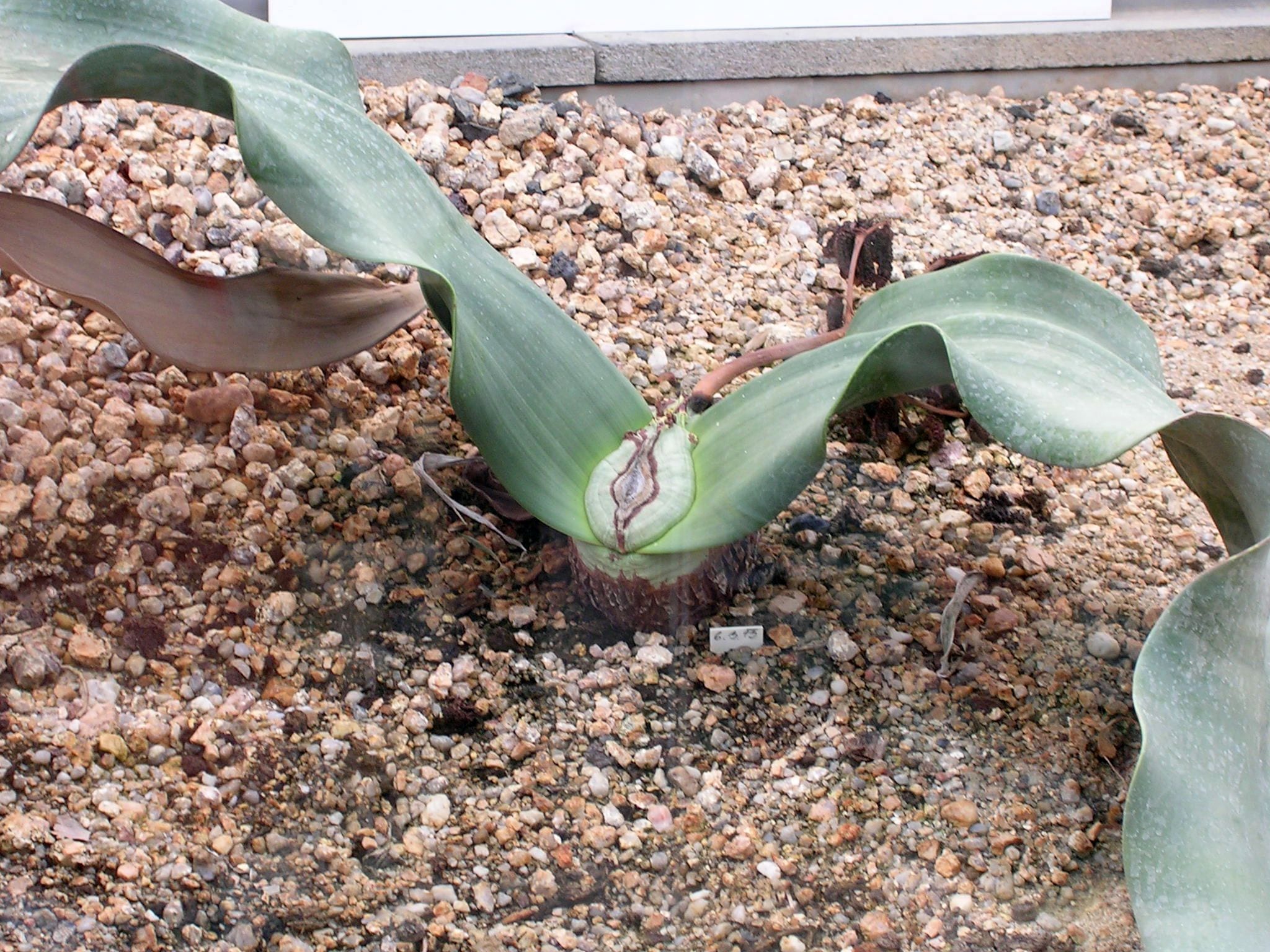
To keep a Welwitschia mirabilis healthy, it must be planted in a large, deep pot with very well-draining substrate . In fact, it's highly recommended to use simply pumice, either alone or mixed with washed river sand. Furthermore, it should be watered sparingly: once every 10-15 days in summer and monthly the rest of the year.
However, it's no use having it in the best substrate if the climate isn't right. The maximum temperature can easily reach 40ºC, but the minimum shouldn't drop below 0ºC. If it does, we'll have to protect it in a heated greenhouse.
Table of Contents