

Echinocactus grusonii
When we first enter the world of succulents, it is very common for all of them to look more or less the same. In fact, thinking that a plant is a cactus when it is actually a succulent plant is something that happens very, very often. And things get even more complicated when they tell you that not all cacti have thorns, and not all succulents are harmless.
What are the characteristics of cacti? How can we distinguish them from other plants sold in nurseries?
Origin and evolution of cacti
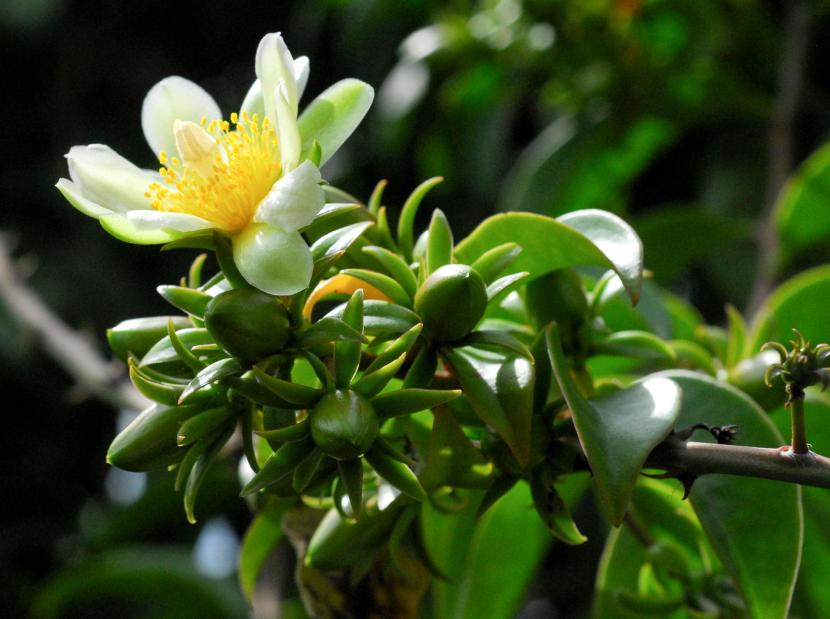
Pereskia aculeata
Cacti are plants that belong to the botanical family Cactaceae. They are all native to the Americas , mainly concentrated in Central America, but there is one exception: Rhipsalis baccifera, which grows naturally in tropical Africa.
These curious plants began their evolution about 80 million years ago, when what we know today as America was joined together to form a supercontinent called Pangaea, which was already in the process of fragmentation at that time.
Researchers haven't found many fossil remains, so for now they can only make assumptions. At that time, the climate in Central America was dry and tropical, so it 's suspected that cacti began their evolution as non-succulent plants: with leaves, woody stems, and flowers that produced pollen and seeds.
Today we can get an idea of how those first cacti must have been, since we have received one: those of the genus Pereskia, considered the most primitive genus among cacti.
As the American continent reached its current location, many areas once covered in plants gradually became arid. To survive, cacti changed from having green leaves to spines . Thus, the task of photosynthesis fell to the stems, which turned green—in most cases—due to chlorophyll.
What are their characteristics?
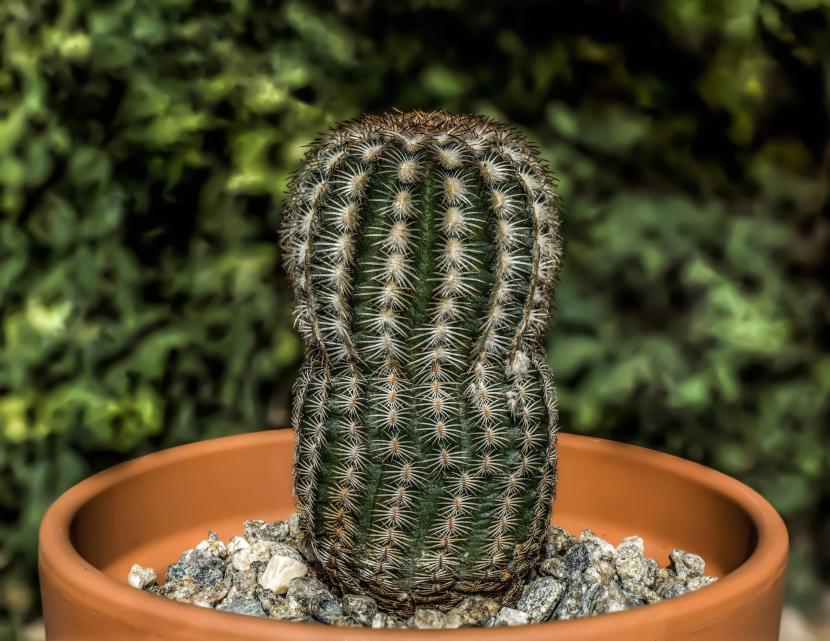
Echinocereus reichenbachii
Now that we know how the evolution of cacti could be, let's see what their characteristics are; that is, what are its parts:
areola
This is the defining characteristic of cacti. These are found on the ribs , and they are very important: spines, flowers, and sometimes shoots emerge from them.
Thorns
In these plants, they are known as foliar spines. They are sharp formations with vascular tissue (meaning they have their own food supply). They can be of various types: long (up to 30 cm), short (1 mm), thick, very thin, curved, or straight.
Many species of cacti have central spines, which are the thickest and longest, and the radial ones, much thinner and more numerous.
Flores
They are solitary and often hermaphroditic . The tepals are arranged spirally, making them quite similar to petals. These, when fused, form a perianth tube. The androecium consists of numerous stamens, usually yellow; and the gynoecium is composed of 3 or more carpels (modified leaves containing one or more ovules).
Fruits
The fruits are usually between 1 and 5 cm long . Once ripe, they remain closed until they decompose.
Seeds
They are very, very small , less than 0,3 cm in diameter. They are usually black and hard.
Stem
The stem is succulent, which means that it stores water. Three main forms are distinguished:
- cladode: the stem is flattened, racket-shaped. Example: Opuntia sp.
- columnar: the stems are cylindrical in shape and grow very erect. Examples: Pachycereus pringlei or Carnegiea gigantea.
- Globose: the stem takes a spherical shape. Examples: Ferocactus sp or Echinocactus grusonii.

Copiapoa taltalensis
If you have any questions, don't leave them unanswered .
Table of Contents