

Echeveria polishedis
Cacti, succulents, and caudex plants, while very different from each other, have something in common: CAM metabolism , or Crassulaceae Acid Metabolism. Living in habitats with strong sunlight, they have had to develop ways to avoid losing water through transpiration. Without this liquid, they could not exist; therefore, every drop is crucial , as it could be the difference between life and death.
In fact, it is so much so that they stop growing completely when high temperatures are combined with periods of drought, and resume when conditions improve. But do you know what CAM metabolism is? No? Well, don't worry, I'll tell you right now .
Plants with what we might call ordinary leaves—those that are thin and green—perform photosynthesis during the day. How? By opening their pores, or stomata, to absorb carbon dioxide (CO2) and transform the sun's energy into food. This is a function they perform without difficulty, as they have a more or less constant supply of water. But what happens when living conditions are particularly harsh?
In nature, only two things can happen: you either adapt, or you can't survive. In the case of succulents, they adapted. They did so in a very peculiar way: by performing photosynthesis in two stages. At night, they take in carbon dioxide, forming malate without the need for sunlight, and during the day they generate sugars from the malate , allowing their stomata to remain closed. In this way, they can conserve water and use it only when absolutely necessary.
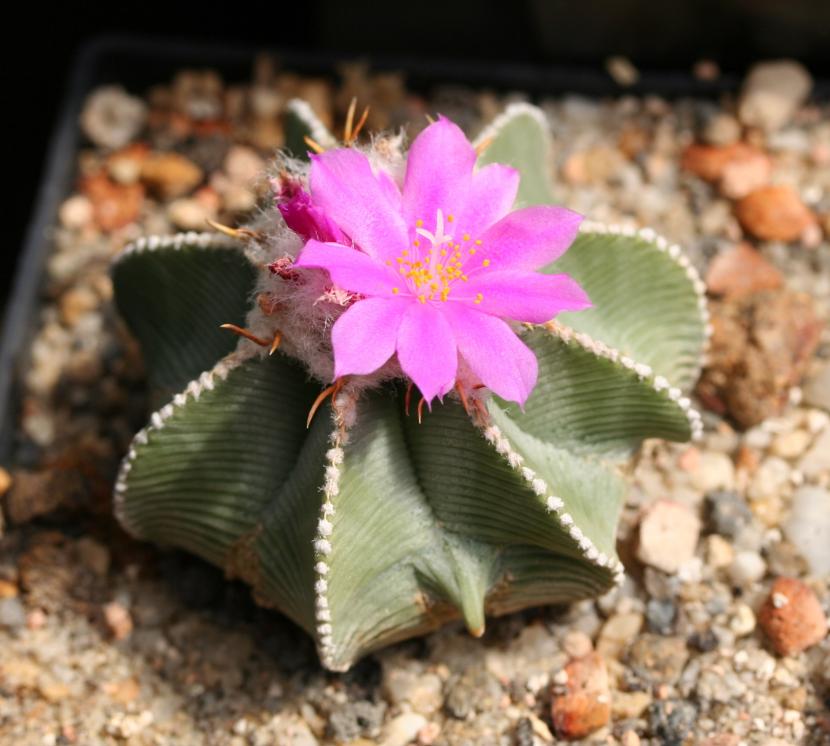
Aztekium hintonii
Did you find it interesting? Without a doubt, succulents are some of the most amazing plants. Not only have they modified their leaves and / or bodies turning them into water reserves, but they also do everything possible to avoid losing it.